

 admin
admin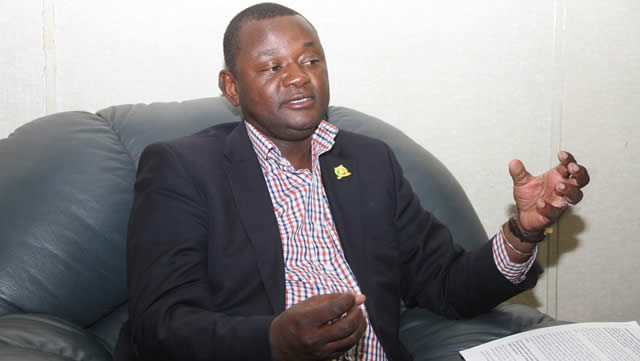
Fortious Nhambura Senior Features Writer
A new board has been at the helm of Zinwa for the past six months. When it was appointed it had clear mandate to turnaround the fortunes of the parastatal that has been struggling to collect money from its debtors and pay salaries. The board had five months to accomplish some of its tasks, among them coming up with a strategic plan and settling salary arrears. Our Senior Features Writer Fortious Nhambura (FN) spoke to the Zinwa board chairman Mr Michael Shongwe Ndoro (MSN) on the board achievements and failures so far.
FN: It’s been six months since you took the reins at ZINWA. Could you please enlighten us on the organisation’s challenges and the measures you have put in place to address them? Can you say you are succeeding in turning around the fortunes of the water authority?
MSN: The board was mandated by the Minister to do a strategic review and skills gap review analysis. We are in the process of doing that strategic review and certainly we will be going back to the Minister by end of November with detailed plan for the next three years. The second thing that he mandated us was to look at salaries and to ensure that we catch up on salary arrears.
We had a target to bring them to date by September but due to the slowness in the economy generally and the demand for cash, we have revised that target to December. We have accelerated the collection of our debtors. As you know, we started off at about $105 million outstanding debtors but to date we are sitting at $97 million. Yes it hasn’t been a significant movement but we are trying to collect everything that we bill on a monthly basis while collecting the arrears from previous years.
We were also tasked to complete some of the major dam construction projects. Obviously focus has been on Tokwe Mukosi, as the primary one and Gwayi-Shangani Dam being the second priority. And in that respect we have started putting the face of the Tokwe Mukosi dam wall and we think we will be mostly complete by the onset of the rains.
We have made necessary arrangements to prevent flooding and minimise the threat of the dam collapsing. Yes the progress might not be visible but I think we are making progress in the right direction.
FN: You took over at a period when ZINWA was struggling to fulfil its mandate of water provision, what are your immediate plans to ensure that people get reliable water supplies in areas where ZINWA is responsible?
MSN: In areas where Zinwa is responsible I think we have been meeting our requirements. We take accountability and responsibility for cities like Harare and Bulawayo but in terms of actually water supply Zinwa is fulfilling its mandate. Although Harare Water is responsible for the distribution of water to the household we have been drilling boreholes in residential areas where we think there is a critical need of water. Where we have 100 percent responsibility from raw water to clear water in markets like Beitbridge, Gwanda and other, those markets have been fully serviced.
FN: You are raising the issue of water supply for Harare. We have had projects like Kunzwi and Musami that have been on the plans for some time now, could you enlighten on what is holding you back?
MSN: I am sure the projects have been awarded to some people before. I think the Kunzwi one has been awarded to the Chinese. The challenges have been Government’s inability to fund these projects. But obviously they are planned and the reality is getting adequate funding to execute it. Zinwa is currently working on seven to nine dam projects nationally that are at different levels of completion. It is our view as a board that we ensure the completion of those projects before we can embark on new ones. Harare in terms water has enough water bodies to supply its residents.
Yes some of the water bodies are polluted but we are working with the environmentalist to ensure that they are cleaned up. I think Kunzwi is a strategic dam for Harare and in the fullness of time it will be executed.
FN: What is Zinwa doing to collect the money it is owed by various consumers, chief among them farmers, local authorities and Government?
MSN: We have set management targets and I must say our collections have improved significantly from both councils and farmers. We have also had lots of support from Government in terms of set offs (where they have allowed us where it owed us money pay off some of our statutory payments through the “I owe you” commitment.
As you know the demand for the dollar is high, Zinwa want theirs, Zimra, Zesa Zinara etc, but I want to say the consumers out there have generally been compliant and are paying their bills.
FN: On a more recent note, ZINWA has imposed a ban on bulk water abstraction in Harare’s residential areas, what is the rationale behind this ban and what measures have you put in place to ensure compliance by bulk water sellers?
MSN: The rationale of ban on bulk water abstraction was that these companies were abstracting bulk water from residential boreholes where the water permits do not give them that right. We were now faced with a situation where our natural aquifers were being depleted faster than the rate at which they could be replenished in those areas to the extent that the majority of boreholes in most residential areas in Harare were beginning to dry up.
As you know boreholes are the primary source of water in these residential areas and we had to move in top ensure that there is equity in the provision of water. However, we offered them alternatives where the impact on underground water resource is minimal. We have simply asked them to comply with (Water Act) which says any commercial or bulk water user needs to registered by Zinwa and we are in the process of registering them. We have also given them satellite boreholes that are manned by Zinwa personal as pick up points for their water.
These borehole sites have good water quality if not better than those they were getting water from. We cannot have a situation where residential boreholes are being dried up by a few commercial or bulk water users who were extracting way above their limits.
FN: Harare northern suburbs have seen an increasing number of boreholes affecting the underground water aquifer. Is this sustainable?
MSN: We have a Statutory Instrument that controls the sinking of boreholes. The ideal is that we should provide high quality water on the tap and boreholes should be a luxury. Our mandate is to provide potable water through the tap. Borehole drilling is something that we believe is ideal only in those marginal areas where we have no strong perennial rivers that flow through them. Boreholes should be more than 200 metres apart. This will ensure that the phreatic water table is not affected. In Harare we should be able to provide water through the tap.



 Online Reporter