
Andrew Mangwarara
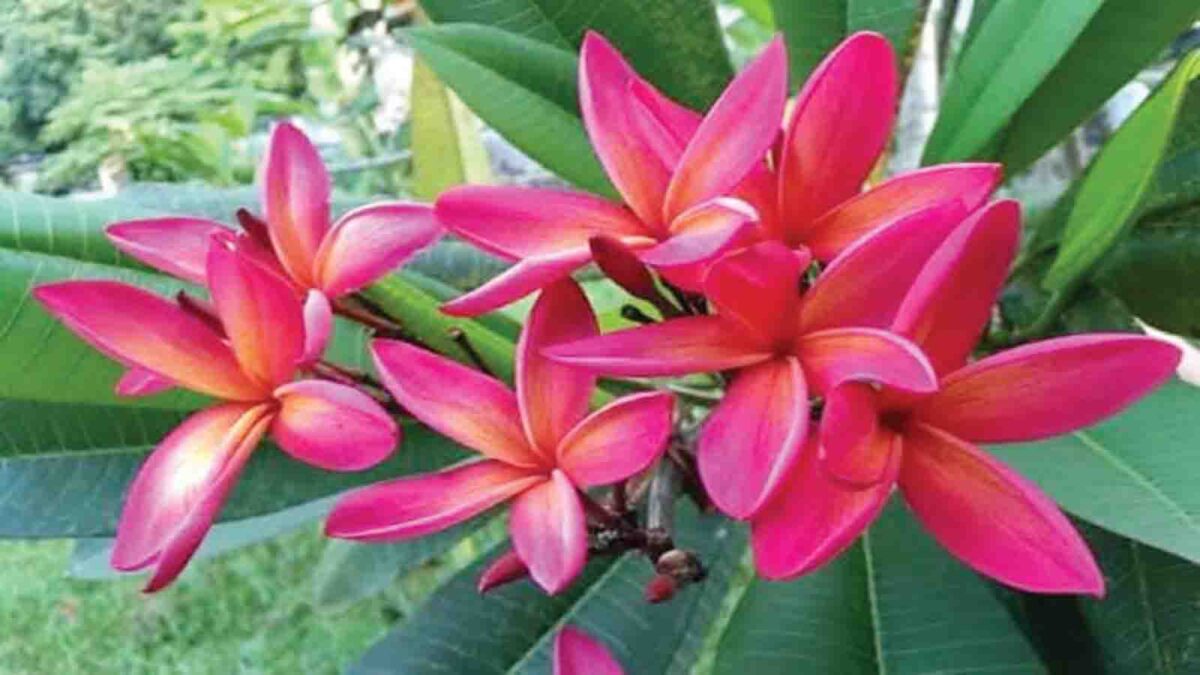
WHENEVER summer beckons, it is time to enjoy the blooms that come with it, such as those of plumeria rubra, commonly known as frangipani.
Originating from South America, this succulent, deciduous tree can reach a height of 12 metres in the wild. Frangipani is usually grown for its fragrant flowers, which come in a variety of colours and make a great sight, especially when the trees are grouped together.
While the latex it produces is poisonous, it is only harmful in large quantities.
It is a very easy tree to grow and can be propagated simply by cutting its branches and planting them directly into the ground, where they readily form roots and thrive.
Frangipani is a resilient tree capable of surviving in drought-prone areas, though it thrives best in wet, humid climates, where it will remain evergreen.
Its flowers range in colour from red, white, pink, cream, yellow and salmon to multi-coloured varieties.
Blooming begins in spring and can continue for many weeks, with individual flowers lasting a few days. Its scent is one of its most unique characteristics, making it a great garden specimen with notes of jasmine, citrus, gardenia, vanilla, coconut, peach or spice.
The intensity of this fragrance varies depending on the time of day, temperature and flower age. For the best results, frangipani must be grown in full sun, as it will not flower much in the shade.
Plant it in well-draining soil and avoid heavy clay to prevent root rot. When designing your garden, you can also grow it in strong, steady pots so it can be easily moved to desired spots. Ensure the potting mix drains well and always water thoroughly to prevent salt build-up.
A common misconception is that because the plant is drought-tolerant, it rarely needs water. However, to produce abundant blooms, the tree needs sufficient moisture — just ensure the soil dries out completely between watering. When it comes to fertilising, follow general guidelines by using a balanced fertiliser, such as Compound D or X, rather than one high in nitrogen, which promotes excessive foliage at the expense of flowers.
The great frangipani does not require annual pruning unless you need to control excessive growth or shape the tree.
Eventually, plumeria will naturally slow down, lose its foliage and enter dormancy.
During stressful periods, pests such as mealybugs, thrips, aphids, red spider mites, scale and whiteflies may appear, alongside diseases like root rot, sooty mould, foliage rust and powdery mildew.
Because the flowers are delicate, they should be dried in paper if you wish to preserve them. Overall, when it comes to effortless beauty, consider the great frangipani.
If you would like to be featured in our green-up campaign contact us on: [email protected] or [email protected]