

 dyton mupawaenda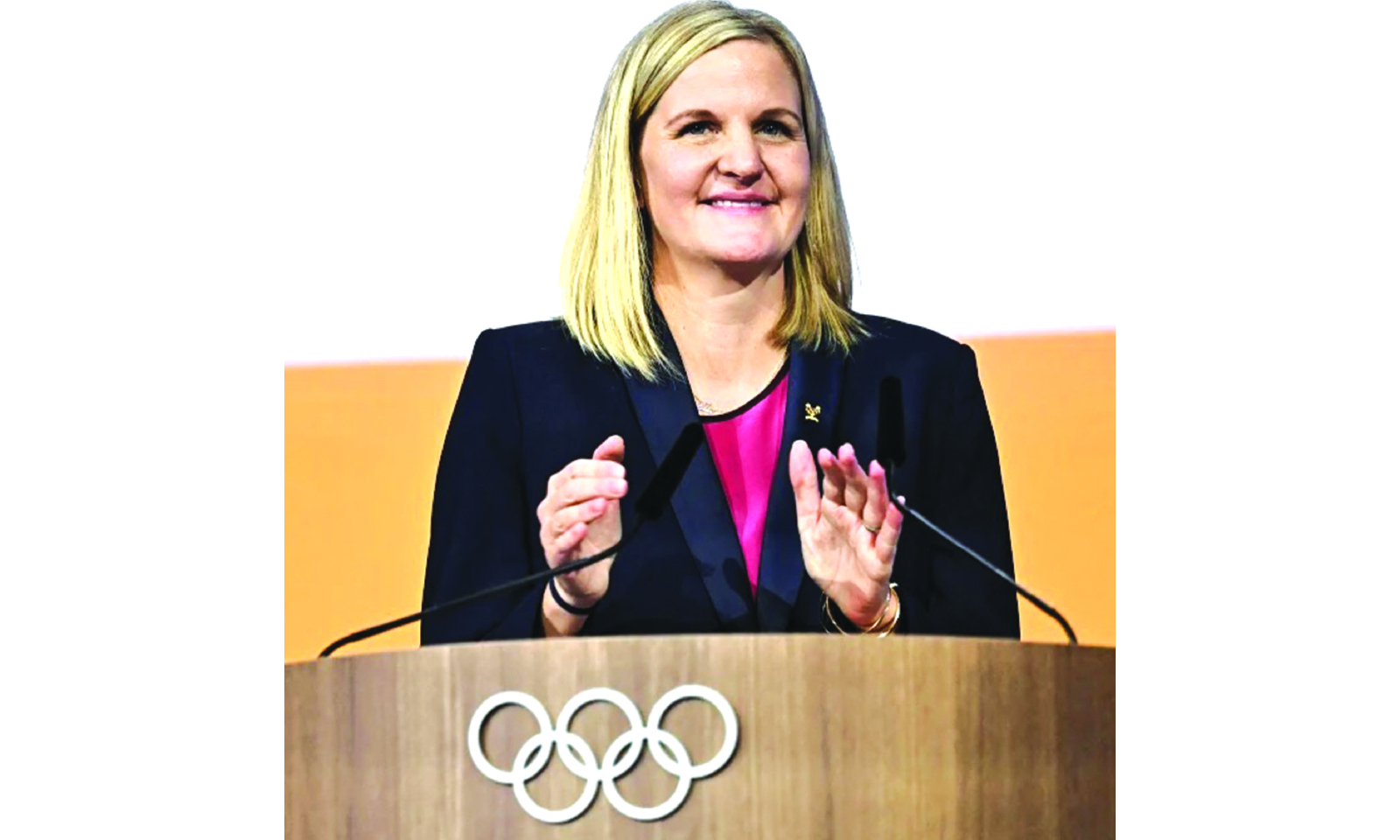
Sharuko on Saturday
IT was supposed to be about the Warriors today, about the Nees’ feel-good factor and about the return of a Smiling Assassin who appears to mature with age.
It was supposed to be about Tawanda Maswanhise flying down the wing and justifying the buzz that has been following him since he arrived in the Scottish Premiership.
It was supposed to be about Tawanda Chirewa, back in the trenches for his country, after what has been a fine adventure at Huddersfield Town so far.
It was supposed to be about the marching band which invaded Durban, in gold-and-green, just like the hosts’ national colours, different from the way the hosts support their football teams.
It was supposed to be the night the Warriors would breathe life into their faltering World Cup campaign, which had seen them just pick a point, in their first four league games.
A campaign which reached its nadir when these Warriors somehow conspired to lose to Lesotho 0-2 in Johannesburg in a result that stank as much as it shocked all of us.
But, somehow, it became a salvage operation, especially after Washington Arubi turned himself into a Father Christmas who, somehow, showed us in March and provided Benin with a gift goal.
Benin are the voodoo capital of the world and they say in the West African country, there is a good likelihood that everyone you meet is probably a witch.
They even have a Voodoo National Day and a Voodoo Museum and their supernatural beliefs are largely based on believing in vampires, pythons, you name it.
And, after a dozen minutes in Durban, Arubi must have felt that a voodoo spell had been cast on him when he inexplicably chipped the ball to an opponent and Benin opened the scoring.
The ageless ‘keeper has been very reliable since Nees took over as Warriors coach but I felt there was something wrong when the gaffer said he didn’t want any ‘keeper who challenges Sekuru Gudo.
It was like telling him that you can mess around and it doesn’t matter because you are the ‘keeper I like and the only one I will always field.
This has a tendency of creating a sense of complacency for a footballer, the same way it will possibly create a sense of complacency for a coach who is given similar guarantees.
Arubi’s howler was the kind of which are only found in hell and he should thank his teammates who fought back from two goals down to force a draw.
The Warriors showed commendable spirit to claw their way from the 0-2 deficit but this was a World Cup qualifier that was there for the taking and that we didn’t is quite disappointing.
I’m not yet sure why we chose to play at the Moses Mabhida Stadium after having played in Johannesburg and Polokwane in our previous matches.
The pitch was heavy and now and again the players found them slipping on the slow surface, it was allergic to a team which wants to depend on its wingers finding space on the flanks and it was hostile to football played on the ground.
It’s a beautiful stadium, no doubt about that, but it’s too big for us to even pretend that our home support will be heard and it can make a difference.
We can’t blame, the solution is for us to ensure that we sort out our stadiums because I can tell you that at the National Sports Stadium, Benin would have stood no chance at all.
ONE WIN IN 17 YEARS
We have to start to believe that we can win World Cup qualifiers because it doesn’t make sense that we have just won one World Cup qualifier in the last 17 years.
That win came against Somalia when we beat one of the weakest football teams in the world 3-1 at the National Sports Stadium on September 19, 2019.
Marshall Munetsi, who scored yesterday, was on target in that match while Khama Billiat scored the insurance goal with a beauty in the dying embers of the match.
When you have only won once in 24 games in the World Cup qualifiers, there is certainly something wrong about you and this is the dilemma that we find ourselves in.
For me, Nees should just use the remaining World Cup qualifiers to prepare for the AFCON finals in December.
And, this probably calls for real investment into the youth brigade into the team and the likes of Maswanhise and Chirewa should be featuring prominently.
But, thank God, it was not all gloom for us.
Yesterday, the name of our country was being written in gold letters after Kirsty Coventry made history to become the first African to be elected IOC president.
Maybe, some things are just meant to happen.
Somehow, the first African to play in the English Premiership, who happens to be a Zimbabwean, did so while playing for a club called Coventry.
The first African to score a hat-trick against Liverpool at Anfield, who is a Zimbabwean, did so while playing for a club called Coventry?
The first African to shatter the glass ceiling and get elected as IOC president, who also happens to be a Zimbabwean, did so while carrying the name Coventry.
And, the first woman to make history, as the first IOC president who is not a man in the 131 years that this position has been occupied, did so while carrying the name Coventry.
Exactly 30 years since Peter Ndlovu made history for Coventry and for Africa with his hat-trick at Anfield in ’95, Kirsty Coventry has just made her own piece of history by being elected IOC president.
And, as fate would have it, both significant events happened in March, and in a year that ends with the number five.
It’s not every day that we get Zimbabwe’s name being written in gold colours and it’s a measure of our uniqueness that we are the country that will always provide sport with its intriguing firsts.
There is no African country with a small population like ours which punches above its weight the way we do.
If they ask you which was the first African country to win a gold medal in hockey at the Olympics, just tell them that the answer is Zimbabwe – at our very first appearance in 1980.
If they ask you which was the first African country to produce an Olympian to win seven medals, just tell them that the answer is Zimbabwe.
If they ask you which was the first African country to produce a three-time Commonwealth boxing champion, just tell them that the answer is Zimbabwe.
If they ask you which was the first African country to produce a black billionaire in the United Kingdom, just tell them that the answer is Zimbabwe.
KIRSTY PROVES EVERYONE WRONG
Kirsty’s stunning first round victory, which is probably the closest thing that the IOC have seen when it comes to something close to a Biblical tale of David and Goliath, should be a wake-up call for all of us as Zimbabweans.
Going through the social media posts in the past few weeks, one would have been forgiven for thinking that Kirsty not only didn’t have a chance, but faced such humiliation it would be the worst story ever written in the IOC.
The pens were being sharpened to blast Kirsty and acres of space were devoted to paint her as someone who was not good enough to run our Sports Ministry, let alone the IOC.
At times, it bordered on a combination of ignorance and hate, which provides a hybrid of toxicity which gets one to stop thinking and wander into a dark world where everything represents evil.
It’s probably a fact that if Kirsty had not cracked the whip, Felton Kamambo would still have been the president of ZIFA or, alternatively, one of his executive committee members would have replaced him.
The dysfunctional system, which had dragged our football to its grave and led to the likes of Musona and Khama prematurely retiring from international football, would have been the one in charge – in one way or the other.
The Warriors would have been banned from the 2026 World Cup qualifiers because they would have failed to pay one or two of their coaches and it’s likely that the likes of Munetsi and Nakamba would also have retired from international football.
So, if we can ask ourselves, if Kirsty was that horrible, how come she won the confidence of 49 out of the 97 voting members of the IOC that she was the best candidate to make history as the first African and woman president of the organisation?
If she was that bad, how come she convincingly beat a British track legend, Seb Coe, who made such a profound impact he was named a Lord and was one of the first athletes to be inducted into the Athletics Hall of Fame?
Lord Coe, an epitome of Britishness as tea itself, got just eight votes out of 97 votes.
Juan Samaranch Junior, whose namesake father was instrumental in turning the Olympics into such a successful global sporting festival, picked 28 votes, still less than half of what Kirsty got.
Samaranch Jnr and Lord Coe represented the two dominant languages, when it comes to numbers, in the world and, in a way, Olympian aristocracy.
But, they both were soundly beaten by a Girl from Harare, who went to Dominican Convent for her high school and was only 17 when she became the first Zimbabwean to reach the semi-finals of a swimming event at the Olympics in 2000.
For me, in a way, she is someone who has a connection to my career.
I was the Zimpapers journalist assigned to cover the Commonwealth Games in 2002 when she won her first major gold medal.
Somehow, it had to happen in Manchester, of all cities in the world.
To God be the Glory!
Peace to the GEPA Chief, the Big Fish, George Norton, Daily Service, Sitting Bull, Crazy Horse and all the Chakari boys still in the struggle.
Come on Warriors!!!!!!!!!!!!!!!!!!!!!
Khamaldhinoooooooooooooooooo!
Text Feedback: 0772545199
WhatsApp: 0772545199
Email: [email protected]



 Online Reporter