admin
admin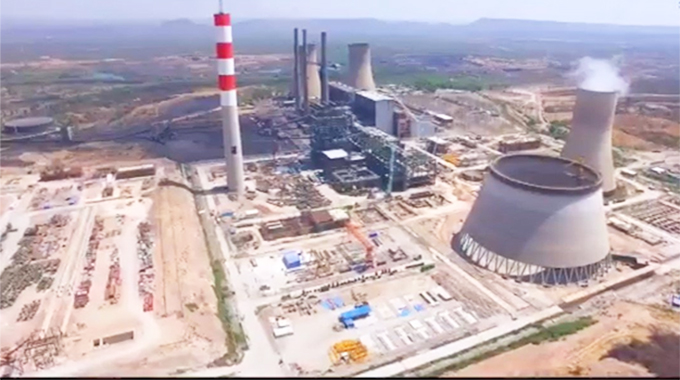
Gibson Nyikadzino Correspondent
The political chaos unfolding in Britain since the premiership of Ms Liz Truss last month, compounded by the Brexit move, provide hints on the problems and threats facing the world as a result of a concept termed democracy.
As the cost of living rises and Britain, like the rest of Europe, facing an energy crisis, there are pockets of political decay that are showing in the Westminster’s political system where issues of development have been suspended in the pursuit of democracy.
In France, peaceful protestors are being beaten and arrested by police for questioning the ability of the present government to resolve economic challenges facing that country.
On January 6 last year, in the name of democracy, riots led to regression of state institutions after intolerance bred from ‘democratic’ political office contests turned violently chaotic.
The debate of what comes first between development and democracy has taken ages to resolve and can be likened to what is better between pragmatism and theorisations.
Development in essence is positive and good change, while democracy is a paradise in the people’s minds, the latter cannot be achievable, hence its consequences are instability and decay, in other cases.
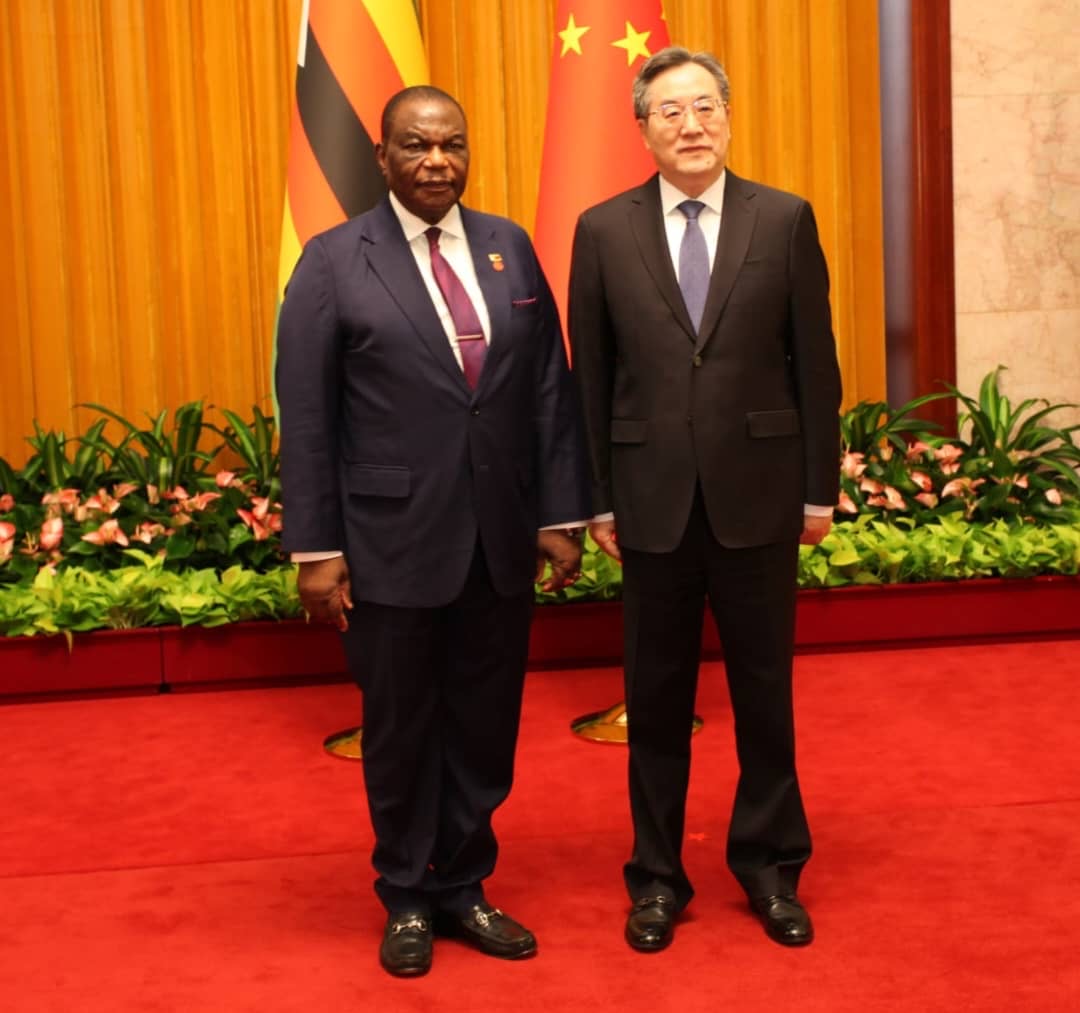
When China’s President Xi Jinping launched the Belt and Road Initiative (BRI) in 2013, in less than a decade, the BRI has brought tangible infrastructure developments to Africa which have economically connected Africa’s need for infrastructure and development, over unfulfilled promises from the West.
The need for peace, infrastructure and opening Africa to trade opportunities prompts the continent to embrace China.
However, Western propaganda against Chinese investments in Africa has been crafted around “exploitation”.
When it comes to infrastructure development, the BRI is achieving what the West has failed. The BRI is assisting Africa in self-transformation.
The infrastructure development in Africa, which is one of the major barriers to the continent’s economic transformation, is being significantly aided by China.
Since 2013, the cumulative BRI engagement amounts to US$932 billion, with about US$561 billion in construction contracts and US$371 billion in non-financial investments.
Africa, and Zimbabwe in particular, have benefited from these developmental engagements compared to the US or European Union investments.
To counter the BRI, the EU and the US last year launched the Global Gateway Initiative (GGI) and the Build Back Better World (B3W), respectively, and committed funds that are yet to provide a meaningful infrastructural development projects needed in Africa compared to the Chinese.
Choosing a meaningful alternative
The development trajectory that Zimbabwe is taking is a process that seeks to be de-universalised from Western notions that conflate development and liberal democracy, only to serve the interests found in the indicators of their body of literature.
There are also reasons why Western democracies want African countries to remain underdeveloped as priority is given to liberal democracy over development.
This is so because when Africa focuses on ‘democracy’ and not development, it will have accepted some of the Western liberal pre-requisites to receiving aid or help.
To the West, development can only be facilitated through their prescribed process of democratisation. Because of the rhetoric associated with democracy and unfulfilled promises, Zimbabwe has chosen a path of pragmatic development that has seen a rise in the number of infrastructure projects being undertaken by the Second Republic.
While the nation’s democratic values have remained in place and important, critical emphasis is seen to be questionable figures, statistics.
There are figures and statistics manufactured in Western factories like the IMF, World Bank, USA’s Freedom House and Britain’s Chatham House with indicators that are used to measure development and democracy using Western standards.
Because the statistics are also used to classify countries as “democratic and undemocratic”, such standardisations have been detrimental to how people in the Global South frame and see development and democracy.
No enquiries are put to measure the access to socio-economic justice in terms of access to services.
On many occasions, Western “think tanks” have unfairly categorised Rwanda as an “undemocratic” country based on their Chatham House findings, compared to South Africa which has been said to be “democratic”, for example.
Despite being classified by the West as “undemocratic”, Libya’s economic development and industrial modernisation under Colonel Muammar Gaddafi was twice advanced than almost the entire EU bloc of countries.
But close indications have shown that in terms of development and access to basic services like good infrastructure for people in the rural areas, the Rwandese have a better and even access to these services unlike the South Africans, who being among the most “democratic” have poor housing and live in the world’s most unequal country.
There is an interconnected demonstration that development in Africa is not a result of a supplied Western democratic antidotes, but proof that people can enjoy the fruits of economic development while political liberalisation comes after.
Development is collective
The reason why Zimbabwe’s detractors and pessimists are making wrong conclusions about the country is because of the missteps they have made from the beginning, to think that someone will come from outside with a development plan for Zimbabwe.
However, the course and shape being formed in terms of modernisation, growth, industrialisation and change under the Second Republic is the one that is premised on the “we eat what we kill” and “nyika inovakwa nevene vayo” philosophical benchmarks.
Zimbabwe has managed to help the formerly neglected rural communities with access to amenities like clinics, schools, infrastructure, decentralised administrative systems, improved road networks and water facilities through the borehole drilling scheme for the country’s 35 000 villages, hence “leaving no one and no place behind”.
In the diaspora, more of Zimbabwe’s citizens are seeing economic opportunities that are being provided in the country and are now willing to make investments back home, despite the majority having left the country in the early 2000s under the veil of “fleeing persecution” to help the West impose a pariah tag on Zimbabwe.
Democracy can be a fallacy?
The ultimate realisation that is coming from the many people is that Western democracy can be costly to a developing nation’s developmental trajectory.
In the West, they shun centralised government planning in preference of free-market politics and the free-market economy.
These have been the key components of Western democracy, but with dire consequences.
In other jurisdictions where central government planning has been key, there have been success stories without the input of Western democratic demands, but through opening up the markets to technical innovation and post-industrial modernism to nurse and nurture development.
One can concede that democracy can lead to development, but the reverse is also true as development can lead to democracy.
Economic markets and technological innovation can deliver growth and improvement for a country with or without Western democracy.
Thus, institutionalisation and economic development are what ultimately lead to democracy.
To believe that all good things happen because of adopting Western prescriptions of liberal “democracy” might be a mistaken believe. However, because development is a multi-dimensional and many-sided process, on one hand it can also be noble to further development over Western democratic tenets to address inequality, unemployment, and end poverty.
In the end, are a people’s standards of living raised by development indicators or democratic indicators?



 Online Reporter