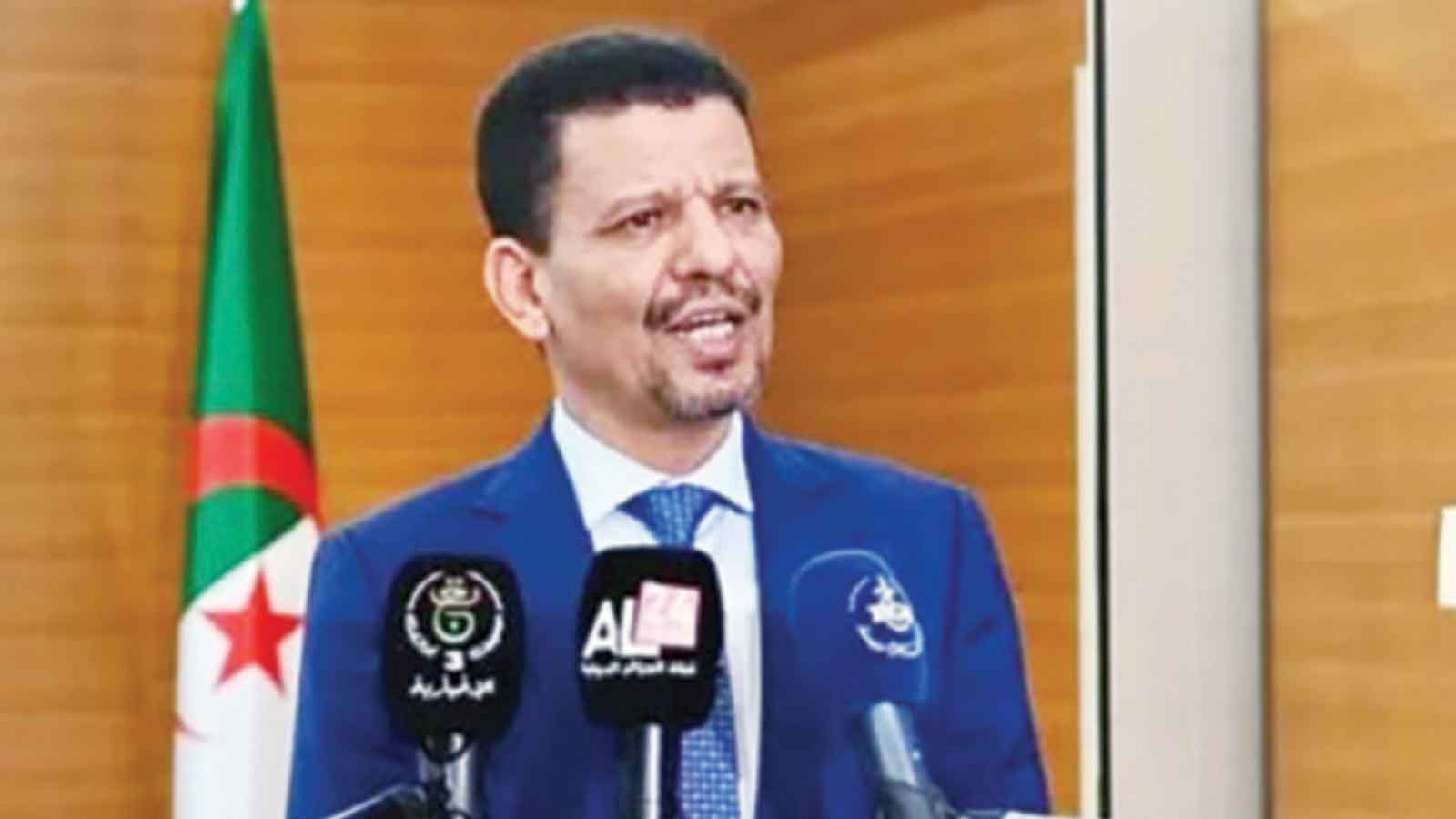
SINCE 1975, the Sahrawi Arab Democratic Republic (SADR) has been fighting for its right to self-determination over its territories occupied by Morocco. Along the way, it has received solidarity from the progressive world, including Zimbabwe. Following last week’s visit by SADR’s Foreign Affairs Minister, Mohamed Yeslem Beissat (MYB), to deliver a special message to President Mnangagwa, he gave an exclusive interview to Zimpapers Politics Hub’s Gibson Nyikadzino (GN). Below are the excerpts:
GN: What significance does your visit to Zimbabwe have, at a time it has just got elected as a UNSC non-permanent member?
MYB: I came as a special envoy from His Excellency Brahim Ghali, President of the Sahrawi Republic, to deliver a written message to his brother and colleague, President Mnangagwa. We came to congratulate Zimbabwe on its brilliant United Nation Security Council election. These elections were a strong message from the international community.
GN: What specific message did the world send, through this vote?”
MYB: Firstly, the confidence, backing, solidarity and the support that Zimbabwe enjoys in the world is enormous because it is not easy to have 182 countries out of 193 countries voting for you. It is a big, unprecedented support. Secondly, it was not only a vote about Zimbabwe. It was a vote against the sanctions, against the harassment. Lastly, it is very significant that Zimbabwe plays this role in a time when the world is in a very special juncture, where a new world order is emerging, where humanity is facing so many challenges involving political, security, economic, financial and climate issues. On every level of our common life on this planet, we are facing multiple and interconnected challenges. We need wise leadership, and the countries chose Zimbabwe to play this role in this very critical moment in the history of humanity.
GN: For over 50 years Zimbabwe and the Sahrawi have had strong bonds. What is keeping the two interconnected?
MYB: Our relationship with Zimbabwe started in the early 1970s. We were meeting twice every year, on the fringes of the liberation movements’ meetings in Tanzania and Mozambique under the Liberation Movement Committee, chaired by the late Brigadier General Hashim Mbita. Together with leaders from ZANU and ZAPU, we were in that committee, attending its programmes.
We were lobbying the world for our aspirations. So ours is a relationship of camaraderie, of comrades in arms, of people who have known each other for many years. This is a relation that is cemented by the blood and the sweat of our peoples in their common struggle against colonialism and racist minorities. And then it developed into a very strong and solid relationship.
When Zimbabwe became independent in 1980, it cast the decisive vote in Monrovia, Liberia, which supported the Sahrawi Republic to be a member of the then Organisation of African Unity (OAU). So, it is an old traditional relation based on brotherhood, camaraderie, common values and shared values of Pan-Africanism borne from the OAU. Shared values of the struggle for freedom, democracy, development and the great values of our common liberation movements.
GN: Regarding the Sahrawi Republic’s occupied territories by Morocco, can you share the status of the efforts to address this challenge?
MYB: Almost two-thirds of our territory is still occupied illegally by our neighbours, Morocco. This is happening despite the resolutions of the United Nations, the African Union, the International Court of Justice, the African Court of Justice, European Court of Justice. Every legal or political entity in the world that has condemned this occupation has asked for the respect of the Sahrawi people, rights of freedom, democracy and self-determination.
Since the 1970s, the OAU had started looking for solutions. Then those solutions of the then OAU were adopted by the United Nations, which had a mission there in the territory, trying to organise a referendum.
But consistently, Morocco has blocked these peace efforts, has sabotaged them, and has obstructed them from organising the referendum. Until now, that’s Morocco’s position of denying justice, repression of the people, stealing of the natural resources and oppression of the people of Western Sahara.
GN: In this occupation, what resources are they exploiting and extracting?
MYB: Western Sahara is one of the richest countries in the world, with huge deposits of phosphate and the best fisheries on the continent. Also, there is gold, iron, copper, uranium and many other rare minerals that have just been discovered. Morocco is there by the force of its might to repress the people and to enjoy those natural resources illegally. This has been condemned by many courts in the world as totally illegal, and it is mere theft in the middle of the day.
GN: What are your expectations of the current peace process, and what are the main challenges to its full implementation?
MYB: We have been asked by the United Nations and the United States of America to organise a direct negotiation with Morocco. So far, the UN and the United States have organised three rounds of negotiations since January 2025. We are committed to supporting this process because we believe in peace and we believe in dialogue.
We will do our share of any necessary steps to be done to ensure that this process continues and is fruitful and brings peace and stability in our region, which is much needed. Nevertheless, despite our position and our concessions, Morocco is adopting an arrogant position because it feels emboldened by the support of some Western countries.
And it is trying to package this position of the Western countries as a new element in the power of balance, while it is an outdated, very old position, because since 1975 these Western governments have always supported Morocco militarily, politically, economically, and in the media. The repeated alignment of these Western powers with Morocco is also the main obstacle to peace in North Africa.
GN: How is Morocco reconciling its position as an AU member against being an occupying force of another AU member?
MYB: I have never seen an arrogant and disrespectful position ever towards the African union and its people and its government like the one Morocco is adopting. Despite coming back to be a member in 2017, they have adopted a totally disrespectful and humiliating position to the African Union.
They refuse the participation of the African union in any peace talks because they think Africans are not mature enough to look for peace for themselves. Secondly, they closed down the office of the African union that was in our capital city, cooperating with the United Nations to look for a solution.
Morocco thinks Africans are not mature enough. At the same time, they want to be a member of the AU. They signed and ratified the Constitutive Act, but every day they humiliate this Constitutive Act and violate it and insist on humiliating the African and the Pan-African Constitutive Act. Yet our message is simple. The rule of law, human dignity, and the respect of the values we wrote; everyone should abide by them, including in the Constitutive Act.
GN: Seems the Moroccans are shutting all doors on you. Are you going to give up your home?
MYB: Any injury for justice or for freedom anywhere is an injury of freedom and of justice everywhere. While Morocco just sent tanks and soldiers to oppress our people, they never consulted our people, they never respected our people, and never gave dignity to our people to choose freely the future they want to live in. It is about dignity, it is about legality, it is about morality. We are very committed to our African home and to the African cause and we consider ourselves an African issue that should be solved in Africa and by African institutions.