admin
admin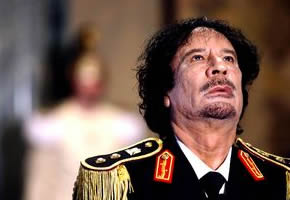
Since the 1950s, there have been at least 85 coups or attempted coups on the continent, many of them in the same countries. Some were local in nature and origin, but others were instigated and supported by foreign powers chiefly the US, Britain and France.
The so-called “Arab Spring” took the continent by storm from December 2010 and resulted in the overthrow of presidents in three African countries — Egypt, Tunisia and Libya. The African Union (AU) failed to swiftly deal with the crisis. It started as a local rebellion from the east. It soon became a foreign operation when US, France and Britain deployed under the banner of Nato after they had obtained a UN Security Council resolution for a no-fly zone over Libya. Ultimately, Nato launched missiles on government positions and hunted down Libyan leader Colonel Muammar Gaddafi before murdering him. Thousands of civilians were bombed and infrastructure destroyed. After the war, the new western-backed government agreed to let France tap Libyan oil, which was a national asset in Col Gaddafi’s era.
In the past 22 years, there have been coups or coup attempts in Sierra Leone (1991), Central African Republic (2003), Chad (2004), Equatorial Guinea (2004), Mauritania (2005), Chad (2006), Madagascar (2006), Guinea-Conakry (2008), Mauritania (2008), Madagascar (2009), Niger (2010), Guinea-Bissau (2010), the DRC (2011), Niger (2011), Guinea-Bissau (2011), Mali (2012) and Guinea-Bissau (2012).
Political analysts said western powers fuel conflict in Africa so that they get their stooges into office and indirectly have access to Africa’s natural resources.
“Influence of some super powers to exploit African resources is causing conflict,” political commentator, Mr Blessing Vava said.
“For example Rwanda and Mali, former colonisers (France) are coming back to their (former) colonies to tap resources. They are fuelling this development through sponsoring rebel groups. Western Governments are working hand in glove with their established puppet Governments in Africa to gain full control of Africa’s resources.”
Kwame Nkrumah, the first Ghanaian President faced a coup in 1969. In the book Dark Days in Ghana, Nkrumah, implicated the US in his overthrow, and warned other African nations about what he saw as an emerging pattern.
“An all-out offensive is being waged against the progressive, independent states. To discover these potential quislings and traitors in our midst, and to encourage them, by bribery and the promise of political power, to destroy the constitutional Government of their countries,” he wrote in Dark Days in Ghana, his 1969 account of the Ghana coup.
These words are generally proving to be true; 44 years after the African luminary wrote the book.
Mr Vava called upon Africa to be swift in dealing with issues affecting the continent. With reference to Mali, he said, Africa was supposed to be the first to try and solve the dispute but failed, paving the way for France to be militarily involved.
“Africa needs to be robust when dealing with issues affecting them. They should not wait for outsiders to come and solve issues on their behalf. There is a need for Africa to speak with one voice,” he said.
Mr Godwine Mureriwa, another political analyst said:
“Nkrumah coup and Lumumba assassination were due to the influence of western Governments. Their aim is do away with governments that are against their ideologies,” he said.
He said western countries cannot be wholly blamed for conflict in Africa. In some cases, he said corruption and poor governance by African leaders is fuelling disenchantment on the continent leading to conflicts.
Some African leaders are greedy, he said, adding “they are after their own wealth than serving people’s interest. As a result of poor service delivery, the neglected group revolt against their government.”
Lack of confidence in their governments, said Nust lecturer, Dr Lawton Hikwa has led to conflict in some African countries as citizens feel left out.
“Ethnic and religious divisions are still very strong in Africa. When leaders fail to come up with laws or structures that will accommodate everyone in the country, groups that feel neglected will revolt,” he said.
The rising incidents of coups and armed conflicts occur despite there being the Lome and Algiers Declarations that empower the African Union to sanction countries in which such power transfers occur.
From all the countries that were affected by coups only two countries were suspended from the AU and one country had its membership withdrawn. Morocco is the only African country excluded from membership of the African Union with Madagascar, Mali, and Guinea-Bissau all been suspended between 2009 and 2012.
The just-ended African Union (AU) summit in Ethiopia failed to sign peace deals to quell the rebellions in eastern DRC and Mali. African leaders were expected to endorse a peace security and co-operation framework to address the structural causes of the recurring cycles of violence in the Great Lakes Region.
Dr Hikwa said Africa should uphold the values of African Renaissance for the continent to realise its potential.
African Renaissance is the concept that African people and nations overcome the current challenges confronting the continent and achieve cultural, scientific, economic and political development. The concept seeks to end the violence, elitism, corruption and poverty that seem to plague the African continent, and replace them with a more just and equitable order.
Other analysts say the absence of African standing army gives European countries and the US the pretext to intervene in conflicts, in some cases escalating the situation.
“We need a standing army. Voluntary organisations might not have a capacity to deal with the problem in place but they might have their hidden agendas that can exacerbate the conflict,” said Mr Mureriwa.
At the last AU summit, leaders called for a speedier formation of the standby brigade.



 Online Reporter