Online Reporter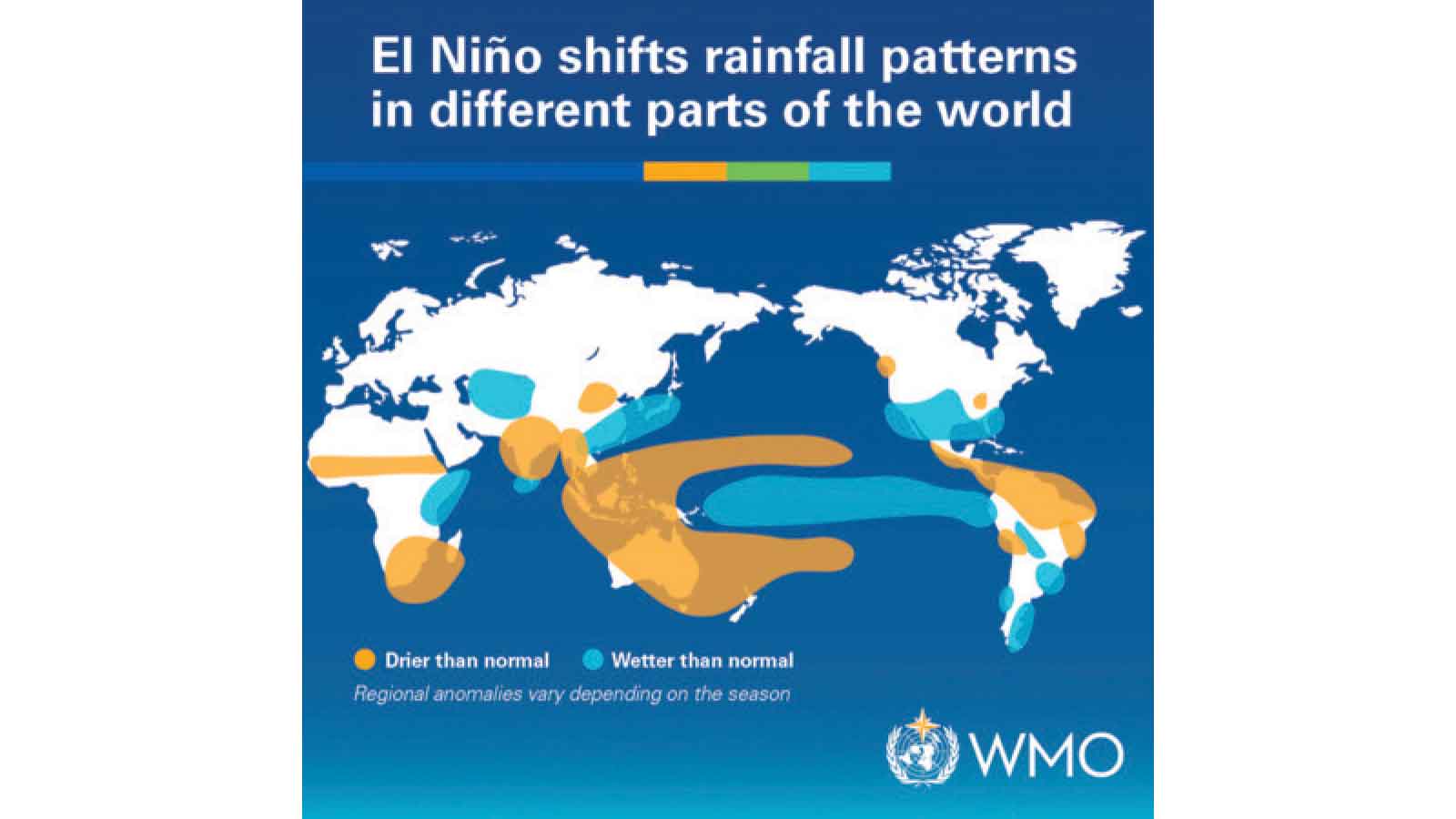
Sifelani Tsiko
Fact Check Editor
A strengthening El Niño has triggered a circuit breaker, sparking a global rout which is increasingly disrupting global weather patterns, supercharging ocean temperatures and threatening food security in most economies worldwide.
The Zimbabwe Meteorological Services Department (MSD) and most other weather forecasting agencies worldwide say this year’s El Nino is on track to be the strongest on record, threatening to unleash extreme weather across the globe and make 2026 the hottest recorded year by far.
Major meteorology agencies say this year’s El Nino is probably the most intense in more than a century. The MSD has in several climate updates issued this year indicated an 88 to 94 percent chance of an El Niño event developing during the upcoming agricultural season.
Stacked on top of long-term human-caused climate change, the El Nino jolt has brought the highest global sea-surface temperatures ever recorded in July, partly fuelled by the fast-developing climate pattern.
This year’s El Niño which the MSD says is likely to become unusually strong could impact the Zimbabwean economy in several ways. The naturally occurring El Nino – abnormal warming of the waters in the eastern Pacific that leads to hotter weather across the world, usually brings droughts to southern Africa, increasing risks to livelihoods and economies in the region.
What exactly is El Niño?
Climate experts say El Niño is a naturally recurring warming of surface waters across the central and eastern tropical Pacific Ocean. It typically develops every two to seven years and can last roughly nine to 12 months.
Meteorologists say the warmer water alters atmospheric circulation, shifting tropical rainfall and influencing jet streams and pressure patterns thousands of kilometres away.
In simple terms, those changes can make some regions wetter, others drier and alter the likelihood of heat, storms and other extremes.
World Meteorology Organisation forecasts suggest the event will continue strengthening towards the end of this year, with sea – surface temperatures in key parts of the tropical Pacific reaching more than a record 30C above average.
Why this El Niño is attracting unusual attention
The natural event developing in 2026 is not an ordinary El Niño and it has rattled various parts of the world with warnings that it could be the largest El Niño in years. Experts say its models indicate that tropical Pacific sea-surface temperatures could rise by more than 3°C above normal later this year. A typical El Niño produces warming of about 1°C to 2°C in the affected Pacific region.
For Zimbabwe, uncertainty still remains over exactly how intense the event will eventually become. A regional and domestic long-range forecast to be issued soon will offer stronger and better signals. This Southern Africa forecast matters most as it could determine the intensity of the El Niño events.
What does an El Niño mean for Zimbabwe?
According to the Meteorological Services Department, the occurrence of an El Niño could bring adverse weather conditions that have a potential to threaten food security in the country. Already, the MSD has projected the likelihood of poor and erratic rains in the 2026-2027 cropping season.
In the 2024-2025 cropping season, most countries in Southern Africa experienced a dry spell that worsened hunger for millions of people, largely due to an El Niño-induced drought. The drought was one of the worst in decades and prompted Zimbabwe and neighbouring countries to declare a state of disaster over food shortages.
A seasonal forecast for El Niño is an essential planning tool for climate-sensitive sectors like agriculture, health, energy and water management. They are also a key part of the climate intelligence that could help support humanitarian operations and disaster risk management in the country.
Has the Government acknowledged the gravity of the El Nino forecast?
Yes, the Government has acknowledged the El Nino forecast as an essential planning tool.
“The predictions of the El Niño-induced drought for the 2026/2027 season must ignite in us all, household by household, greater determination and focus to increase the adoption of Pfumvudza/ Intwasa Programme, among other agriculture initiatives and projects,” said President Mnangagwa in statement recently.
“Let us work hard on our God-given land so that we produce what we eat and we guarantee national food security and sovereignty.”
What is the Government doing to help minimise the impact of an El Nino drought?
The Government says it is stepping up efforts to insulate the agriculture sector from the looming super El Niño, which forecasts indicate could potentially affect the country’s key economic sectors.
Efforts are being made to strengthen climate-smart agriculture, water harvesting and soil conservation to protect production. Various interventions have been activated to also optimise water-use efficiency.
The Government is also targeting one million hectares under Pfumvudza/Intwasa this season as part of efforts to strengthen household food security under drier conditions.
In addition, the Government also intends to build strategic grain reserves of 450 000 tonnes through successive seasons, supported by the country’s new artificial intelligence (AI)-powered silos. Livestock is another major area of concern.
More than one million cattle died during the 1991/1992 El Niño, while 44 766 deaths were recorded during the 2023/2024 drought. Government is encouraging farmers to conserve grass, bale hay, retain maize stover and wheat straw, and establish fodder reserves before pastures deteriorate.
Zimbabwe is targeting seven million hay bales and promoting locally adapted breeds such as Mashona, Boran, Tuli and Nguni to strengthen livestock resilience. On water security, the Government is intensifying efforts to rehabilitate boreholes across the country.
More than 12 000 boreholes dried up during the 2015/2016 El Niño, while 6 028 rural boreholes were dysfunctional during the 2023/2024 drought. It is heartening that the Government has so far installed 240 solar-powered boreholes at dip tanks nationwide to provide reliable water for livestock during prolonged water shortages.
Zimbabwe has some 4 211 dip tanks serving approximately 5,7 million cattle.
These facilities are strategic animal-health centres supporting disease surveillance, livestock identification, vaccination, farmer extension and early detection of disease threats.
In addition, the Rural Infrastructure Development Agency (RIDA) has indicated that it will rehabilitate 1 300 boreholes in Matabeleland South as part of efforts to cushion villagers against the effects of the El Nino-induced drought.
What about cyclones?
The MSD will continue to monitor the possibility of increased cyclone activity in the Indian Ocean as the broader atmospheric pattern changes could be triggered by other factors. Tropical cyclone formation and tracks depend on several factors, and their threat can only be assessed with useful precision when a particular storm develops.
El-Nino induced drought could have other wider effects
During El Nino induced droughts, Zimbabwe and most other SADC countries often record low rainfall resulting in increased food insecurity and water shortages across the region. The El Nino weather pattern often affects agricultural production and other key sectors like tourism, industry and energy production.
Targeted interventions are often needed for the various sectors.
Weather experts say El Niño has profound consequences worldwide, influencing droughts, floods, storms and heatwaves, as well as agriculture, health, fisheries, wildfire risk and economic activity. Dry conditions have disrupted crops in parts of Southeast Asia and Central America, while the UN World Food Programme estimates El Niño could leave nearly 50 million more people facing acute hunger by year’s end. Strongest effects of an El Nino in Zimbabwe will emerge later in the year as the summer season progresses. Drought and wildfire risk in much of Zimbabwe are also possible.
SADC regional outlook
The 33rd Southern Africa Climate Outlook Forum (SARCOF-33) is underway in Swakopmund, Namibia (August 25-28, 2026). At the end of this forum, a regional forecast will be issued to help the region better prepare for impacts on food and water security, energy supply, health, infrastructure and livelihoods.