admin
admin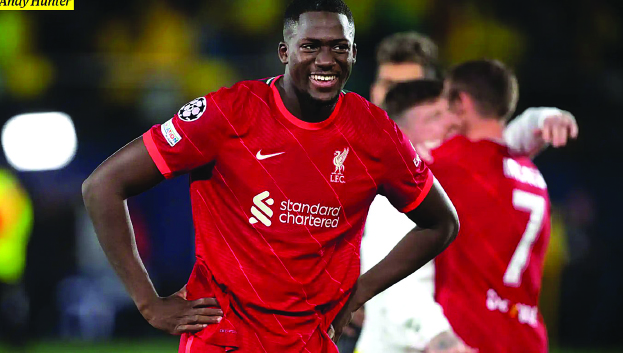
Sharuko on Saturday
SOMETIMES, it’s scary, just the mere thought of it — the impending reality, the grim possibility, the mere probability.
It’s never easy to leave home.
Ask Lionel Messi, the football god from Argentina who, during our lifetime, has redefined the meaning of greatness, when it comes to this game.
The man who, at the age of 35, is finally set to win the one piece of silverware, the World Cup, which he has been hunting all his career.
To enable him to take his place alongside Maradona.
The flawed genius who remains the greatest to ever kick the ball, on Argentina’s Mount Rushmore, where they preserve their football immortals.
To take his place alongside Mario Kempes.
The hero of their ’78 World Cup winning campaign, where he won both the Golden Ball and Golden Boot awards.
He also won the South American Footballer of the Year, and would have won the Ballon d’Or, in the same year, if non-European players were eligible for the award.
Argentina have won the World Cup just twice but it’s a tournament which defines their real football heroes.
This probably explains why Alfredo Stefano, who some even claim was better than both Messi and Maradona, doesn’t feature at the top of the names, when Argentine football heroes are mentioned.
Di Stefano’s name is written in gold letters at Real Madrid, where he was the architect of their dominance of the European Cup, in the early years.
They even honoured him with the Estadio Alfredo Di Stafeno, which is part of the club’s training facilities.
He scored six goals, in six games, for Argentina, where he was born in Buenos Aires.
There are many who will argue, for a good reason too, that Maradona didn’t need to win the World Cup to seal his immortality as the Greatest Of All-Time.
It’s a fair argument because it sounds a bit foolish that the greatness of a footballer can be defined by what happens in just a month of the World Cup show.
For instance, why should Messi’s status be defined by having a teammate like Gonzalo Higuain?
The man who, when put through on goal, in the final of the 2014 World Cup at the Maracana, in Brazil, he failed to beat German ‘keeper Manuel Neur.
In a tight game, which ended in a goalless draw in regulation time, this could have been the killer blow, and the decisive moment, of that grand contest.
Rewind 28 years earlier, at the Azteca Stadium in Mexico City, and you get another World Cup final showdown, between Argentina and Germany.
With the Germans having stormed back, from two goals down, to level the tie 2-2, Maradona sent Jorge Burruchaga clear on goal, with just five minutes of regulation time left.
Unlike Higuain, Burruchaga retained his cool and his calm finish powered Argentina to a 3-2 win and, in that instance, Maradona’s immortality was sealed before 114 600 fans.
There has been this nonsense that a genuine Manchester United fan, like me, is playing the football version of Judas Iscariot, the ultimate sell-out, who betrayed Jesus Christ for some 30 pieces of silver.
The argument is that appreciating the genius of Messi means disregarding the greatness of CR7 but it’s a gospel, which I don’t believe in.
As a disciple of football, I’m someone who feels privileged that we have been blessed to have these two stars, playing at such a high level, for such a long time.
Their sheer quality and amazing longevity, inspired by their rivalry for greatness, has pushed them to the very edges of the planet where the game’s gods have permanent residence.
On August 8, last year, Messi choked in his tears as he waved goodbye to his beloved Barcelona.
This was his home, since his arrival in 2000, at the age of just 13, to be bonded to these Catalans through a contract, which was signed on a napkin.
Now, after 23 years of this blog ‘Sharuko On Saturday,’ the time has come for me to also say goodbye and leave the stage.
Next weekend, the final edition of the blog my readers call, ‘SOS,’ will be published, for the very last time, in this grand, old, majestic newspaper.
TWENTY THREE, IT’S STILL A MAGICAL NUMBER
After two decades of one of the finest partnerships between a writer, and his readers, in the history of Zimbabwean journalism, we have come to that dreaded moment.
Somehow, it had to be that magical number – 23!
At 23 days, four months and 16 years, Messi made his first team debut for Barca, on November 16, 2003.
When Di Stefano switched allegiance, to play for Spain, the great Argentine scored 23 goals for his adopted nation.
On June 14, 1998, the curtain finally came down on the Chicago Bulls’ partnership with Michael Jordan when the superstar played his final game for this franchise.
Having flirted with the jersey number 45, on his return from retirement, Jordan was wearing his iconic number 23, when he called time on his Bulls career that night.
Ninety years ago, a new world record, for the most expensive transfer for a footballer, was set.
Bernabe Ferreyra, the Argentine star widely known as “El Mortero de Rufino,” completed a world record transfer from Tigre to River Plate.
The transfer fee was £23 000.
It marked the first time that a world-record breaking transfer fee had been set, outside the United Kingdom, in the history of football.
It would last 17 years, the longest period of time that the world transfer record, has remained intact.
At Manchester City, the Number 23 represents an ending, a tragic one, when Marc-Viviene Foe collapsed, and died on the pitch, at the 2004 Confederation Cup, in France.
The English champions called time on this number, retiring it from their locker, as a sign of respect for the late Cameroonian midfield powerhouse.
Even science connects the number 23 and the end of life.
They say the average lifespan of a human being is about 23 000 days, or 63 years.
When the life of Julius Caesar finally came to a tragic end, on March 15, BC, it came via an assassination in which he was stabbed 23 times.
What is beyond doubt is the way the great William Shakespeare had a huge influence in my passion for writing.
The number 23 also runs quite deep, in the life and death, of the great man, whose work continues to inspire the world, of both writers and readers.
He was born on April 23, 1616, and died on April 23, 1564. Shakespeare was 52, when he died, the same age as Bernabe Ferreyra, when the great Argentine also took his final breath.
So, against that background, it’s probably understandable that the number 23 represents a cycle, in the life and times, of footballers and writers.
And, as we draw closer to our final fling next week, when we will bring the curtain down on the 23-year-old adventure of this blog, I’m certain a number of you will understand that it’s the way it is.
After all, for the last six weeks, we have been preparing the platform for the beginning of the end of a journey which we have enjoyed, in almost a quarter-of-a-century.
I was 29, when this blog started.
At the end of that year, at exactly 11.37pm, on December 31, 1999, my son was born.
There are some who will probably claim that he was just 23 minutes away from becoming one of those special kids, who were the first to be born, in the new millennium.
Others will say he just missed being born on the first Saturday of the new millennium, by just 23 minutes.
The very same day of the week which, thanks to this blog, has become associated with the journalism work of his father.
I named him Kalusha.
They all call him King now, maybe, because it’s an easier name to pronounce, in a world obsessed with English.
The inspiration behind his name, just like everything about me, was naturally inspired by my football romance.
Why Kalusha?
Because, in the 80th minute of that ’94 AFCON qualifier between my Warriors and Chipolopolo, on July 25, ’93, something in me changed, in a very big way.
That’s the precise minute that Kalusha Bwalya scored the equaliser, which shattered our ’94 Nations Cup dreams, at the National Sports Stadium, in the final game of the qualifiers.
For years I hated him and silently carried the wound he inflicted on me, and this entire nation, on that afternoon at the giant stadium.
But, they say time is a healer and, as the years passed by, I began to appreciate the way this man called Kalusha, had somehow managed to drag his broken team, and shattered country, from the depths of despair to the beauty of success.
So, I felt, why not honour him for his amazing courage, indomitable spirit and remarkable leadership qualities, by naming my beautiful boy after him?
THE GOOD BOYS OF ’99
In a way, one can probably also say that ’99, when this blog started, was the year of football, in more ways than one.
It was the year Manchester United completed the Treble and, 23 years later, one still gets that feeling this was scripted in the stars and had little to do with the Red Devils’ sheer determination.
Yes, their comeback win in Turin, overturning a two-goal deficit to beat a Zinedine Zidane-inspired Juventus in the semi-finals, was a great advert for the power of determination.
But, when you are 0-1 down in the final, and all that is left is three minutes of time added on, the issue about never-die-spirit falls away.
You surrender your fate to the football gods and while, on a rare day, you can get a chance to score a goal, it’s very, very unlikely that you can score twice.
But, that’s what United did, in that final against Bayern Munich and, as they say, the rest is history. It was also the year Gianluigi Donnarumma, was born.
Now, when you realise that the giant ‘keeper, who was born in the same year we started this blog, has now grown to become one of the finest goal-minders in world football, you can understand that it has been quite a long journey.
For goodness sake, Donnarumma was the star of the show at Euro 2021 when his heroics, in the penalty shootout, ensure the trophy went to Rome, rather than stay at home.
It was also the same year Ibrahima Konate, Rafael Leao, Kai Havertz, Matthias de Ligt, Joao Felix and Matteo Guendouzi were also born.
In the lifespan of this blog, we have seen Konate bring born in Paris, starting off his career at Sochaux, in France, moving to RB Leipzig in Germany before completing his mega move to Liverpool.
The Reds valued him so highly that they were prepared to splash the cash, £36 million of their money, to bring the giant defender to Anfield.
But, this life of living in luxury hotels and flying first-class to matches, while earning thousands of pounds every week, was not the case when he was growing up in Paris.
The youngest of eight children, he was the son of poor Malian immigrants and was the youngest in a family of eight kids.
He was just 15 when he left home, promising himself he would never return to live in the poor neighbourhood where he grew up.
In the same year Konate was born, which is the year we started this blog, another boy was born in extreme poverty, some 10 565km away, across the Atlantic, in Uruguay.
His parents named him Darwin.
What Bibiano Nunez, and his wife Silvia Ribeiro, called home, in the Uruguayan town of Artigas, close to the Brazil border, was a small dwelling built on the flood plains of the Cuareim River.
Now, and again, the family would see their home, and whatever little they had as their belongings, in terms of furniture, being swept away by the floods.
But, God has a special way of blessing his people, and the arrival of their son, Darwin, would change everything for them.
This year, Darwin was signed for US$100m by Liverpool and will earn, a minimum of £140 000 a week, until around 2028.
“My father worked as a labourer on a building site for eight or nine hours every day and when his shoes were falling off his feet he would still try to find money to buy me football boots,” he told the Mirror.
“My mum was a housewife but she walked through the streets of the town collecting empty bottles to sell back to the stores.
“We had a house in Artigas but it was never in good condition. My first thought when I started playing football was to buy a house for my parents and set up a business for them.
“I have kept working hard to please my mum and dad because they did everything for me. It is like I am giving them something back for all the love they gave to me.”
He added:
“I grew up in a poor neighbourhood but I am proud of where I came from. It was there that I learned how important it is to share things.
“When I was with my friends, we would all bring something we could all share, like a snack or some candy.
“I used to go to school at 7am because they would give us something to eat. When I got out of school at 3pm, I would go straight to training because mum wasn’t at home. She was out collecting bottles.
“I often went to bed with an empty belly but the one person in the house who went to bed with the emptiest belly was my mum.
“A mother does everything for her children. My mum often went to sleep at night without eating anything because she wanted to feed the rest of us.”
And, what did his father teach him?
“My dad showed me that not everything in life is material.”
That’s what my father also taught me and, ironically, he passed away in 1999, the year Darwin Nunez was born, the year we also started this blog.
In life, everything comes to an end, at some point.
To God Be The Glory!
Peace to the GEPA Chief, the Big Fish, George Norton, Daily Service, Sitting Bull, Crazy Horse and all the Chakariboys still in the struggle.
Come on United!!!!!!!!!!!!!!!!!!!!!!!!!
Ronaldoooooooooooooooooooooo!
Text Feedback 0772545199
WhatsApp 0772545199
Email – [email protected]
You can also interact with me on Twitter (@Chakariboy), Facebook, Instagram (sharukor) and Skype (sharuko58) and GamePlan, the authoritative football magazine show on ZTV, where I interact with the legendary Charles “CNN” Mabika, is back every Wednesday night at 9.30pm



 Online Reporter