

 admin
admin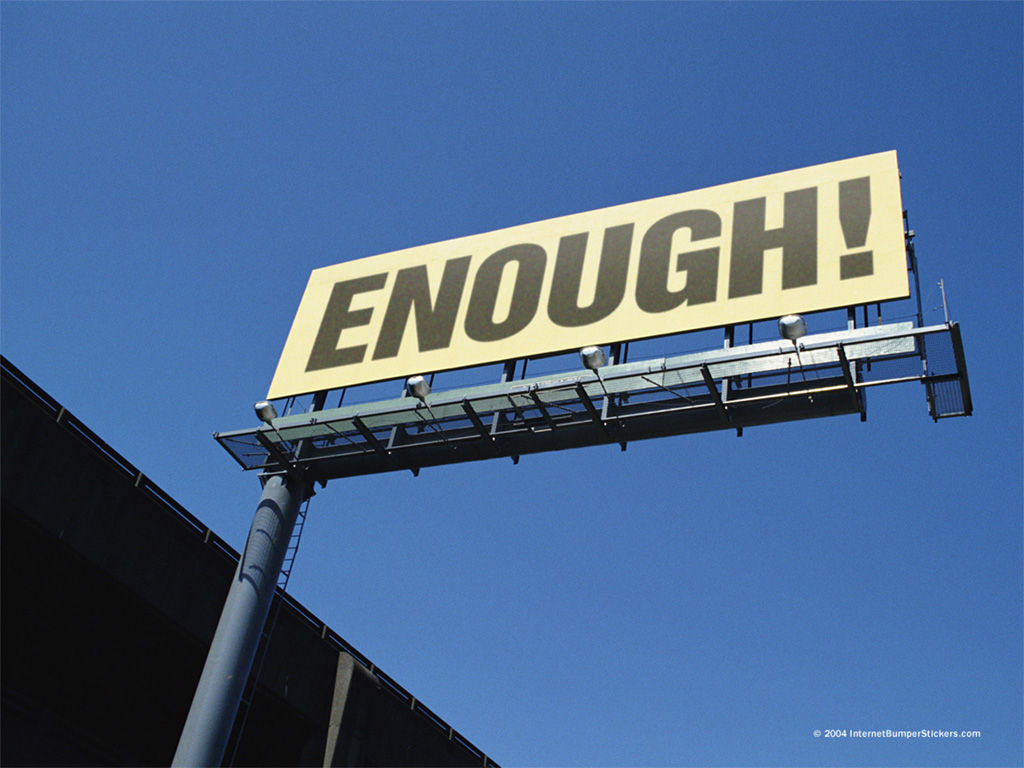
Nyaradzo Viki-Mavindidze : Motivation for Success
The caption in the picture was sent to me a few months ago and I occasionally mull over it when I engage in my goal setting and evaluation processes. It has made me question my dreams, goals and motivation. Why do I do what I do? What is my motivation? Is it enough to just meet my needs and if I reach out for more than my needs is it greed?As we live in a fallen corrupt world we always have to consciously evaluate our motives. Think about your own life. Where are you dissatisfied and feel the need to get more? My guess is that a potential source of discontent is a result of comparison.
Where are you today compared to where . . .
You want to be in the future (aspirations and goals)?
You were in the past (reminiscing about the “good ol’ days”)?
You thought you would be already (your expectations and those of your family, society, and others)?
Others are today (comparison; keeping up with the Joneses)?
When reality falls short of societal, religious and economic expectations, we often feel that something is wrong. Things shouldn’t be the way they are. This leaves us disappointed and upset.
Take money as an example. Studies show that satisfaction it’s not based on the “absolute” amount of money you possess. It is determined more so by how much money you have “relative” to what you want.
Your financial aspirations are driven by how much others have, how much you think you should have, how much others (e.g., a spouse) expect you to have, and so forth. Even if you are successful in hitting your financial goals, the more you make, the more you adapt, and therefore the more you want. Higher income levels provide only fleeting happiness, and is typically replaced by the desire for more.
Our expectations can be about anything:
How many twitter followers we have compared to others (or how many we think we should have).
How much publicity we get compared to others (or how much we wish we had or have received in the past).
How many accolades we receive compared to others.
How many prospects return our calls compared to our expectations or past successes.
The type of work we do compared to what we think we want to do, what others are doing, what society says we should do, or what our families tell us they expect
And the list goes on.
Nearly every area of life has beliefs and associated desires. The issue arises when we subconsciously say to ourselves, “It shouldn’t be this way.”
I should weigh less.
I should make more money.
I deserve to be treated better.
I wish I had a different job.
Why does everyone else have more than I do?
Of course a gap between the current state and our desired future state does not always cause dissatisfaction. Sometimes it can be a source of motivation. But even in those situations, our future aspirations can be a distraction that causes us to miss the beauty of the here and now.
According to a survey, 61 percent of the population finds themselves saying, “I will be happy when . . .” Their happiness awaits them in the future. As a result, they get so focused on where there are going that they speed past where they are.
But what if you could savour each moment? What if each moment was exactly as it should be?
To be clear, I am not suggesting lowering your expectations in any area of your life. It is calibrating to “reality” so that you can powerfully deal with those circumstances. Although society tells us we should work to “have what we want,” satisfaction in life is derived from “wanting what you have”.
Although it may not always be easy to experience life as “perfect” it is possible. It is obtained by having a deep appreciation for what is rather than what isn’t. And like anything, this takes practice.
According to another survey, 58 percent of the respondents said that they are “dissatisfied with their lives.” This is a lot of people.
Are you one of them? 76 percent believed that despite their success, they feel that something is missing from their lives. Maybe the issue is not one of success. Maybe it is about the perception of success.
“We all spend our lives kicking the crap out of ourselves for not being this way or that way, not having this thing or that thing, not being like this person or that person. For not living up to some standard we think applies across the board to all of us. We all spend our lives trying to follow the same path, live by the same rules. I think we believe that happiness lies in following the same list of rules. In being more like everyone else. That? Is wrong. There is no list of rules. There is one rule. The rule is: there are no rules. Happiness comes from living as you need to, as you want to. As your inner voice tells you to.
“Happiness comes from being who you actually are instead of who you think you are supposed to be. Being traditional is not traditional anymore. It’s funny that we still think of it that way. Normalise your lives, people. You don’t want a baby? Don’t have one. I don’t want to get married? I won’t. You want to live alone? Enjoy it. You want to love someone? Love someone.
“Don’t apologise. Don’t explain. Don’t ever feel less than. When you feel the need to apologise or explain who you are, it means the voice in your head is telling you the wrong story. Wipe the slate clean. And rewrite it. No fairy tales. Be your own narrator. And go for a happy ending. One foot in front of the other. You will make it.” — Shonda Rhymes: “Year of Yes: How to Dance It Out, Stand In the Sun and Be Your Own Person”.
Like Shonda says, it’s time to be the narrator of your own dreams and set your goals based on personal motivation and not the desire to measure up or greed!
What is Enough? When is it Enough?



 Online Reporter