Online Reporter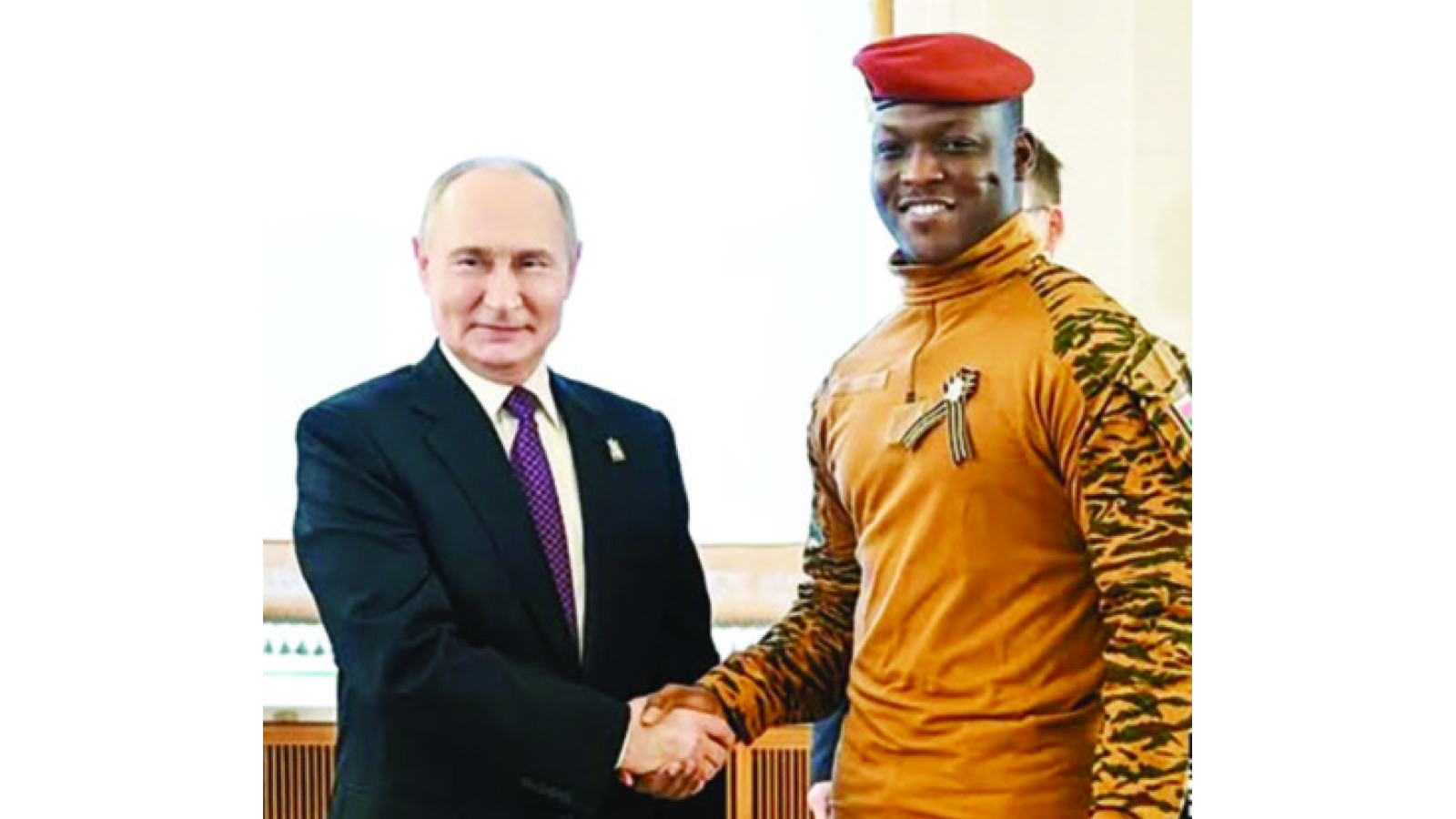
Vsevolod Sviridov
Russia steps up its support for the Sahel nations aiding them in securing sovereignty, particularly through advancements in e-governance.
At the end of July, a white-and-blue plane bearing the Russian flag touched down on the sweltering runway in Bamako, Mali.
Оne may have expected an official from the Ministry of Defence carrying military contracts, but out stepped Russia’s Energy Minister Sergey Tsivilev, bearing plans for investments and digital reforms. Tsivilev also visited the capitals of Niger and Burkina Faso at around the same time.
Not long ago, cooperation with these three countries was limited to the military sphere.
Today, Russia offers the Sahel countries economic cooperation, technological expertise, and tools for achieving genuine sovereignty. But why is Moscow interested?
From the colonial shadows to a new map of Africa
Paris used to maintain a military presence in the Sahel, controlled the extraction of resources, and influenced domestic politics. However, between 2020 and 2023, three military coups: in Mali, Burkina Faso, and Niger, dramatically shifted the landscape.
The new governments almost simultaneously expelled French troops and welcomed in Russian security advisors.
In 2023, they established the Alliance of Sahel States (AES) — a security bloc that emerged following their split from the Economic Community of West African States (ECOWAS).
For the first time in decades, these nations are crafting foreign policies unencumbered by the legacy of their former colonial metropole.
In transitioning from a France-centric approach to a multi-vector foreign policy, these countries are now building relationships with Russia, China, India, the UAE, and Iran. This shift has opened new avenues but requires time, infrastructure development, and the skilful navigation of diverse partner interests.
Despite losing its influence in the Sahel, France retains an economic and cultural foothold, adapting its approach to the region. Thus, the realignment of power in the Sahel will be gradual and uneven, heavily dependent on these nations’ ability to forge stable relations with new partners while managing complex internal political dynamics.
The economies of the “Sahel trio” share structural similarities: dominant sectors include mineral extraction (especially gold) and agriculture (cotton, peanuts, and livestock).
Their macroeconomic indicators are also closely aligned, with budgets ranging from US$4 billion to US$6 billion and each country facing external debts of about US$30 billion.
Geographical proximity further amplifies shared security challenges, as all three countries are grappling with threats posed by terrorist, separatist and criminal groups
Despite the similarities, however, there is significant cultural and historical diversity among these nations. Mali boasts a rich history of statehood, having been home to the powerful Ghana, Mali, and Songhai empires during pre-Islamic and pre-colonial times.
The first mentions of political entities in this region date back to the 6th-8th centuries. In Niger (as well as northern Nigeria), Hausa city-states developed into centres of science, crafts and trade. These historical foundations have contributed to a unique political culture and distinct perceptions of sovereignty.
Russia is changing the game
During the Soviet era, relationships with the Sahel countries evolved dynamically, particularly with Mali, which embraced socialist ideals in the 1960s-1980s.
The Soviet Union played a key role in developing infrastructure, training personnel, and enhancing gold mining and industry in the country.
Collaboration with Burkina Faso intensified in the 1980s under President Thomas Sankara, a leader known for his strong anti-colonial stance and alignment with the USSR. His political legacy continues to resonate with the current leadership.
Although ties with Niger were less strong, there were still joint projects including breakthrough initiatives in solar energy, which were noteworthy for the Soviet era.
After the collapse of the Soviet Union, relations stagnated until the early 2020s, when military coups reshaped the political landscape in these nations. Russia positioned itself not as an imposing external force but as a partner, offering these countries the tools and expertise needed to secure their own sovereignty and safety. This long-standing military cooperation laid the groundwork for an economic agenda.
The first significant step in this direction was a visit by the Russian delegation led by Deputy Prime Minister Alexander Novak in late 2024.
These first meetings focused on exploring opportunities and establishing preliminary contacts among officials. However, over the next six months, tangible progress was made, and Burkina Faso President Ibrahim Traoré and Mali’s President Assimi Goita visited Russia in May and June, respectively.
Russia also established intergovernmental commissions for cooperation with each country.
All three commissions were chaired by Energy Minister Sergey Tsivilev, indicating Moscow’s intention to move from mere declarations to concrete project implementation.
Tsivilev’s visit to the region in July 2025 marked the launch of comprehensive trade and economic collaboration. In each country, the Russian delegation was received by heads of state and held meetings with representatives from various ministries, agencies, and businesses.
One of the results of this cooperation has been a considerable increase in trade volumes. For example, Russia’s exports to Burkina Faso increased from US$236 million in 2021 to US$752 million in 2024.
Overall trade with the Sahel Alliance countries approaches US$1 billion – a modest figure compared to those nations’ trade with China but significant in the context of Russia-Africa commerce (for example, trade between Russia and South Africa also hovers at around US$1 billion).
Russia mainly exports petroleum products, grain, and fertilisers. Additionally, several bilateral investment projects are being explored, including the construction of power plants, processing facilities, and resource development.
These initiatives are designed for the long term, and align with the developmental goals of both the African nations and the Russian economy.
Currently, the only significant Russian investment project in the region is by Nordgold, which is operating in Burkina Faso. It has successfully developed the Bissa and Bouly gold deposits, investing over U$2 billion and producing about 10 tons of gold annually. This stands out as one of the few sustainable Russian investment initiatives in Africa.
Knowledge sharing and its importance for Africa
Another vital and relatively new aspect of Russia’s partnership with the Sahel countries is support in the field of public governance through what is known as the transfer of competencies — essentially, knowledge sharing.
This particularly refers to the exchange of expertise in digital public administration, known as e-governance knowledge sharing. The term encompasses transferring practical knowledge, skills, and methodologies from one party to another to help countries effectively build their own institutions and manage their affairs.
This isn’t just about training; it’s a comprehensive approach aimed at creating and reforming laws, regulations, and mechanisms that strengthen state structures, making them more robust, transparent, and independent.
True sovereignty entails not only political independence but also the ability to make autonomous decisions, manage resources, and ensure the security and development of the country. Without effective institutions and a solid regulatory framework, the nation remains vulnerable and reliant on external influences.
The transfer of competencies can empower Sahel nations to establish their own governance mechanisms, enhance legislation, build reliable institutions, and become more self-sufficient and resilient.
Russia does not aim to displace other players in the region. Companies from China, the UAE, Türkiye, Iran, India, Canada, Germany, and Italy remain active in the Sahel.
Instead, Russia seeks to create an alternative, inclusive model of cooperation.
This allows countries in the Sahel region to develop their own independent growth strategies, leveraging multilateral partnerships and attracting friendly non-regional players, along with strategic partners in West and North Africa. — RT.com
Vsevolod Sviridov, deputy director, expert at the Centre for African Studies, Higher School of Economics, Moscow