Chronicle Editor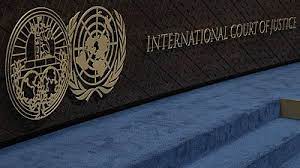
THE International Court of Justice yesterday issued a series of provisional measures that require Israel to comply with the 1948 Genocide Convention, allow more humanitarian aid into Gaza and act against those who issue genocidal statements.
While the court itself does not have the power to enforce the interim ruling, or indeed the final verdict it delivers in the case, its directives on Friday could influence the war in Gaza, said analysts. Pressure has been mounting on Israel and its American backers in recent weeks, as global calls for a ceasefire continue to pick up steam.
The ruling does not determine whether Israel is committing genocide, as South Africa has alleged. But Judge Joan Donahue, the current president of the ICJ, said while announcing the provisional measures that the court had concluded that the “catastrophic situation” in Gaza could get much worse by the time it delivers its final verdict, necessitating provisional measures.
“The ruling sends a strong message to Israel that the court views the situation as very serious and that Israel should do what it can to perform restraint in carrying out its military campaign,” said Michael Becker, an assistant professor of international human rights law at Trinity College in Dublin who also served as an associate legal officer at the International Court of Justice in The Hague from 2010 to 2014.
Can the war continue?
The ICJ in its provisional measures did not order Israel to stop its military campaign in Gaza. South Africa had requested such a cease-and-desist directive in its request for provisional measures, citing the prospect of genocide in Gaza.
So, Israel would not be in violation of the ICJ’s Friday directives in continuing with a war that it insists it will pursue until it has decimated Hamas, the Palestinian armed group that attacked southern Israel on October 7, killing nearly 1 200 people and abducting 240 others.
Yet, the government of Israeli Prime Minister Benjamin Netanyahu will likely be under greater scrutiny than ever over the actions of its soldiers in Gaza and the statements of its leaders and generals.
But even if Israel decides not to abide by the ICJ’s ruling, there will be pressure on its international backers.
“Israeli politicians have already said that they’re going to ignore the ICJ order,” Mark Lattimer, the executive director of Ceasefire Centre for Civilian Rights, told Al Jazeera. “It is much harder for, particularly, the US and European states including the UK, to ignore the order because they have a much stronger record of holding or supporting the International Court of Justice.”
Legal experts expect Israel’s allies in the West, including the US, to respect the ICJ’s ruling. To fail to do so would have serious repercussions. — Abridged version of Al Jazeera’s take on ICJ ruling


 Online Reporter