Online Reporter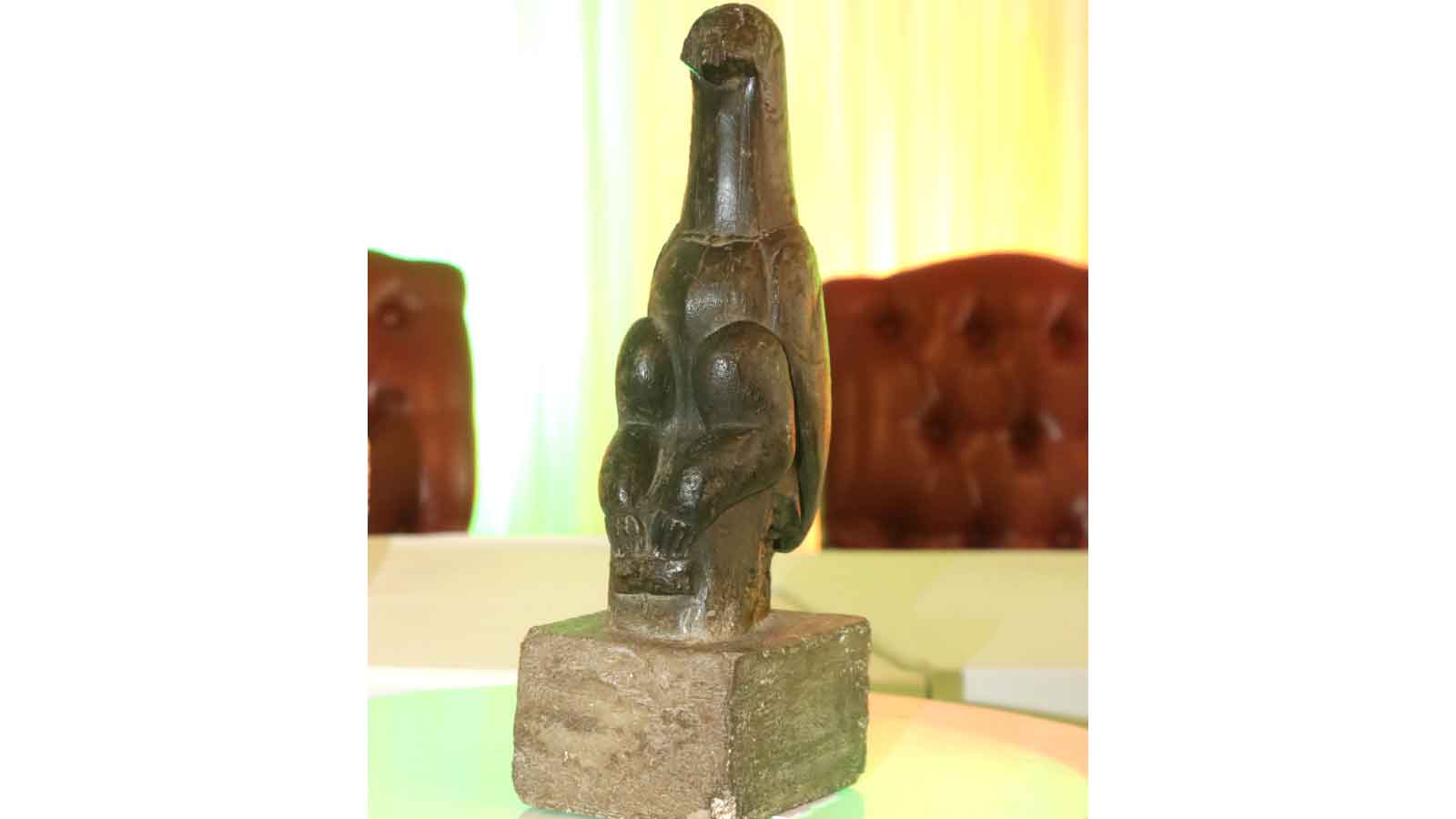
Sifelani Tsiko
Fact Check Editor
A bold decision by South Africa to return looted human remains and the last Zimbabwe Bird forcibly taken centuries ago during the colonial era, to Zimbabwe highlights the importance of material culture in shaping the understanding of the country’s cultural heritage.
There is no doubt that the crimes of European colonialism are undeniable and make up part of our history. European museums still hold a huge repository of cultural heritage from several African countries. Calls for the repatriation of the cultural artefacts are growing louder and in the coming decades, we must see the permanent restitution of African heritage to Africa.
The return of ancestral human remains and the priceless Zimbabwean Bird recently is a significant milestone which will make sure that African material heritage will no longer be the prisoner of the plundering European museums. In many ways, the repatriation by South Africa of the heritage, will help to restore our cultural, intellectual, religious and spiritual property taken from our ancestors without what heritage experts say was their “free, prior and informed consent or in violation of their laws, traditions and customs.”
More importantly, the African material heritage is a critical pillar of not only national, but African heritage, essential for preserving the memory, identity and culture of its own people.
In this report we capture the voices of politicians, archivists and heritage experts after the homecoming of human remains and cultural artefacts which will certainly help Zimbabwe to reclaim its historical narrative and reshape our understanding of colonial history. Africa must raise the stakes and reclaim its artefacts still being held by foreign institutions to preserve its identity and heritage.
President Mnangagwa has over the years also added his voice to the growing calls to repatriate Africa’s cultural artefacts held in Western museums and private collections. Here is what he said at the opening of the 28th Eastern and Southern Africa Regional Branch of the International Council on Archives (ESARBICA) General Conference in June 2025.
“The claim that we are truly an independent and sovereign continent, as well as masters of our own destiny, will be truly actualised when we close the information gap within our historiography. Africa has a duty to tell its story, recount our history, and preserve our own culture, ourselves.
“It should never be lost to us that culture, in its broad sense, is a critically important pillar of national pride and identity. Properly leveraged, it provides the most reliable and sustainable building block for social and economic development,” he said. “This conference must heighten our legitimate demand for the Western world to return the artefacts and archives to us, their legitimate owners.”
On the return of the last Zimbabwe Bird, he said: “Our forebears did not merely carve these birds as decorations. They are the physical embodiments of the various spiritual beliefs within our communities. The Zimbabwe Bird is a central symbol that adorns our flag, coat of arms and ZiG currency. To have all eight bird artefacts reunited is a political victory and cultural homecoming. It is a powerful recognition that our heritage belongs here, at the Great Zimbabwe, Dzimba-dzemabwe, where it can inspire future generations and serve as a cornerstone of our national identity.”
South African Minister of Sport, Arts and Culture Gayton McKenzie:
“Today, history has been made. South Africa has wrongfully kept the Zimbabwean Soapstone Bird for 137 years. We are choosing to say something to every institution and every government still holding what should not be retained: the era of colonial collection is over. The time for return has come.”
Deputy Chief Secretary – Presidential Communications in the Office of the President and Cabinet Mr George Charamba:
“Today marks the completion of a cultural and spiritual journey nearly a century in the making. We have finally restored a vital piece of our national soul. The return of the Sacred Bird of Great Zimbabwe marks a moment of profound restoration. After 137 years, it comes home alongside eight Zimbabwean ancestors, restoring dignity to history and meaning to memory. We extend our sincere gratitude to the governments of Zimbabwe and South Africa, our cultural institutions, traditional leaders, and all who worked tirelessly to make this moment possible. As Zimbabwe approaches Independence Day on 18 April, this return carries even greater significance — a reminder that true independence includes the restoration of heritage, identity, and dignity. This is not a gift. It is justice. Africa restores what is hers.”
Said Professor Munyaradzi Manyanga, the Bantu Mosaics Research Associate and Executive Dean of the School of Heritage and Education at Great Zimbabwe University:
“There is more to the return of the bird, it is a profound act of restorative justice. The bird is part of our national emblem – it adorns our flag, our coat of arms and our currency. For years, its absence at the very site where it was carved stood as a silent testament to colonial plunder. Its return to Zimbabwe stands as a powerful symbol of resilience and the successful fight for decolonisation and cultural restitution.”
Said Prof Njabulo Chipangura – Anthropologist and Curator of Living Cultures at Manchester Museum, University of Manchester:
“This was more than just a “return” for me as a scholar of heritage practices and repatriations, it was an emotional home sending ceremony of my own heritage.”
Said Prof Plan Shenjere-Nyabezi – University of Zimbabwe Professor of Archaeology and Heritage Studies:
“To me, the return of the last Zimbabwe Bird is more than a simple repatriation of an artefact. It is a landmark event in our history! With all the other birds already returned, I would say the arrival of this last sacred piece, (together with the human remains), signifies a spiritual homecoming! Its return completes the circle, allowing the full power of their symbolic representation to be realised.”