peter
peter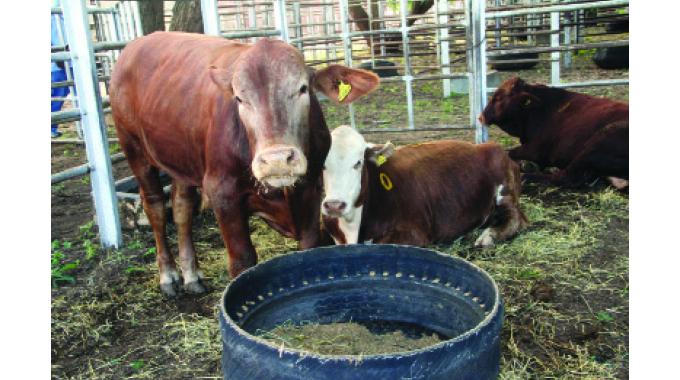
OFTEN, I get questions from people who want to start on livestock production, especially cattle rearing.
While the questions cover a very broad spectrum of issues such as the availability of land for that kind of venture, marketing issues and breeds to choose, the most frequently asked question is about the number of animals at which livestock begin to make reasonable income and then lastly the choice between buying heifers or cows.
A heifer is a female animal that has not produced an offspring yet while a cow is an animal that has at least calved down. In trying to answer these questions let me begin by pointing out straight away that cattle production is not a business for the faint-hearted. It is a hard-hat zone, where you need to be ready for a heavy object falling on your head anytime, metaphorically speaking.
There are a lot of challenges that could set you backwards or even clean you out of your investment and leave you poorer than you were before you tried venturing into cattle production. These challenges will vary from one area to another but will include things like stock theft, predation, poisoning from noxious plants like umkhawuzane, notifiable diseases like foot and mouth which can get your area quarantined, high mortality tick-borne diseases like Theileriosis which wipes out herds and so on.

Other than these production challenges that come with the territory, there is the issue of the waiting period before you start reaping rewards from your investment. Cattle production is a long-term project and depending on your level of investment, you will begin to see direction and feel that you are in the right pathway, somewhere after five years of ploughing in your investment.
It is simply not a quick returns type of business hence you will need all the patience of the world to do the right thing and reap your rewards later. This means you have to have a certain source of income to support you and the business while you wait to begin milking your investment. You will not throw in ten thousand dollars today and expect to begin selling and creaming out profit next year!
In simple terms, if you are in a hurry stay away from investing in cattle, you will be frustrated. Regarding the numbers which make business sense, my response has always been that there are no scientifically tested minimum threshold numbers but my experience is that you will begin to be comfortable when you have at least fifty breeding cows in your herd.
This means with proper management you can be producing at least 40 calves every year and that makes for a good number businesswise. Anything in the upwards of 50 breeding cows in your herd should make out for a good business case. In so far as starting with heifers or cows, I would say buy heifers if you do not want to be dealing with a lot of challenges at your infant stages. As a rule of thumb, no livestock farmer will sell his/her breeding cow unless it has some issues. On very few cases you will get someone genuinely selling because that is the only animal they can sell. They do not have big enough steers to sell, all the other cows are in calf, hence they are selling this one. It is a rare circumstance.
The cow you bought, probably has a dead udder which does not produce milk, or it has clogged teats, somehow all its calves die before weaning, it is very temperamental, tends to stray from the other herd hence you are always looking for it, it is prone to uterine prolapse, requires assisted calving most of the time and so on. These are issues you do not want to saddle yourself with as a beginner in the industry because you are still learning yourself.
Most importantly buying a cow which is into production might seem attractive because you know by the end of the year you will get your calf, but you have no way of knowing how many lactations it has gone through.
It could have already calved seven times and the seller will lie and say it only calved twice. So, you are buying something that is approaching its end of productive life cycle. Put crudely you are buying a scrapyard destined product and hoping to start a serious business with it, simply because you can not handle the waiting period for the right choice.
Livestock farmers will tell you that the vitality of calves produced tend to decrease as the cow gets old. So, if the cow is old, you will find that its calves tend to be sickly and generally of poor thrift. On the other hand, heifers, will need you to wait even up to three years before giving you a calf, depending at the age at which you bought them.
Therefore, it is important to be sure you are buying bulling heifers which are ready to go into production. That way you will wait perhaps for just a few months before you receive your first calf. Also, with heifers you will teach them most of the production manners that you want in your animals something you may not be able to change in older cows. Uyabonga umntaka MaKhumalo.
Mhlupheki Dube is a livestock specialist and farmer. He writes in own capacity. Feedback [email protected]



 Online Reporter