Debra Matabvu
For most Zimbabweans, the issues that matter most are straightforward: Can I find a job? Can my business grow? Can I afford basic goods and services? Can I get land, electricity, water and affordable healthcare?
Those everyday concerns are reflected in many of the resolutions adopted at the 23rd ZANU PF National People’s Conference in Chinhoyi recently.
The resolutions represent a broad set of directives that, if implemented by the Government, could affect everything from jobs, farming and investment to roads, healthcare, youth opportunities and social protection.
Delivered by the party’s Secretary for Legal Affairs, Cde Ziyambi Ziyambi, the resolutions cover almost every aspect of Zimbabwean life, with a strong emphasis on consolidating economic stability, increasing production, creating employment and improving public services.
But what do they actually mean for the ordinary Zimbabwean?
Here are 10 of the most significant takeaways:
- More support for farmers and food security
For farmers, particularly small-scale producers, the conference resolved that the Government should accelerate the processing and issuance of offer letters, permits and title deeds to qualifying resettled farmers.
It also called for tighter monitoring of Presidential Pfumvudza/Intwasa inputs, ensuring that they are available on time and distributed transparently.
The resolutions further direct the Government to complete critical dams and irrigation schemes and prioritise mechanisation for small-scale farmers.
In practical terms, the thrust is to give farmers greater security over the land they occupy while improving access to inputs, irrigation and equipment — all aimed at increasing agricultural production and strengthening food security.
- A push towards a more stable monetary system
The resolutions also address one of the issues that directly affect businesses and households: the monetary system.
The party directed the Government to support the road map towards transition to a mono-currency, while also calling for the expeditious clearance of debt arrears to unlock capital.
For ordinary citizens, monetary stability matters because it influences prices, savings, investment and business confidence.
The resolution does not, by itself, change the monetary system.
Rather, it signals the direction the party wants the Government to pursue as it works towards a more stable economic environment.
- More jobs through local industry and small businesses
The conference placed considerable emphasis on micro, small and medium enterprises (MSMEs), directing the Government to introduce robust skills development programmes aimed at accelerating their establishment and formalisation.
The resolutions also call for policies supporting local provincial industries and for qualifying local companies to be prioritised when tenders are awarded within provinces.
For young people, entrepreneurs and small businesses, this could mean more opportunities to participate in the formal economy if the measures are implemented effectively.
The emphasis on local contractors and enterprises also seeks to ensure that Government spending creates economic activity within communities rather than allowing opportunities to be concentrated among a small number of large companies.
- More value from Zimbabwe’s minerals, raw materials
The resolutions take a firm position on beneficiation, directing the Government to maintain the ban on the export of raw materials while accelerating mechanisms to add value locally.
The party also wants special economic zones established in every province to promote value addition and beneficiation.
For Zimbabweans, the significance is potentially huge.
Instead of exporting minerals and agricultural products in raw form and importing finished products, the policy seeks to encourage more processing inside Zimbabwe, creating jobs and generating additional economic activity.
The conference also resolved that the “use it or lose it” principle should be enforced on mining claims, while the processing of mining certificates should be expedited.
- Better roads, water and electricity
Infrastructure is another major area covered by the resolutions, with the Government directed to accelerate the completion of development projects, increase water harvesting and utilisation, and expedite the development of dam master plans.
The party also called for greater investment in renewable energy as part of rural electrification and industrialisation, while secondary roads should receive greater attention in construction, rehabilitation and maintenance.
For communities, this is perhaps one of the most tangible areas of the resolutions.
Better roads reduce the cost of moving people and goods, reliable water supports households and agriculture, while electricity is essential for businesses, schools, healthcare facilities and rural industrialisation.
- Provinces to benefit more directly from economic activity
The conference resolved that Zimbabwe should adopt a gross domestic product (GDP) accounting system that attributes economic output to the locality where production actually takes place, regardless of where a company is headquartered.
It also called for policies supporting local provincial industries, greater transparency and community participation in projects funded through devolution funds, as well as priority for qualifying local companies in provincial tenders.
The objective is to ensure that economic activity is reflected where it actually occurs.
For provinces and local communities, this could provide a clearer picture of their contribution to the national economy while strengthening the case for investment and development resources.
- More opportunities, support for young people
Youth unemployment and limited access to economic opportunities remain major concerns, and the resolutions seek to address these through several measures.
The party directed the Government to prioritise the absorption of suitably qualified Youth Service in Zimbabwe graduates into employment and to increase opportunities for youth employment.
It also resolved that the youth quota on land allocations should be implemented religiously, while affordable loans for young people should continue, including a review of Empower Bank loan conditions.
The resolutions further call for the expedited allocation of residential stands under the Munhumutapa Housing Scheme and the issuing of title deeds to eligible beneficiaries.
For young Zimbabweans, the package, therefore, combines employment, land, finance and housing.
- More accessible healthcare, social protection
The resolutions also contain measures aimed directly at vulnerable groups and the provision of basic services.
The Government has been directed to develop the manufacturing capacity of NatPharm to improve the availability of medicines, while social protection programmes for elderly people, persons with disabilities, orphans, child-headed households and other vulnerable groups should be strengthened.
The Women’s League resolutions additionally call for the enforcement of free maternal healthcare in public health institutions and increased provision of free comprehensive cervical, breast and prostate cancer screening at district hospitals.
If implemented, these measures could improve access to basic healthcare and provide greater protection for some of the country’s most vulnerable citizens.
- More investment — but greater obligations for investors
The resolutions seek to attract investment while simultaneously demanding greater accountability from investors.
The Government has been directed to ensure that investors fulfil their environmental, social governance and corporate social investment obligations in host communities, including support for roads, schools, clinics and other permanent infrastructure.
The party also wants stronger mechanisms for accounting for foreign investors’ commitments on employment, procurement, infrastructure development, community empowerment and environmental protection.
The message is, therefore, not simply “invest in Zimbabwe”, but “invest and deliver wider benefits to the communities where the investment takes place”.
- A major political change — and its wider implications
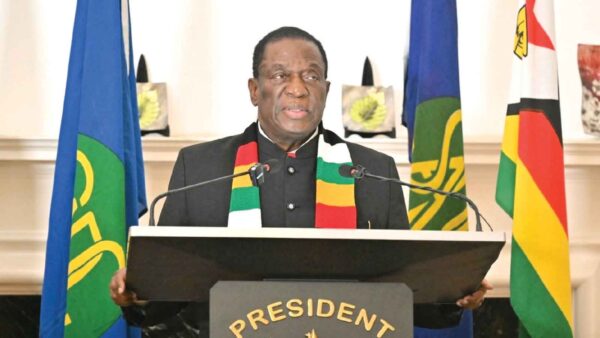
Perhaps the most politically significant resolution is the decision that President Mnangagwa should be the sole ZANU PF Presidential candidate at the party’s 8th National People’s Congress, which has been deferred to 2029.
The conference also resolved that the party constitution should be aligned with the national Constitution in respect of the terms of office for the party leadership and directed the Government to make consequential legislative amendments arising from Constitution of Zimbabwe Amendment (No. 3) Act, 2026.
This is fundamentally a political resolution, but its consequences extend beyond party structures because it sets out the political direction ZANU PF intends to pursue towards 2029. The conference also resolved that disciplinary measures be taken against ZANU PF legislators who absconded from Parliament and failed to vote in the Constitution of Zimbabwe Amendment (No. 3) Bill, 2026.
The bigger picture
Taken together, the resolutions present a broad economic and social agenda centred on production, investment, infrastructure, employment and social protection.
There is a clear emphasis on moving Zimbabwe further towards an economy driven by local production and value addition, while ensuring that investment and economic activity generate jobs and infrastructure within communities.
The resolutions also place considerable responsibility on the Government.
Their impact will ultimately depend not on their adoption at the conference, but on how quickly and effectively they are translated into policies, budgets, legislation and programmes.