Online Reporter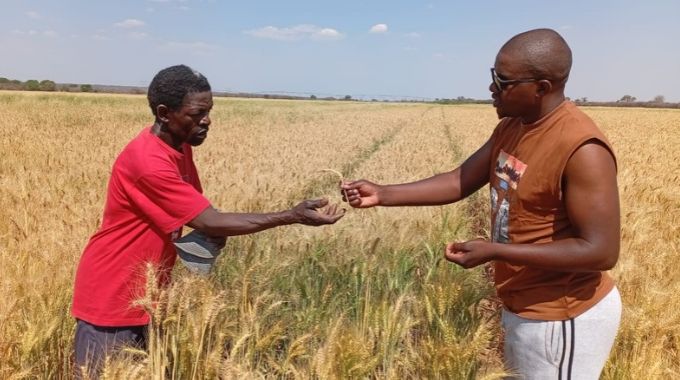
Raymond Jaravaza, Sunday News Reporter
FARMERS have started notifying the Agricultural and Rural Development Authority (Arda) of their harvesting schedules as Zimbabwe enters the critical phase of the winter wheat season, with the Government deploying 293 combine harvesters to move swiftly between farms as the crop reaches maturity.
The mobilisation comes as farmers race against rising temperatures and the threat of veld fires that could destroy mature wheat standing in fields or damage harvested grain, with Government confident that the country has sufficient machinery to harvest the crop within the required window.
The Ministry of Agriculture, Mechanisation and Water Resources Development has organised the 293 combine harvesters into wheat production clusters, allowing machinery to be moved to areas where the crop is ready instead of remaining idle at individual farms.
Permanent Secretary for Agriculture, Mechanisation and Water Resources Development Professor Obert Jiri said harvesting was expected to gather pace over the next three to four weeks as increasing temperatures accelerate the drying of the crop.
“Wheat harvesting has started in earnest. We are officially in the wheat harvesting season following irrigation and quelea bird control, and our farmers have begun harvesting,” said Prof Jiri.
He said most of the crop had reached physiological maturity and was now drying in preparation for combining.
“We expect harvesting to escalate in the next three to four weeks as temperatures soar. We should see the wheat drying very quickly and combining rapidly as well,” said Prof Jiri.
Prof Jiri said the country had adequate harvesting capacity and that the clustering system would enable authorities to prioritise farms according to crop maturity.
“We have organised these combine harvesters into our wheat clusters, so we know exactly where wheat is mature and ready for harvesting, and we deploy the combines to those areas,” he said.
“So far, it is all good. We have already harvested daily, while the others are ready for deployment as the harvesting season gathers momentum.”
The harvesting drive follows a strong winter wheat planting season in which farmers put more than 126 000 hectares under the crop, surpassing the national target of 125 000ha.
The Government is targeting production of 662 500 tonnes of wheat, reinforcing efforts to increase domestic production and reduce reliance on imports while strengthening national food security.
Arda alone planted 65 000ha, with an expected output of about 325 000 tonnes, making the parastatal one of the major contributors to the national wheat harvest.
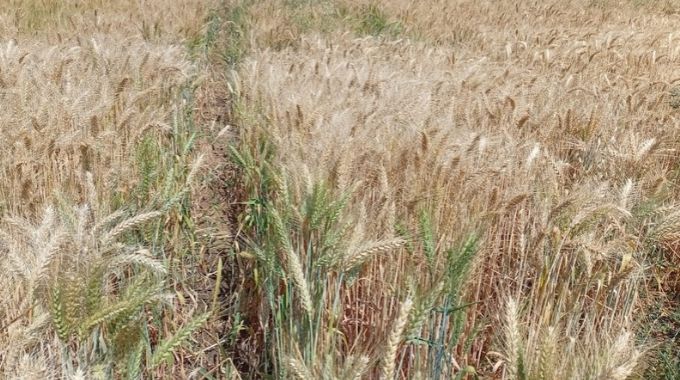
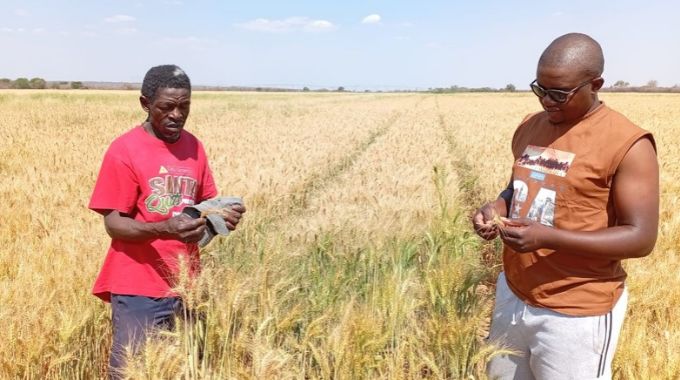
At Marsland Farm in Umguza, Matabeleland North, harvesting preparations are already under way, with the crop expected to be ready for combining in about three weeks.
Farm manager Mr Perculiar Moyo said the farm had planted 45ha of winter wheat and was expecting yields of between 5,5 and six tonnes per hectare.
“We started gradually reducing irrigation of the wheat and will completely stop in a few days as harvesting should start around mid-October. On Monday (tomorrow) we will notify Arda that we need a combine harvester around 10 October so that they include Marsland Farm in their planning for the distribution of the equipment,” said Mr Moyo.
“Our fuel for the combine harvester is ready. We look forward to a good harvest of about six tonnes per hectare.”
Mr Moyo attributed the crop’s condition partly to reliable electricity supplies during the winter season, which enabled uninterrupted irrigation.
“We did not experience any power outages from the day we planted, so irrigating the crop was seamless. We would like to thank the Government for ensuring that electricity supply was stable during the whole winter season,” he said.
The Government had earlier assured wheat farmers that 155 megawatts of electricity would be available to support the winter wheat programme, particularly irrigation, which is critical to production during the dry winter months.
For the first time in nearly two decades, Zimbabwe went through the winter season without the prolonged power shortages that had previously disrupted irrigation and other productive activities.
At Bubi Lupane Irrigation Scheme in Lupane, farmers are also preparing for harvesting, with the scheme’s chairperson, Mrs Sinikiwe Moyo, saying they had been assured of a combine harvester within the next two weeks.
The scheme planted 116ha of winter wheat and is targeting an average yield of four tonnes per hectare.
“We planted 116 hectares of winter wheat and are optimistic about harvesting four tonnes per hectare. After a visit by Vice-President Kembo Mohadi two months ago, who promised us that Zesa
(Zimbabwe Electricity Supply Authority) will not disconnect power due to a debt we owe them, electricity supply has not been cut off,” she said.
“We plan to pay off the Zesa and Zinwa (Zimbabwe National Water Authority) debts when we harvest our wheat. The crop is in a good condition and we are optimistic of harvesting a good yield.”
With temperatures rising, farmers are also being urged to remain vigilant against veld fires, which pose a major threat to mature crops and harvested grain during the dry season.
The Government’s push to increase wheat production dovetails with the Second Republic’s thrust of strengthening domestic food security and building a more resilient agricultural sector through irrigation, mechanisation and improved access to inputs and energy.
The current season’s performance will also provide an important measure of progress towards increasing local wheat production and ensuring adequate supplies for the milling and baking industries.



 Blessing Chizhande