Online Reporter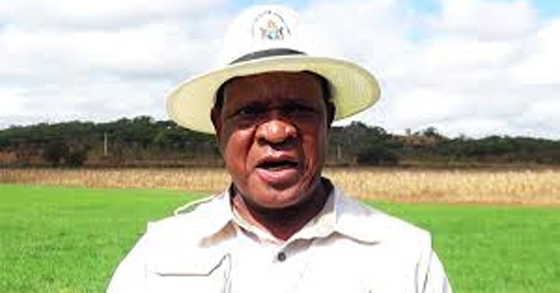
Lovemore Kadzura
Post Reporter
THE Minister of Lands, Agriculture, Fisheries, Water, and Rural Development, Dr Anxious Masuka has disclosed that the winter wheat season is progressing well nationwide – with the country on track to attain the targeted 600 000 metric tonnes.
Minister Masuka, who was on tour of wheat farms in the province, said the necessary enablers are in place for a successful wheat season.
During his visit to Zimati Farm on the outskirts of Rusape on Saturday, Minister Masuka expressed confidence that farmers will meet the national target of 120 000 hectares set by President Emmerson Mnangagwa, with an average yield of 5.2 tonnes per hectare.
This will ensure the country maintains its wheat self-sufficiency status achieved last season.
The Minister noted that essential resources, including 150 megawatts of ring-fenced electricity, irrigation facilities, tractors, vehicles for extension officers, and chemicals to control quellea birds, are now all in place.
“We are currently embarked on a nationwide tour to assess the wheat planting progress in various provinces. Here in Manicaland, the target was 13 000 hectares, and I am pleased to report that 11 900 hectares have already been planted. Nationally, our target stands at 120 000 hectares, and as of last Thursday, we had achieved 115 400 hectares, which translates to 96 percent of our target. With the tallying still underway, I am confident that we will meet the target set by His Excellency, President Dr Emmerson Mnangagwa.
“Our aim is to achieve an average yield of 5.2 tonnes per hectare. The wheat planted on May 18, 2025 is still in the hardening stage, and 50 percent of the crop in Manicaland province has reached this stage, which augurs well for achieving our yield target. This is an improvement on last year’s yield of 4.7 tonnes per hectare.
“We are delighted that the essential enablers are in place. Electricity supply has stabilised, and we have secured 150 megawatts of ring-fenced power for winter wheat production. Mechanisation is progressing, with tractors being delivered, and irrigation schemes facilitated by the Government are underway. Farmers are well-prepared, and we have also mobilised sufficient chemicals to control quellea birds. 0Furthermore, the President has provided 60 vehicles to the 60 districts to enhance preparedness for this winter wheat season. We are optimistic that our target of 600 000 metric tonnes will be met,” said Minister Masuka.
Zimati Farm, leased by Mutapa Investments Fund chief executive officer and former Reserve Bank Governor, Dr John Mangudya boasts a thriving 30-hectare wheat crop.
The farm manager Mr Miller Chiposa, expressed optimism about a bumper harvest, anticipating yields of between 5.5 and nine tonnes per hectare.
“We planted our wheat on May 18, 2025, which is the ideal time for wheat planting. We had a smooth process from land preparation to planting. We applied basal fertilisers, specifically 350 kilogrammes of Compound D per hectare. We planted the K2 Marshal variety.
“We utilise centre pivots for irrigation. Currently, we are at the wheat hardening stage, where we withhold water from the crop for a period to encourage more shoots and deeper root growth. Hardening commences three days after germination. We expect to harvest between 5.5 and 9 tonnes per hectare from this crop. Our farm has a history of producing premium wheat, which yields high-quality bread. Everything is progressing according to plan, with sufficient water, stable electricity supply, and ample labour,” said Mr Chiposa.
Wheat production relies heavily on constant irrigation, making a reliable electricity supply crucial for powering irrigation systems.
The availability of electricity plays a key role in facilitating uninterrupted irrigation, thereby ensuring optimal crop growth and yields.
As such, a stable electricity supply is essential for successful wheat farming, and its availability can significantly impact the overall productivity of wheat crops.