Andrew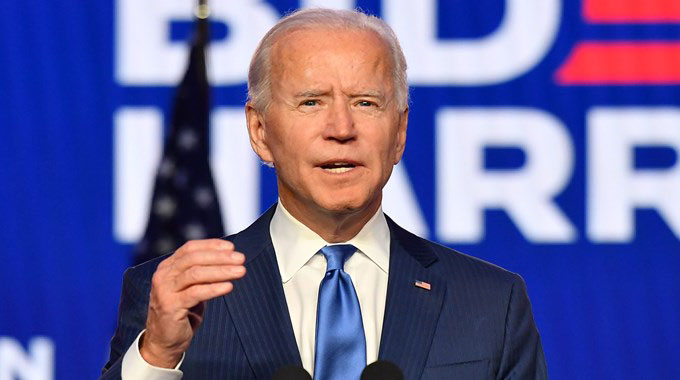
Nobleman Runyanga
Guest Columnist
LAST month, US President Joe Biden announced that this year’s edition of the US-Africa Summit would be held between December 13 and December 15.
He is reported to have told the media that the planned meeting, which is set for Washington DC, would discuss issues such as food security and climate change.
It comes at a time the US is grappling with the Russia-Ukraine conflict, where it is siding with the latter.
It is also grappling with China’s increased influence in global politics and economics.
It is, therefore, against this background that Biden’s statement that the “summit will demonstrate the United States’ enduring commitment to Africa, and will underscore the importance of US-Africa relations and increased co-operation on shared global priorities” rings hollow.
Right from the outset, it is very clear the event is driven more by Washington’s objective to counter Beijing and Moscow’s influence on the African continent than to assist Africans.
In a July 2022 article on the meeting, Al Jazeera quoted an unnamed US official emphasising that they were not “asking our African partners to choose (between the US and China). We believe the United States offers a better model, but we are not asking our African partners to choose”.
Put differently, the US is going to use the meeting to lure African countries into partnerships by dangling financial packages.
The run-up to the summit has been characterised by Washington’s attempts to craft a new strategy on Africa that focusses on shifting from past engagements that were characterised by military interventions in the Sahel region to diplomacy and development.
US chair of the senate foreign relations committee Senator Bob Menendez recently admitted to tbsnews.net that “we have very little positive to show” for the billions spent in the region.
The new strategy is also driven by the need to move away from the Donald Trump era of go-to-hell diplomacy.
Cameron Hudson, an expert on US-Africa relations at the Centre for Strategic and International Studies, put it succinctly when he told tbsnews.net “they are trying to get away from this Trumpian framing of Africa as this chessboard where we are simply checking the ambitions of Russia and China”.
Without vouching for Donald Trump, the immediate past president of the US only came into office in January 2017 and left in January this year.
To blame the unwholesome US-Africa relations wholly on Trump is the height of dishonesty.
Sadly, the US is doing so for convenience sake.
This further buttresses the reality that the US looks after nobody’s interests except its own.
America’s troubled relations with Africa date back to the slave trade. It has always been an exploitative relationship. Anyone who believes otherwise does so to their own detriment and at their own peril.
The prevailing US-Africa relations are a direct result of America’s conscious and wilful choices.
Nothing emphasises this point more than the US’ regard for Africa as a geopolitical pawn in its political war against the East.
Its dim view of the 35 countries that abstained from voting against Russia when the United Nations General Assembly put the Russia-Ukraine conflict to a vote in March this year is instructive. Washington is currently in the process of enacting a punitive law for African countries which support Russia.
The legislation — called Countering Malign Russian Activities in Africa Act — was passed in the House of Representatives on April 27 by an overwhelming majority of 419 to nine.
It is set to be passed by the Senate and become law. The proposed law defines malign activities as those which “undermine United States objectives and interests”.
Under the proposed legislation, the US government would ensure compliance or punish non-compliance through foreign aid programmes, among other diplomatic instruments.
The new statute enjoins the US Secretary of State “to develop and submit to Congress a strategy and implementation plan outlining United States efforts to counter the malign influence and activities of the Russian Federation and its proxies in Africa”.
The US’ acts as if China and Russia’s influence in Africa was built overnight.
Actually, the US is being affected by its own foreign policy decisions.
Talk of one being hoist by own petard.
For example, while China and Russia were busy assisting Southern African countries to liberate themselves from the clutches of colonial powers such as the United Kingdom (UK), France and Portugal, the US was plotting to assassinate foremost sons of Africa like Patrice Lumumba and Kwame Nkrumah.
While in politics there are no permanent friends, it is only natural that most African countries will take sides with China and Russia.
This is because the two countries have consistently stood by many African countries.
The US takes Africans for fools.
Who would forget that when Portugal granted Angola independence in 1975, the US teamed up with the South African apartheid regime to sponsor the late Jonas Savimbi’s UNITA (National Union for the Total Independence of Angola) rebel group to destabilise the country? This was calculated to ensure the independence of Angola would not inspire and pressure SA’s apartheid regime to let go of South Africa. Which individual in his right mind would support a Western power which has been a source of his unhappiness for centuries?
When the US unfairly and illegally punished innocent Zimbabweans by imposing sanctions on them their bold move to recover land from about 4 000 colonial beneficiaries in 2001, progressive global powers such as China and Russia continued to assist Zimbabwe the same way they did back in the 1960s and 70s when the country was fighting for independence.
So, there is no way Zimbabwe will abandon its all-weather friends to please anyone.
The Secretary of State, Anthony Blinken, has recently been on a tour of the DRC, Rwanda and South Africa. In South Africa, he tried to push the government to take sides with NATO in the Russia-Ukraine conflict, but he was in for a rude diplomatic shock. The encounter betrayed the fact that the US stupidly thinks that it is still dealing with apartheid South Africa. There is no way South Africa will take a position which is against a fellow BRICS (Brazil, Russia, India, China and South Africa) member.
SA’s Foreign Minister Naledi Pandor showed Blinken the ground had shifted since the days of the US-SA alliance in the 1970s and 1980s.
She refused to be bullied and asserted South Africa’s right to make sovereign decisions without being pushed by Western powers.
She told Blinken she “certainly will not be bullied that way, nor will I expect any other African country worth its salt to be treated that way”.
As the 50 or so invited African leaders wait to gather in Washington DC in December, they should borrow a leaf from Pandor in terms of dealing with a patronising and bullying West.
The fact that the US crafted an Africa strategy to endear itself to the continent and is simultaneously enacting legislation to punish (mostly African) countries which support Russia demonstrates that nothing has changed about its attitude towards Africa.
Countries such as Zimbabwe, which have been under illegal and unfair sanctions for over 20 years, know that there is nothing new in the so-called strategy. As the US awaits the 2022 US-Africa Summit delegates, it should know that progressive African countries will not be lured into fighting China and Russia to please strangers.
Insincere and politically foxy overtures from a spent global power will not cut it.


 Online Reporter