Bruce Ndlovu [email protected]
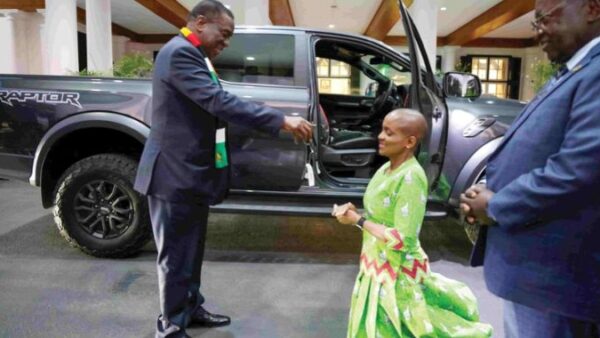
WHEN Alick Macheso visited the mourning family of businessman Wicknell Chivayo last month, he unexpectedly became the centre of attention.
Macheso, a man accustomed to stealing the show in far more festive circumstances, is no stranger to nationwide attention. On this occasion, however, the spotlight was trained on something other than his music.
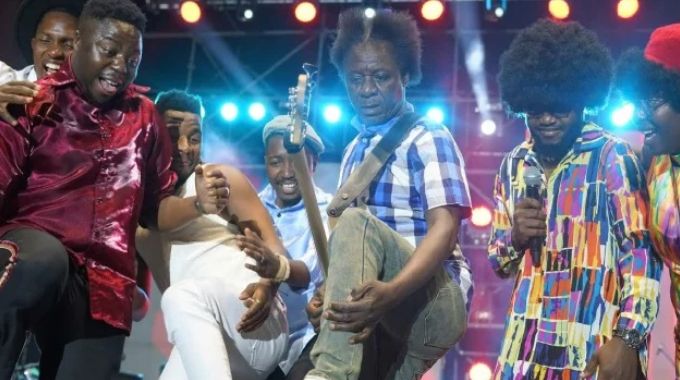
For once in his storied career, it was not his bass guitar, an instrument that has become almost an extension of his arm, that got people talking. Instead, it was his hairstyle: a neatly pushed-back perm that seemed to borrow generously from the fashion traditions of the 1970s and 80s.
Others were fascinated by his speech and mannerisms, which, to those accustomed to seeing him only behind a microphone, offered a different glimpse of the Sungura maestro. However, those who have followed Macheso’s career closely were hardly surprised. After all, this is a man who can make a guitar sound like a helicopter on stage. A little eccentricity is hardly out of character.
Neither was this the first time that Macheso’s hairstyle had unexpectedly captured the country’s imagination. A few months earlier, Extra Basso had made headlines for sporting stylish cornrows, a hairstyle more commonly associated with some of hip-hop and R&B’s trendiest stars.
Macheso himself has dismissed the idea that his changing hairstyles are anything unusual, explaining that experimentation has always been part of his artistic journey.
In an interview with our sister paper, the Sunday Mail, he said: “It is not the first time that I am trying something new with my hair. I have always done this from the time I embarked on my music career over 40 years ago.
“I was born an artiste and what I do is pure art. I live art every day of my life.”
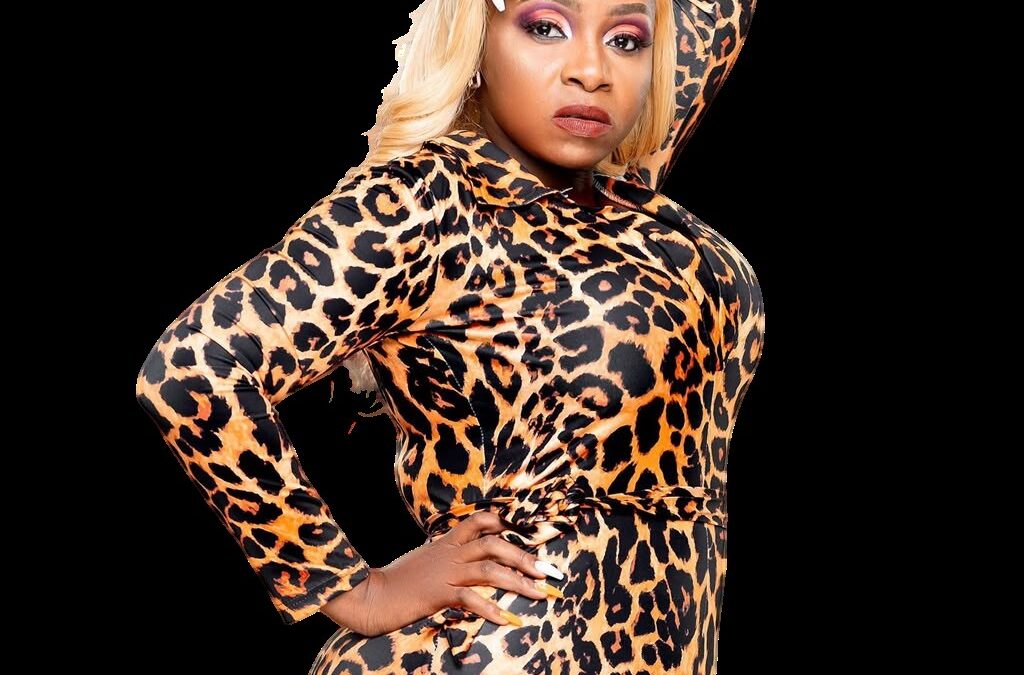
This week, legendary musician and politician Sandra Ndebele found herself at the centre of a similar fashion debate after sharing images from the video of her latest track, Abalalanga.
More than two decades into the music industry, Ndebele has developed a thick skin, having weathered years of criticism from those who have rarely had anything kind to say about her stage attire.
True to form, her latest look did not escape scrutiny. As with Macheso, much of the criticism centred on the familiar argument that she should dress her age. Some of her harshest critics went further, suggesting that her outfit revealed too much and was therefore unbecoming of someone who holds public office as a councillor.
For Ndebele, however, music and public service are not necessarily conflicting identities. In an earlier exclusive interview, she spoke about balancing the two demanding responsibilities, arguing that both offer opportunities to connect with people.
“My role as a councillor is to serve people, while my role as a musician is to entertain them, but both are ultimately about connecting with people.
“I use my brand, Sandra Ndebele, as a platform to serve my community. Through these connections, we’ve been able to attract support, including initiatives like drilling boreholes in the areas I represent,” she said.
Her explanation offers another perspective on the scrutiny surrounding her appearance. Beyond the stage costumes and provocative performances, Ndebele sees her musical identity as a platform that can also advance her work in the community.
The scrutiny directed at Macheso and Ndebele, a month apart and in entirely different circumstances, perhaps points to a wider struggle to accept that artists do not necessarily have to abandon their fashion identities as they grow older.
Both musicians have occupied the upper echelons of Zimbabwe’s entertainment industry for more than two decades. In that time, their audiences have grown up alongside them. Fans who once followed them as teenagers have since found jobs, started families and, in some cases, become grandparents.
Their lives have changed. They have matured and taken on new responsibilities. Perhaps, consciously or otherwise, they now expect the musicians whose careers they have followed for years to undergo a similar transformation. They want Macheso and Ndebele to grow up in much the same way they believe they have.
But the relationship between age and fashion has never been that straightforward, particularly for entertainers whose public identities are built partly on how they present themselves.
This is hardly a new phenomenon. In 2018, the late Oliver Mtukudzi found himself in the crosshairs of social media commentators after appearing to be, in their words, dressing too young.
Tuku had stepped out in a tight-fitting navy-blue outfit, complemented by a sling bag dangling from his hip and ankle-high shoes. For a man who had embraced fashion throughout his life, there was little reason to think he had committed any sartorial offence.
After all, this was the same musician who had dressed like a hippie in the 1970s before gradually developing the distinctive African-inspired look that became synonymous with his later years. His appreciation for fashion extended to handmade shoes and custom-designed outfits, threads often sourced from some of Harare’s finest designers.
Yet, in his 60s, he was suddenly being told that the world no longer had an appetite for his youthful spirit of experimentation.
The policing of how entertainers should look as they grow older is hardly a uniquely Zimbabwean pastime. Beyond our borders, some of the world’s biggest music stars have faced remarkably similar demands to tone down their appearance, abandon youthful fashion choices and accept what critics consider the more respectable trappings of ageing.
Few artists embody the refusal to play by such rules quite like Madonna, the Queen of Pop. After more than four decades of reinvention, provocation and deliberately unsettling convention, she has become an enduring target for those who believe that a certain birthday should come with a corresponding change in wardrobe and behaviour.
Recently, American conservative commentator Megyn Kelly took aim at Madonna following her appearance at the MTV Video Music Awards.
Madonna, who won seven trophies at the event, found herself on the receiving end of criticism over her opening performance, which featured provocative choreography and simulated sexual acts.
Kelly described the performance as “needy”, “desperate” and “classless”, arguing that Madonna should move away from provocation and embrace what she considered a more age-appropriate public image.
“Stop trying to look 38, you’re 68,” Kelly thundered.
For Madonna and other ageing stars, however, the equation is not quite that simple. After spending decades building an identity around reinvention, provocation and pushing boundaries, being told to suddenly abandon those instincts is easier said than done.
For many entertainers, fashion is not simply about keeping up with trends or dressing to impress. It is part of their artistic expression, a visual extension of the personalities they have spent years cultivating. The clothes, hairstyles and stage antics that audiences scrutinise are often as much a part of their identities as the music they create. There is also a curious contradiction in the way audiences engage with their favourite stars. They celebrate artists for being different, rebellious and daring when they are young, but sometimes expect them to become more restrained once they reach a certain age.
Yet, growing older does not necessarily mean growing out of one’s personality. Nor does it automatically signal the end of an appetite for experimentation.
Perhaps the real question is not whether Macheso, Ndebele, Tuku or Madonna are dressing their age, but why age should dictate how much freedom an artist has to express themselves.
After all, if audiences have spent years celebrating these performers for refusing to be ordinary, why should they suddenly demand that they become predictable?