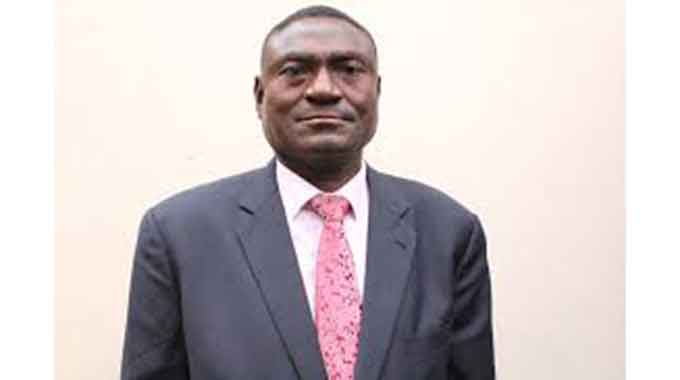
Vusumuzi Dube
Silenkosi Moyo, [email protected]
WHEN an artiste dies, the silence that follows feels heavy.
The stage goes dark, their studio falls still, the tools untouched and the creative energy that once inspired us all suddenly stops. Whether they were a painter, musician, writer, actor or dancer, their absence is felt far beyond their own field.
For families, communities and the arts sector, a death is not just an ending, it is the beginning of difficult questions we often avoid while the artiste is still alive.
Beyond mourning and tribute lies a complex web of legal, financial, cultural and ethical issues that few people, even within the arts, are prepared to navigate. What actually happens when an artiste dies? Who owns their work, their story and their digital presence? And how do we protect what they have left behind for future generations?
The first challenge is usually ownership. Many artistes in Bulawayo die without wills or estate plans. Their works, recordings, scripts or manuscripts are scattered across studios, theatres, galleries or collectors’ homes, suddenly becoming the subject of confusion and at times conflict. Families, galleries, record labels or bandmates may all claim some right to the work, but without documentation, those claims are hard to prove.
Copyright law grants protection for 50 years after an artiste’s death but that means little if there is no clear heir or executor to manage the rights. In the absence of legal guidance, some works are reproduced, resold or even stolen. Others disappear into private collections or digital platforms, never to be seen again.
It is a cruel irony that the art we once celebrated becomes most vulnerable precisely at the moment its creator can no longer protect it.
The death of an artiste often exposes another weakness, the absence of proper documentation and archiving. Many artistes, especially those working independently, do not keep detailed records of their works. Their life’s work may be scattered across notebooks, flash drives and social media posts. Without catalogues, recordings or provenance records, it becomes nearly impossible to authenticate or trace their legacy.
This is how cultural history is lost. Future researchers, students and curators usually find only fragments, a photograph here, a recording there or a faded poster. In an era where digital presence is part of an artist’s identity, questions of who manages their online portfolio, music accounts or social media accounts after death remain largely unanswered. These digital spaces, too, are archives of our cultural memory, yet they vanish quietly when passwords are lost or accounts are deleted.
There is also the financial reality. Valuing an artist’s estate can be complicated and emotionally charged. Some works or recordings may appreciate rapidly in value after death, while others may have no clear market. Families can find themselves caught between sentimental attachment and financial necessity, sometimes selling artworks, instruments or music rights far below their worth.
In the absence of proper advice, an artist’s legacy can quickly turn into a legal and emotional nightmare. Tax obligations, inheritance disputes and unclear ownership can lead to years of conflict. Meanwhile, the very people the artist hoped to support, their children, spouse or collaborators, may be left with nothing but uncertainty.
The art sector must also reflect on the role of art institutions. Too often, memorial exhibitions, tribute concerts or theatre retrospectives are organised in haste, driven by emotion rather than long-term strategy. There is rarely a co-ordinated response to the death of an artist, even one of great stature.
Our galleries, museums, theatres and arts councils could do more to provide professional support, helping families document, value and preserve estates, offering guidance on copyright and licensing and ensuring that important works remain accessible to the public. The Copyright and Neighbouring Rights Act provides guidance on this.
Another uncomfortable truth is that death sometimes inflates value in ways that border on exploitation. When an artist dies, the market can go wild. Collectors rush to buy remaining works, record labels re-release albums and ticket prices for tribute shows skyrocket. While this may seem like a tribute to their greatness, it is often opportunistic, a short-term profit built on tragedy.
Worse still, forgeries and misattributions become more common. Unfinished or unreleased works are suddenly “discovered” and sold or streamed under the artiste’s name. Without estate oversight, the market becomes vulnerable to manipulation and the artist’s reputation can suffer long after their passing. There are also ethical questions that go beyond money. Should unfinished works be completed by others? Should unreleased music be published? Who decides how the artist is remembered?
In African contexts, where the boundaries between the individual and the community are more fluid, these questions take on added depth. The artist is not just a private creator but a custodian of collective memory.
When they die, their loss is both personal and cultural. Without mechanisms to pass on knowledge and technique, entire traditions can vanish with a single death, whether it is a musician’s unique rhythm, a sculptor’s style or a playwright’s storytelling approach.
If we want to preserve the contributions of those who came before us and those who are present, we must start building legacy structures now. Schools, universities and local councils can play a key role by integrating the works of local artists into education and community programming.
Archiving projects, oral-history interviews, and public art collections can help ensure that an artiste’s work continues to inspire long after they are gone.
Mentorship is equally vital. Many artists hold vast knowledge that is never formally passed down. Apprenticeships, studio residencies and inter-generational collaborations can bridge that gap and keep creative traditions alive.
The question of what happens when an artist dies is not just about loss, it is about responsibility.
How a society treats its deceased artists reveals how much it values culture itself. The art sector needs to make use of the existing laws and policies that protect intellectual property, support families and encourage proper documentation and estate planning.
An artiste’s death should not mark the end of their relationship with the public. It should open a new chapter of preservation, learning and respect.
Yet that can only happen if we plan for it deliberately, not in the chaos of grief but in the calm of foresight.
If we can find the courage to face these questions now, we will ensure that when our artists leave us, whether from the stage, the studio, or the page, they do not fade into silence but continue to speak through their works, stories and the lives they have touched, because in truth, art never really dies, it only waits for us to care enough to keep it alive.
** Silenkosi Moyo is an arts manager with over a decade of experience in visual arts. She serves as the regional manager at the National Gallery of Zimbabwe in Bulawayo. **


 Online Reporter