Tendai Gukutikwa
Post Reporter
ACROSS the sweep of history, the quest for power has turned brothers into sworn enemies.
From Europe’s fabled Wars of the Roses, where cousin fought cousin for the rightful claim to England’s throne, to the storied kingdoms and chiefdoms closer to home, succession disputes have always revealed a deeper truth – the struggle for leadership is seldom about titles alone.
It is about pride. About bloodlines. About memory, and the quiet, stubborn desire to be seen, to be named, to be remembered.
Today, that ancient drama is unfolding with little fanfare in the rolling hills of Mutasa, where a family once knit together by blood and custom now finds itself cleaved in two, divided by the weight of the Muchena headmanship.
What was meant to be a measured, ceremonial passing of traditional authority has curdled into a bruising contest between two brothers, each certain that justice, custom and the long arc of family history stand squarely on his side.
At the heart of the dispute are 78-year-old Cecil Muchena and his younger brother, Headman Itai Muchena, recently confirmed as the substantive headman.
Though they now find themselves on opposite sides of the same ancestral seat, the two men share the same father – the late Chidzere – a polygamist who raised children from different houses in Muchena.
Separated by nearly a decade in age, the brothers once walked the same village paths and shared the same homesteads where they now vie for authority.
Those who remember them as younger men could scarcely have imagined that the family name would one day sit at the centre of a public wrangle for leadership.
Yet in many traditional settings, kinship is tested most fiercely when a seat falls vacant.
Questions of age, maternal houses, lineage and clan custom rise like sediment to the surface, particularly when different branches of the same family read tradition through different eyes.
The Muchena dispute has since drifted beyond hushed family disagreements and into formal corridors of authority.
Letters of complaint have been sent to Mutasa District Development Coordinator (DDC), Mr Lloyd Kasima, Minister of State for Manicaland Provincial Affairs and Devolution, Advocate Misheck Mugadza, and Chief Mutasa.
In the letters, Cecil’s faction question Itai’s legitimacy, and contend that the appointment process did not follow accepted family procedure.
In an interview, Mr Kasima confirmed that Headman Itai Muchena was appointed earlier this week.
He also confirmed receiving objections from Cecil Muchena and his supporters.
“Yes, we received that letter, but we referred them to Chief Mutasa because it is under his jurisdiction. When it comes to headmen, our office’s duty is only secretarial. The selection meetings and everything else are chaired by the Chief’s office,” he said, adding that the contested headmanship was being resuscitated after having previously been abolished, making the contest even more pointed.
Where a traditional office is revived after years of dormancy, recollections of custom can diverge sharply.
What one branch of the family regards as settled practice, another may read as a departure from tradition.
One of the letters, submitted on March 17, and perused by this publication, alleged that Itai was operating without proper family endorsement.
It further claims another brother, Mr Edwin Muchena, was misled into signing documents used to support his authority.
The dispute intensified again on April 18, when another notice of objection was sent to the same offices.
In it, Cecil’s faction declared: “We hereby officially notify all stakeholders that the Chidzere family does not recognise or accept the appointment of (Mr) Itai Muchena as acting Headman of Muchena Village,” reads the letter, insisting that succession must follow seniority.
“According to our family customs and traditions, leadership succession starts from the eldest and descend in order of seniority. There are two elder brothers senior to him according to our family tree and order of seniority. The family has never selected (Mr) Itai Muchena to lead,” it further argues.
It also carried a stern warning to villagers.
“Anyone who takes a matter to (Mr) Itai Muchena’s court to be judged or fined, or anyone who receives him or treats him as Headman after seeing this notice, will be doing so at their own risk and peril,” further states the letter.
The notice was signed by Messrs Cecil, Thomas and George Muchena.
The Muchena throne remains a seat with two stories attached to it.
One brother says birth order, age and ancestral symbols make him the rightful heir. The other says due process, consensus and confirmation have already settled the issue.
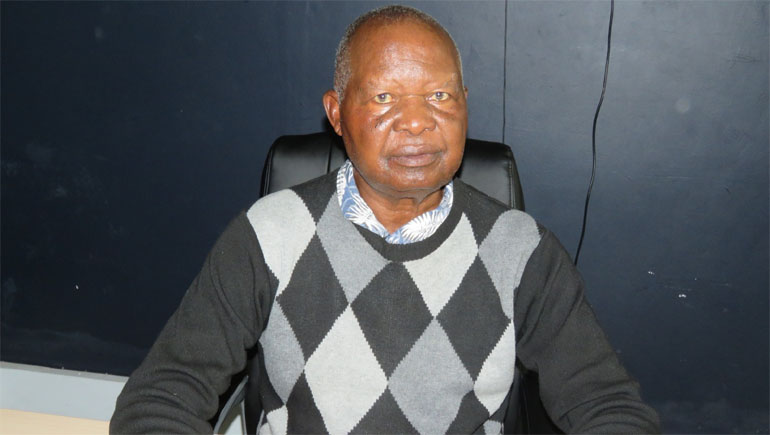
For Cecil, the dispute is more than a title. It is about restoring what he believes was taken from him.
Speaking in an unsolicited interview, he said being the eldest living son should have settled the matter long ago.
“I am the eldest living son at the moment, and Itai is my younger brother. I am 78-years-old,” said Cecil, who said he was once appointed acting headman, only to be removed within a month.
“I was appointed as acting headman and within a month I was removed because Itai had influenced the authorities, lying that I was an opposition political party member in 2020,” he said.
He believes the decision stripped him of a rightful inheritance.
“Within a month I was removed and he replaced me afterwards. I am the one with the family paraphernalia (tsvimbo dzababa), meaning that I am the father figure, and so I should be the headman,” he said.
In many families, traditional regalia carries symbolic authority.
To Cecil, possession of these items is proof that ancestral recognition rests with him.
However, Mr Itai Muchena strongly rejected the allegations, and said his brother’s account ignores what actually happened.
“In fact, I am one of the people who signed to select him back in 2020. However, he was removed due to political reasons,” said he said, adding that leadership could not remain vacant.
“The then acting chief called three village heads and selected me as the acting headman. I was a village head then. I was appointed as the acting headman in July 2021, and I have been thus since then,” he said, adding that the matter has now been regularised and put to bed.
“As of April 24, 2026, I am now the substantive Headman Muchena, and we are preparing for the installation ceremony,” he said.
On why a younger brother would lead ahead of an elder sibling, Itai said the family uses a different succession system.
“The issue of him being older than me does not hold any water. We use the collateral model within our family, and it was our family’s turn to be installed the headman. I was unanimously selected when the selection meeting was held in July 2025,” he said, adding that Cecil had initially welcomed the outcome.
“Cecil even congratulated me, and I am shocked that he is now sending out notices of objections against my appointment,” he said.
Itai did not hide his frustration over the resistance.
“I think this is all out of jealousy and deception. They should be stopped. He was given his chance and abused it. Should that be my problem, though?” he said.
Chief Mutasa was not readily available for comment as his phone went unanswered.
Between the two brothers lie villagers waiting for certainty and, like many succession battles before it, the deepest scar may not be who occupies the throne, but how fiercely the struggle for it has divided a family.
The two brothers now speak from opposite ends of the same family story.
One leans on age, seniority and ancestral regalia, while the other leans on process, consensus and formal recognition.
For villagers, however, the dispute reaches beyond family pride.
A headman is expected to preside over disputes, help maintain order, handle community matters and serve as a bridge between citizens and higher authorities.