Valentine Zvobgo
There is something particularly cruel about sudden death because it gives the living no time to prepare for the world that comes after.
One moment there is a husband, wife, mother, father, son or daughter moving through the ordinary business of life; the next there is a telephone call, a name on a list, a body waiting to be identified and a family trying to understand how the world can possibly continue when one of its most familiar people will not be coming home.
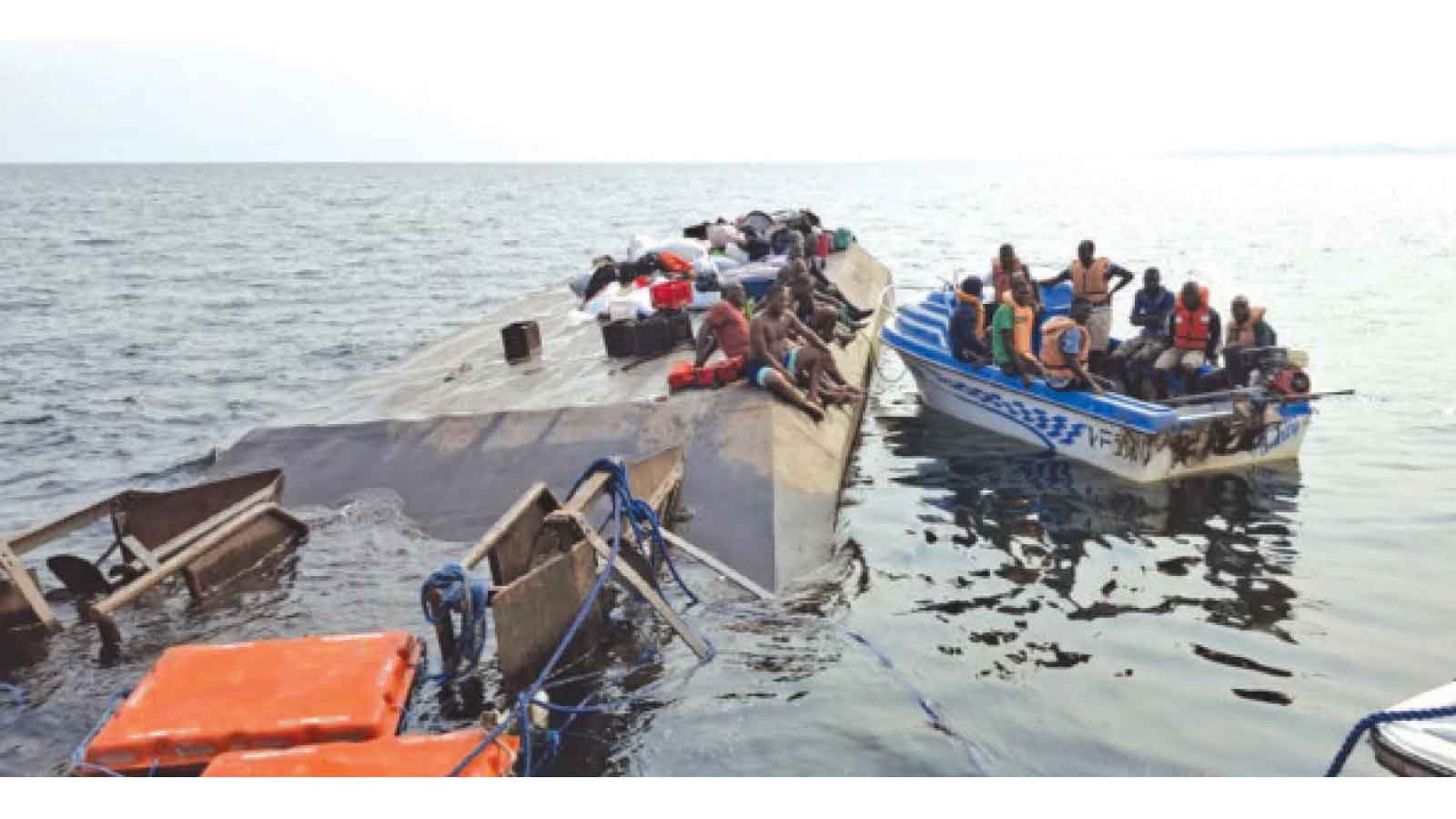
The Kariba ferry tragedy has brought that particular kind of grief into our national consciousness.
Ninety-seven lives have been lost, families have been shattered and survivors are carrying experiences many of us can only imagine.
We have rightly begun asking what happened, whether the ferry was operating safely and where responsibility ultimately lies.
Those questions must be answered.
But beneath them is another question, perhaps more urgent in the first days of mourning: What happens to the life that remains?
Death does not mean the end of that person’s life only.
It changes the circumstances of those who depended upon that person.
A child who went to sleep knowing that a parent would be there tomorrow must now learn to grow around an absence.
A woman may suddenly find herself a widow, looking after children, paying bills and making decisions on her own.
A man may become a widower without ever having prepared for that life.
Parents bury children they expected to outlive them.
And beneath the grief is the quiet economic reality that grief does not suspend the cost of living.
School fees remain due, food must still be bought, medical needs continue and households still have futures that require investment.
This is why disaster response must go beyond recovering bodies and arranging funerals. The dead deserve dignity, but their families deserve support.
Survivors need medical and psychosocial care.
Most importantly, we must remember those whose economic security depended upon the people who died.
When a breadwinner disappears suddenly, death can become a long-term socio-economic crisis.
A child may lose not only a parent, but also access to education.
A surviving spouse may lose the income that held the household together.
An elderly parent may lose the child upon whom their survival depended.
Our Constitution gives us a language through which to understand these consequences. Human dignity and the right to life sit at the centre of the constitutional order, while the Constitution recognises socio-economic rights and places obligations upon the State concerning social security and the protection of vulnerable people.
Children’s rights are particularly important because the Constitution recognises their entitlement to family or parental care, education, healthcare, nutrition and shelter, with their best interests paramount.
The law, therefore, allows us to ask a deeply human question: When a parent dies suddenly, who protects the life of the child that remains?
This is also where Ubuntu must move beyond sympathy.
Tinochema nemagute is an acknowledgement that another person’s suffering is not entirely separate from our own humanity.
But mourning cannot end with tears.
It must eventually become action.
What does the widow need when the visitors have gone home? What does the orphan need when the funeral is over? What does the survivor need when the rescue operation has ended? And what happens to the family when public attention moves to the next story?
The law itself recognises that death has consequences beyond the moment of death. The Coroner’s Office Act provides a framework for investigating unnatural deaths, while the laws governing registration and burial give legal structure to the identification, certification and dignified handling of the dead.
These processes may appear technical beside grief, but they matter deeply to families because death certificates, identification, estates, benefits and legal claims often become part of the difficult life that follows the funeral.
Then the law takes us back to the beginning of the journey: the safety of the vessel itself.
The Inland Waters Shipping Act provides for the registration, survey and safety of vessels on inland waters, including matters concerning passengers, cargo, lifesaving equipment, crew competency and navigation.
Safety, therefore, does not begin when the captain takes the wheel.
It is built beforehand through inspection, maintenance, capacity controls, equipment, competent personnel and regulatory oversight.
If the evidence establishes that the vessel was carrying substantially more people than its permitted capacity, that question must form part of the wider investigation.
This is why responsibility must ultimately be approached with care.
Local Government and Public Works Minister Daniel Garwe has publicly spoken about the circumstances surrounding the captain’s decision to sail, including advice reportedly given to him.
Those statements form part of the public conversation, while formal investigations must establish the facts.
The captain himself died in the tragedy, and the fullest account must, therefore, come from evidence, surviving records, the regulatory framework and those who can speak to what occurred.
This is not about assigning blame prematurely; it is about understanding responsibility comprehensively.
A transport safety system does not begin and end with the person at the helm.
It includes the vessel, its maintenance, capacity, equipment, crew, operational decisions and the institutions responsible for oversight.
Only by examining the whole system can we understand what went wrong and how to prevent its repetition.
The declaration of a national disaster also carries meaning.
Under the Civil Protection Act, a disaster declaration exists because extraordinary circumstances require extraordinary measures to assist and protect affected people.
It should, therefore, be felt not merely in official announcements but in the lives of those who have been left behind.
The dead must be treated with dignity, survivors protected, families supported and those whose economic security has been shattered assisted beyond the funeral.
There will be time to establish responsibility.
There must be.
The State Liabilities Act provides part of the legal framework through which claims against the State may, where the law permits, ultimately be pursued.
But that process must coexist with compassion.
We can investigate while we comfort.
We can preserve evidence while we bury our dead.
We can ask difficult questions while ensuring that a child does not become a second casualty because the parent who supported the household is gone.
Perhaps we should, therefore, judge the response not only by what happens in the first 48 hours, but by what happens six months later.
Are the children still in school?
Is the widow able to keep the household together?
Are survivors still receiving care? Have families been able to access the documents, benefits and assistance necessary to rebuild?
Has the transport system been made safer? Have the lessons of Kariba changed the way we regulate, maintain and operate public infrastructure?
Kariba should leave us with more than the question of how the ferry sank.
It should leave us asking what kind of country we want to be when tragedy strikes.
Do we mourn only those who died, or do we commit ourselves to those who must wake up tomorrow without them?
Do we count the coffins, or do we count the lives that now have to be rebuilt?
Because when death comes suddenly, there is no preparation for the life that follows. The family simply has to find its way through it.
And perhaps our responsibility, as a State and as a people, is to make sure that those who have already lost someone do not have to lose everything else as well.
Justice must establish what happened.
Compassion must ask what happens next.
That, to me, is the human lens.
Valentine Zvobgo is a legal practitioner, conveyancer and notary public. For feedback, call +263775383746/+263776614003.