Online Reporter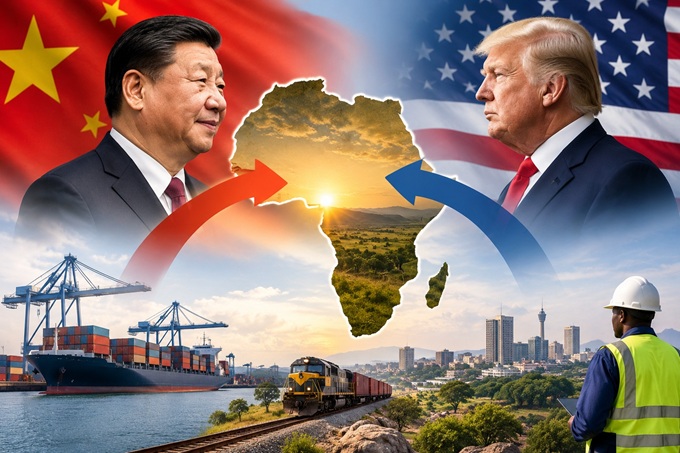
Mafa Kwanisai Mafa
The meeting between President Xi Jinping and President Trump in Washington ought to be interpreted across Africa not merely as another high‑level encounter between two powerful nations, but as a landmark moment within an evolving global order.
Its core takeaway is clear: even when major powers hold deep‑seated differences, sustained dialogue, negotiation and practical cooperation remain achievable. This carries immense weight for Africa, whose development, security and economic prospects are highly vulnerable to shifts in great‑power relations.
President Xi Jinping’s toast at the White House anchored the bilateral relationship in shared history, friendship and coexistence. He referenced wartime solidarity between Chinese and American peoples, Ping‑Pong Diplomacy which reopened formal ties, and joint efforts by ordinary citizens from both nations to fight desertification.
His central message was that major‑power disagreements need not harden into endless confrontation. The eight‑point consensus released afterward translates this spirit into concrete commitments covering strategic stability, trade, artificial intelligence, international waterways, counter‑narcotics, and military crisis‑communication mechanisms.
It should be noted that these consensus items represent frameworks for future engagement rather than fully realised outcomes. Actual implementation will face many uncertainties. The summit’s real value therefore lies not in erasing all disputes, but in building institutional channels through which frictions can be contained.
Africa Cannot Afford to Be a Theatre for Rivalry
For Africa, one phrase resonates most strongly from Washington: “respect, fairness and reciprocity”. Chinese foreign‑policy documents frame these values as the bedrock of a constructive, strategically stable major‑power relationship, alongside practical cooperation, managed competition and peaceful dispute settlement.
This set of principles speaks directly to Africa’s long‑held aspiration: every nation deserves the right to chart its own development course, instead of being reduced to a battleground for external rivalry.
Africa knows firsthand the harm when great‑power relations deteriorate. Trade disruptions fracture commodity markets; sanctions limit access to capital and critical technologies; geopolitical tensions push up food and energy prices.
Conflicts far from African shores send ripples across African economies via shipping lanes, commodity cycles and cross‑border investment flows. The whole world has a stake in preventing great‑power competition from splitting the globe into hostile blocs.
This Washington gathering does not erase substantial frictions between the two largest economies. Trade, technology and security questions stay highly complex, and independent observers confirm many underlying tensions persist.
For African countries, this is a vital reality check: the world has not suddenly become conflict‑free. What the summit demonstrates is the necessity of keeping diplomatic doors open even when interests diverge. If Washington and Beijing can build platforms for economic talks, AI exchanges and military risk mitigation, African nations should likewise reinforce their own continental and regional mechanisms to handle intra‑African disagreements.
Stability from Outside Cannot Substitute for Home‑grown Progress
The economic agenda merits close African attention. Both sides agreed to advance trade mechanisms and a reciprocal tariff‑reduction package worth US$30 billion, alongside ongoing consultations over trade and investment.
The lesson for Africa is unambiguous: economic turbulence among top global powers never stays confined within their borders. African exporters, manufacturers, farmers and consumers all operate inside one interconnected global economic system.
Greater predictability in major‑power economic ties may generate a more favourable external environment for African states. Yet Africa must not passively wait for others to deliver stability. Even improved great‑power relations do not automatically advance African interests; gains must be actively claimed.
Africa must seize every opening brought by calmer global conditions to deepen intra‑continental trade, accelerate industrialisation, expand local value addition and push forward regional integration. The strategic goal is to move beyond heavy reliance on raw‑material exports and secure more meaningful participation within global value chains.
Strategic Autonomy Means Diversified Partnerships, Not Isolation
Africa must refuse to become an arena where outside powers compete for influence. It is home to 54 nations, more than one‑billion people, vast mineral wealth, a youthful demographic, and untapped potential in agriculture, technology and industry.
African governments possess their own national priorities and continental objectives. An increasingly pluralistic international landscape creates expanded space for Africa to build diversified international partnerships.
The sensible African response is not to pick sides between major external partners. African nations ought to advance continental interests through multi‑faceted engagement, while firmly defending African agency.
A single country may partner with one power on infrastructure, with another on education and technology, draw foreign investment from European partners, cooperate with India on pharmaceuticals, and work with other allies across agriculture and manufacturing. Strategic autonomy is not isolation. It means preserving sufficient policy space to make decisions rooted in national and pan‑African interests.
AI Governance: Africa Must Move from Technology Consumer to Rule‑maker
The AI‑related understandings reached at the summit deserve special African scrutiny. The two governments resolved to launch dialogue on AI risks and opportunities and set up dedicated communication channels for AI‑related incidents. For Africa, this brings both opportunity and warning.
Artificial intelligence will reshape education, public health, agriculture, labour markets, defence, public administration and industrial output across the continent. Africa cannot afford merely to import and consume technologies designed elsewhere.
African stakeholders must keep raising foundational questions: Who owns local data? Who develops locally‑relevant algorithms? Who controls digital infrastructure? Who captures the economic returns generated by new technologies? As leading technological powers begin negotiating global AI governance norms, Africa must insist on a seat at the table when digital‑economy rules are being written.
People‑to‑people Diplomacy: Power Beyond Heads of State
The human‑exchange dimension highlighted in President Xi’s remarks offers valuable inspiration for Africa. China announced an initiative to welcome 100,000 young Americans for visits and study over five years, aiming to nurture long‑run mutual understanding through youth, education and cultural ties. Africa should embrace this logic. Diplomacy is not reserved exclusively for presidents and cabinet ministers. Universities, young scholars, artists, athletes and business communities constitute vital layers of international relations.
African higher‑education institutions can serve as natural bridges linking Africa to the rest of the world. Student mobility, joint research, language programmes, innovation alliances and cultural cooperation build durable connections that survive changes of government and shifting political moods. This is bottom‑up diplomacy in practice.
Historical Lessons: Partnership for Capacity‑building, Not Dependence
History also furnishes Africa with critical perspective. The continent bears deep scars from foreign domination, colonial exploitation and geopolitical contest. It therefore has a profound stake in an international order that upholds state sovereignty, territorial integrity and peaceful coexistence.
At the same time, Africa’s lived historical experience compels it to reject dependency in every form. All international partnerships should aim to build indigenous capabilities, rather than entrench lasting reliance on outside actors.
Pre‑emptive Communication as a Tool for Conflict Prevention
The eight‑point consensus includes commitments to military crisis communication and risk prevention. This principle carries high relevance for a continent grappling with multiple regional conflicts.
Africa needs stronger continental institutions for early warning, preventive diplomacy, mediation and conflict resolution. One clear lesson emerges: robust communication pathways should be established long before crises escalate into open warfare.
Africa as a Shaper, Not Merely an Object, of Global Governance
In the final analysis, the Washington summit invites Africa to engage in serious strategic reflection. Global geopolitics is undergoing far‑reaching transformation. The old notion that world affairs revolve around a single centre of power faces mounting pushback from the rising weight of Africa, Asia, Latin America and the broader Global South.
For Africa, the correct path is blind alignment with no external power. What is required is strengthened African agency.
The summit’s most meaningful message extends beyond bilateral great‑power relations. It poses a fundamental global question: can major powers compete without eroding the developmental space available to other nations? The vision of international relations grounded in respect, fairness and reciprocity offers one compelling framework to address that challenge. The practical deals concluded in Washington demonstrate that dialogue can yield tangible cooperation even amid persistent disagreements.
Africa’s strategic agenda is clear. Welcome greater international stability, but relentlessly build up African endogenous strength. Broaden global partnerships, yet safeguard domestic policy autonomy. Attract international investment, while demanding greater local value addition. Embrace digital innovation, and vigilantly protect African data sovereignty. Participate fully in globalisation, and simultaneously reinforce domestic productive capacity. Engage all major international actors, and never surrender Africa’s right to define its own development priorities.
This high‑profile diplomatic moment should not only be interpreted from Washington or Beijing. It must also be seen through perspectives from Harare, Addis Ababa, Pretoria, Abuja, Nairobi, Accra, Cairo and every corner across Africa. Africa has too much riding on global‑system stability to remain a passive onlooker. The emerging world demands an Africa that is no longer only an object of global diplomacy, but an increasingly influential participant co‑shaping international rules, partnerships and multilateral institutions.
About the Author:
Mafa Kwanisai Mafa is a Pan‑African scholar committed to the unity, dignity and sovereignty of Africa. As an internationalist and friend of China, he advocates solidarity, South‑South cooperation and a just multipolar world. He remains devoted to the unfinished struggle for African liberation, economic emancipation and the sovereign development of African peoples.