Online Reporter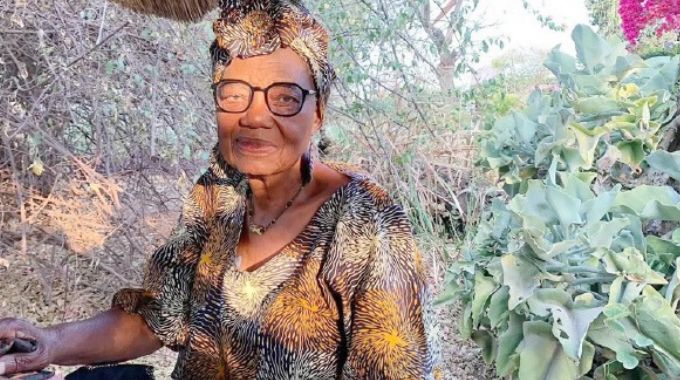
Bruce Ndlovu, Sunday Life Reporter
IN Zimbabwe, as it is in most other countries around the world, it is common for children to try to walk in the footsteps of their late parents.
From the offspring of businesspeople, who dream of dominating the boardroom as their illustrious parents once did to young musicians hoping to hold a tune as effortlessly as their forebears, the business of carrying a family legacy from one generation to the next is as old as time.
A son inherits his father’s business. A daughter picks up her mother’s tools. A young musician takes to the stage, armed with songs once sung by a parent whose voice has long fallen silent.
However, very rarely does one find a parent seeking to continue, preserve or even enhance the legacy of their own offspring.
Yet in the remarkable life of Erica Gwetai, the renowned author and educationist who passed away recently, this is precisely what happened.
Her daughter, the celebrated writer Yvonne Vera, had left behind a literary legacy that had already travelled far beyond Zimbabwean borders when she died in 2005.
For her mother, Vera’s death was not the end of that story but the beginning of another.
Three years after Vera’s death, Gwetai picked up her pen and published Petal Thoughts: Yvonne Vera, a biography of her daughter.
For most parents, the death of a child leaves an emptiness that words can barely begin to describe.
For Gwetai, however, words became both a bridge to the daughter she had lost and a vessel through which she could keep her memory alive.
When she began writing, the wound left by Vera’s passing was still fresh.
Her daughter had died relatively young, at a time when her literary voice was still reverberating around the world. The international adulation that had followed Vera’s work could do little to soften the private grief of a mother who had been forced to bury her own child.
And so, with that painful loss still sitting heavily on her heart, the pen and pad became almost a confessional — a sacred space into which Gwetai could pour all the words she had not whispered or shouted to her daughter while she was still alive.
Writing became therapy. It became medicine.
More importantly, it became a long road towards healing for a woman who had faced one of the cruelest experiences a parent can endure.
However, Gwetai’s writing was never simply about mourning.
In the years after Vera’s death, she gradually found herself developing her own romance with the written word, inspired in part by the passion her daughter had displayed for literature.
She became as dedicated to the pen as her daughter once was.
In doing so, Gwetai became an unusual custodian of Vera’s literary legacy. She became parent determined not only to remember her child but to ensure that the light she had kindled did not go out.
It was a role she embraced with remarkable conviction.
“My own belief is that she is proud of what I have done,” she told this reporter once in an interview.
“My own belief is that she sees and she is with me. To accept this death, I had to believe that I am
with her, she is within me. I would say she is so proud of me because I took over her legacy and continued writing. I didn’t let her down because otherwise people would say she tried writing after her child but she failed. I did it and I am still doing it and I’m sure she’s so proud of me, wherever she is.”
As her career progressed, Gwetai was not merely writing about her daughter, but she was writing alongside her memory, carrying an invisible literary conversation across the boundary between life and death.
Even when it came to Vera’s unfinished work, Gwetai remained fiercely protective of the daughter’s wishes and memory.
She had refused to publish Obedience, a book Vera had been working on before her death.
For some, releasing an unfinished manuscript by a celebrated writer might have seemed like an obvious way of preserving her legacy.
For Gwetai, it would have been a betrayal. Vera had confessed to her mother, during her final days, that her greatest fear was not death itself but leaving behind an unfinished book. It was a confession she took to heart.
“In her final moments as death approached, she would call me and say that she was scared of dying and leaving behind an unfinished book. She would say, ‘Mum, I don’t fear death but I fear leaving behind an unfinished book,’” said Gwetai.
Gwetai would not allow the public’s appetite for Vera’s work to override the wishes of the woman who had created it.
“I didn’t want it to be released to the public because it was poorly edited. So a few people like her late friend Terence Ranger had the manuscript, but only people with academic interests can study and analyse it,” she said.
In an era when unfinished manuscripts belonging to famous writers can become coveted literary artefacts, Gwetai chose restraint over commercial or popular appeal.
For her, Vera’s legacy was not something to be exploited but something to be protected and this perhaps what made Gwetai’s own literary journey so moving.
She had entered the world of writing not because she wanted to compete with her daughter, but because she wanted to remain close to her.
Her books became monuments, not made of stone, but of words and through them, Vera remained more than a name on the covers of celebrated novels. She remained a daughter, a child whose voice her mother was determined to keep alive. In death, Vera had left behind a literary inheritance. In life, Gwetai became its devoted keeper