Laina Makuzha
LOVE by DESIGN
There is a special kind of loneliness that only married people know. Not the type one might instantly think, but the loneliness of lying next to someone who no longer reaches for you.
Of making dinner for someone who no longer sees you nor asks about your day. Of working flat out for the family, with no appreciation. You have not fought. You have not left. But you have, in the quietest way, begun to disappear from each other.
This week the discussion is for you if you can relate. You are still married. There is no big affair. No physical danger, no shouting that the neighbours hear. The bills are paid. The children are fed. From the outside, everything looks fine.
But inside the house, something is off.
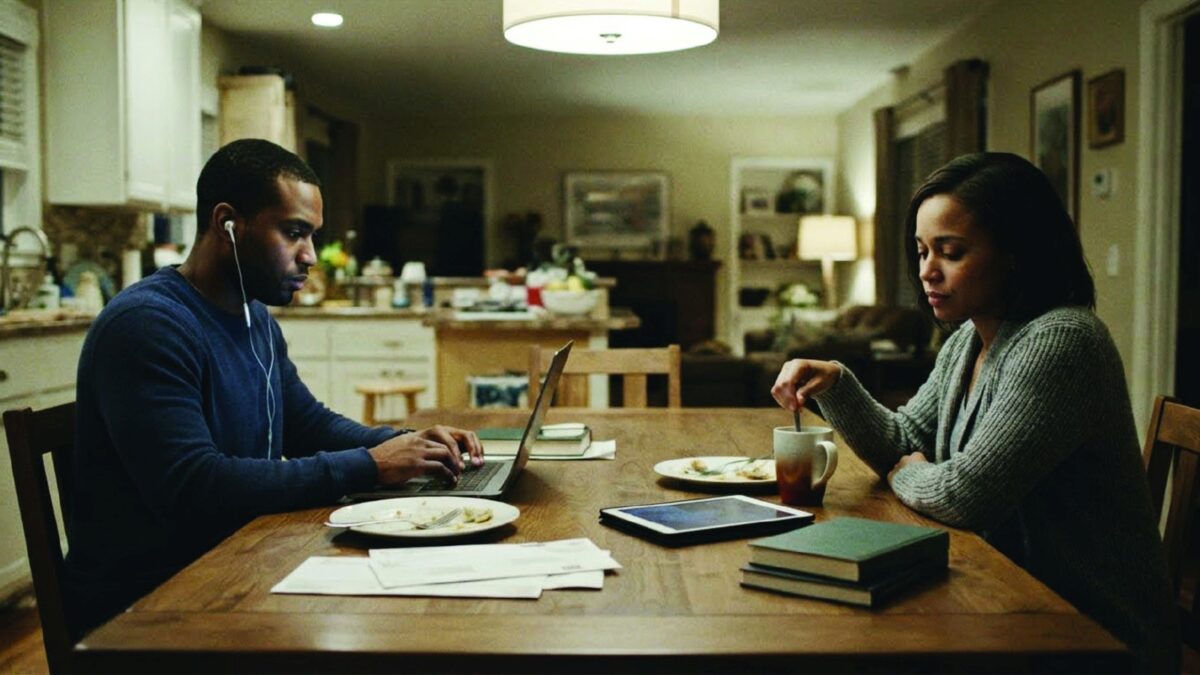
There is a rather ironic sense of peace. No fights, yes — but also no laughter. You sit in the same room, but on different devices, different times, different lives. You are polite, efficient, even kind — but you are hollow. Aloof. Roommates who once were lovers. You ask yourself: Why are we so distant? Why does it feel so empty when nothing terrible has happened?
If that is you, you are not imagining things. You are not alone. And you are not beyond hope. This has a name, and once you can name it, you can begin to heal it and find a healthier way forward.
Therapists are calling it “quiet quitting” in marriage, a term commonly associated with doing only the bare minimum in workplace settings. In marriage however, it looks like this:
Staying legally married but emotionally checking out. One or both partners simply stop trying. No deep conversations. No curiosity about each other’s day. No future plans together. No touch that lingers. Just management: kids, chores, work, sleep, repeat. It is not a loud exit. It is a silent erosion.
Why do good people do this? And to what end?
I like to think no one wakes up and just decides to become a ghost in their own marriage. Experts say it happens slowly, for various “understandable” reasons which include avoiding conflict, keeping peace for the children, not wanting to be the villain, the “bad guy” or burnout where one carried the invisible load for years — planning, remembering, organising, forgiving — and no one noticed.
In August 2026, an episode of The Oprah Podcast titled “Quiet Quitting: Why Women Are Emotionally Checking Out of Their Marriage,” generated much debate, inspired by a viral article in “The Cut”.
In it, Oprah sat down with journalist Monica Corcoran Harel, who wrote that article, and two relationship experts — Nedra Glover Tawwab, author of “The Balancing Act”, and Julie Menanno, author of “Secure Love”. She also opened the floor to women living it. The reasons they gave included not feeling cared for, validated, or loved in the way they felt they needed. As Oprah framed it, the core question in the marriage becomes: “Do you see me, do you hear me, and does what I say mean anything to you?” Women spoke of relationship burnout, being exhausted by the mental load, and carrying the invisible work while husbands offered flimsy promises to engage more and lead the family, then slipped back.
The podcast guests were clear: relationship help is not a guarantee, but the end goal is emotional connection — to find out what is getting in the way of seeing and hearing each other. Tawwab talked about balancing boundaries so you don’t lose yourself while trying to keep a marriage, and Menanno stressed emotional validation as the turning point.
Licensed marriage and family therapist Lisa Brookes Kift says the biggest warning sign is actually the absence of arguing. “It’s a myth that an absence of arguing in a relationship automatically means the relationship is healthy.
Many are conflict-avoidant and rather than address their feelings, opt to sweep them under the rug, which over the long term erodes the foundation of emotional safety.”
And where does it lead, if we do not catch it? Experts warn it leads to indifference, which is harder to heal than anger. As Sexton puts it: “When people are fighting, it means there is still skin in the game. The opposite of love is not hate… it’s indifference.” He does have a point, in my view. Clinical counsellor Dr Mindy DeSeta adds that many couples only notice the gap years later — when the kids leave the nest, when work slows down, when life finally gets quiet enough to hear the silence in the marriage.
Left unchecked, it becomes parallel lives, increased loneliness inside marriage, vulnerability to emotional affairs, and what many now call “gray divorce” — divorces after decades together, not because of one crisis, but because of a thousand small disconnections.
Couples must be wary of this sneaky phenomenon. Research by Dr John Gottman, who studied thousands of couples, found that the best predictor of divorce is not fighting, but stonewalling — emotional shutdown. The antidote is not grand gestures. It is small, consistent bids for connection eg taking one small step toward each other today. A text. A touch. A “I miss us.”
If you recognised yourself here, share this with your spouse with a note: “I think this is us. Can we try?” And if you need a safe, non-intimidating space to tell your story authentically, please do reach out.
Feedback: Connect on Facebook: Naledi Laina Makuzha, or Whatsapp/SMS: +263719102572