By Mabasa Sasa
Africa’s mineral wealth has long presented a paradox. A continent that holds many of the resources the world’s prosperity depends on has too often stayed at the margins of the industries those resources feed.
From colonial-era looting of gold and diamonds to continuing global competition for critical minerals, Africa has supplied the raw materials while processing, manufacturing and technological gains have accrued elsewhere.
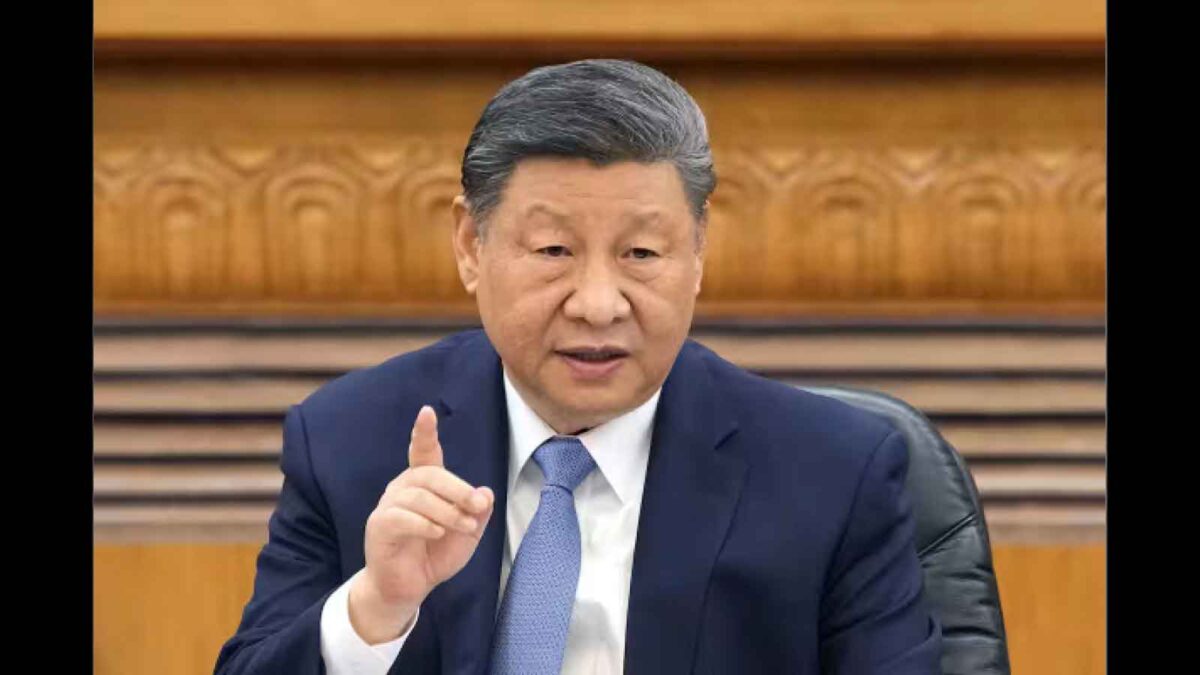
It is against this history that President Xi Jinping’s Four-Point Proposition on Advancing China-Africa Mining Cooperation, as announced in Beijing in October 2026, should be read.
Its importance lies less in the scale of new Chinese investment per se, and more in the guiding principles underpinning it: African ownership of African resources, mutual benefit, industrial value addition, and a fair and open environment for cooperation.
This approach could turn mining from a source of exports into an engine of industrialisation.
Correcting historical imbalances
Colonial mining was organised around the needs of external economies; not those of indigenes. Railways and ports were built to move minerals from the mine to the coast and onto ships, not to knit local economies together.
Little space was left for home-grown manufacturing and beneficiation.
Then, despite high hopes at independence, this unequal economic arrangement persisted. A neo–colonial–style economic order, largely inherited from former colonial powers, took hold across many African countries, whereby raw or barely processed minerals were exported overseas. This left Africa subject to external market forces, while it remained a net importer of finished manufactured goods.
This is the problem Xi’s first point – that African resources belong to Africa – acknowledges and seeks to address.
Sovereignty over minerals means more than legal title to the deposits. It means the capacity to decide how they are mined, processed and sold so that they contribute to national development.
Tackling this is as urgent now as it has ever been, and perhaps even more so considering the surging demand for lithium, cobalt, copper and graphite. These are the minerals behind batteries, renewable energy, electric vehicles and modern infrastructure.
Africa must not again watch its resources power a technological revolution elsewhere while its own economies sit at the bottom of the value chain.
Building True Partnerships
The second point of Xi’s proposition stresses mutual benefit, local employment, skills development and the transfer of appropriate green technology.
While investment has traditionally often been measured by the amount of capital injected, the better measurement could be how each dollar, euro, yuan, yen or pound actually contributes to the local economy.
Chinese mining firms bring finance, technical expertise, processing technology and access to a vast industrial market. African governments bring the minerals, strategic location and the prospect of long-term commercial partnership.
What matters is whether or not these complementary strengths yield benefits beyond the actual mining site. Investment should mean jobs for African workers, business for local suppliers, and skills and technology transfer beyond just at the recipient mine itself.
In addition, investment in mining should mean land rehabilitation, water infrastructure and enhanced overall environmental sustainability.
Of course, this is not a burden to be carried by the investor alone. Chinese investors, for their part, bring capital, technical expertise and market access to support these national goals. The host governments should create a regulatory and operational ecosystem that promotes win-win partnerships and sustainable development.
Zimbabwe’s lithium test
Zimbabwe shows the abundant opportunities that lie ahead for those willing to seriously integrate Xi’s four-point proposition.
According to the United States Geological Survey, the country ranked fourth among lithium producers in 2024, with about nine percent of global output. Mining and quarrying contributed an estimated 15.4% of real gross domestic product that year.
Chinese companies, among them Zhejiang Huayou Cobalt, Sinomine, Shengxin Lithium Group and Yahua, have invested in the industry, helping to build production capacity and link Zimbabwe to China’s battery-materials supply chain.
The export figures, however, carry a warning. Reuters, citing the Minerals Marketing Corporation of Zimbabwe, reported that spodumene concentrate exports rose 11% to 1.128 million tonnes in 2025, from 1.014 million tonnes in 2024. Revenue, though, slipped from US$514.5 million to US$513.8 million as international prices weakened.
More output did not mean more income. Prices, the degree of processing and the share of value captured along the supply chain all determine what a country actually earns.
This paradox of higher output without corresponding revenue growth exemplifies the historical value–chain trap that the Four-Point Proposition seeks to address. Encouragingly, tangible progress is now being made to break this cycle.
Reuters reported in April 2026 that Huayou had begun exporting lithium sulphate from Zimbabwe after completing a US$400 million processing plant in October 2025. The plant has a reported annual capacity of 50,000 tonnes of lithium sulphate, an intermediate product that can be refined further for battery manufacturing. This processing facility marks an important early step toward greater local value addition, even though a complete domestic battery-manufacturing ecosystem is yet to be built.
That does not by itself prove a full battery industry is commercially viable in Zimbabwe, but this Chinese investment gives the country a strong platform to build on.
Building on it will require reliable, affordable electricity, better transport links, specialised training, research partnerships and policies that enhance local procurement. Universities and technical colleges can work with industry to develop skills in chemical processing, automation, materials science and environmental management.
Further, the government’s ambition to deepen local processing must be matched by predictable regulation, commercially realistic investment terms and clear environmental standards.
Thinking beyond a current boom
This is where Xi’s third and fourth points come in.
The third calls for high-quality development, sustainable financing and infrastructure investment suited to national circumstances. The fourth calls for a fair and open investment climate and warns against making African resources a tool of geopolitical rivalry.
As a package, this speaks to going beyond just digging for more minerals, and instead building industries that survive the end of any commodity boom.
For Zimbabwe and Africa at large, it means mining revenue must flow into infrastructure, education, healthcare and diversification.
Companies must honour their environmental obligations, rehabilitate the land they disturb and protect communities from avoidable harm. Governments must collect taxes and royalties fairly and make sure host communities see tangible gains.
Regional cooperation can help too. Coordinated infrastructure, shared technical standards and aligned industrial strategies would create larger markets for processed minerals and make investment in refining and manufacturing more attractive.
The measure that matters
As alluded to earlier, going forward, under the spirit of the Four-Point Proposition, both sides may evaluate China–Africa mining cooperation against these yardsticks: the share of minerals processed locally, the number and quality of jobs created, the growth of African-owned suppliers, the technical skills transferred and the lasting contribution of mining to national development.
China needs secure access to resources and more diverse supply chains; and Africa needs the chance to turn geological wealth into productive capacity and skilled employment. Both depend on well-designed partnerships and responsible implementation.
What makes the proposition historically significant is that it places Africa’s development aspirations at the centre of the mining relationship.
For Zimbabwe, lithium offers a real–world test case for how these principles can deliver tangible national gains, rather than remaining abstract rhetoric, by moving from shipping concentrates to building an industrial ecosystem around them.
There is no question about the good political ties between China and Africa. The imperative now is to use those to build economic relations that make sense for both sides.
And President Xi’s four-point proposition presents the best foot forward.
Mabasa Sasa is a Harare-based Zimbabwean geopolitical analyst and international affairs commentator.