admin
admin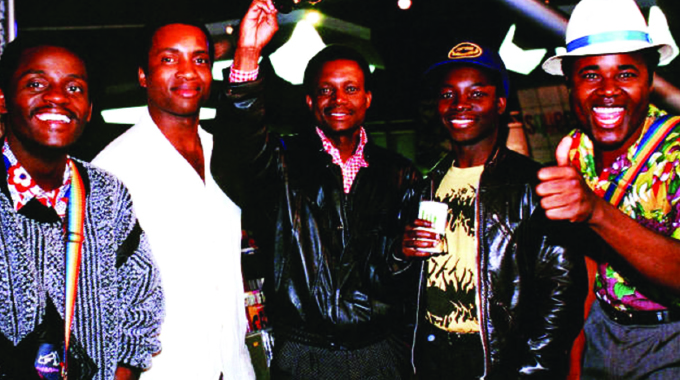
Elliot Ziwira
Senior Writer
Musos are a unique breed in that they have a way of lyrically nourishing the soul regardless of the situation.
They have mastered the art of hitting the inner man so brutally that he feels no pain, as the godfather of song, Bob Marley, would aptly put it, yet drawing torrents of tears from him.
It is in its nature for music to nostalgically take one on time travels from the past to the present, and into the future, with such ruthless allure that ends in emotional waterworks.
Forgive my lyrical trespasses, but there was a time when music was still therapeutic to the soul, and the studio was sacred.
It was not just a walk-in mall, where one would go in, and 10 minutes later, comes out with a master copy for a genre of disorganised sound or the other species proudly tacked onto the arm.
During this time logged in the past, the Marxist Brothers released a song that would eventually become an anthem. Titled “Denda” and released in 1984, the hit had the following lines:
Mai vaJulie munoendepiko?
Hamuzivi here kuti chitima chakafa?
Ndinoenda kumusha,
Kwedu kuShurugwi
Ndakanzwa kuti mbuya vanorwara nemoyo
Denda irori, denda here
Denda rakatora vasekuru . . .
It was the time when the family unit was still intact, and love could heal wounds, merely by showing up in periods of need.
No matter the odds, the dejected woman in the song, Mai VaJulie, is determined to make it to Shurugwi to see her ailing grandmother, whose ailment is reflected in grandpa’s death. Train or no train, she will track her way to her roots.
The reference to “Denda” not only captures the essence of human resilience in the face of tragedy, but it also reminds one of the immense talents that came out of Glen Norah, one of the areas that we would be exploring in recognition of our ghetto heroes.
The Chimbetu siblings, Simon and Naison, known as the Marxist Brothers then, are among the many gifted individuals who emerged from the glen, as will be explored later on.
Indeed, the dale is rich. Such wealth inspires generations of those of us whose hearts remain ensconced in the ghetto of our dreams.
Hanging on to nostalgic musings
Some feelings just refuse to go.
Picture this: the resonating feeling hangs onto the crest of time when papa materialised from nowhere, Superman style. And, you had just handed your coins to the cashier in exchange for buns, majipe (fresh chips), starfish, fried tongue or crumbs; a mixture of pieces of this and that; kwaChikuhwa kuChitubu or kwaNyashanu kuSpaceman.
“And then?” Young Ezekiel Mphahlele’s voice asking his uncle in “Down Second Avenue” (1959) rings in your mind.
And then, you knew Dawson could have been right about “Disaster at Level 12” in your English Language textbook, after all, especially when of late coins at home had suddenly acquired the curious habit of disappearing. Valuable kosher coins, not mazuda; “worthless” foreign money as we used to call it.
Of course, there were other ways of chancing on a handful of coins. But you could not possibly tell pops that you had a good day at chigoza, a form of gambling, where (mis)matching heads or tails determined the winner; or Crazy Eight, just as you couldn’t explain to dear mummy why all of a sudden, all your shirts were button-less.
Naturally, you had to cook up a story fast before an average person could spell out “L-I-A-R”. Something like, “Sekuru Godfrey was here, and he said, “Hi.” He left me some money!”
You would effortlessly tell an untruth, knowing that Sekuru Godhi, pops’ much-loved brother-in-law, could get away with anything. By the time he would show up, the story would have been forgotten, anyway.
Gosh, those buns ekwaChikuhwa were just something else. I am still to excite my taste buds with buns with a remote semblance of those dear Mr Chikuhwa’s recipe produced.
Eish, am I salivating? Ooh no! Those buns, those buns, unstoppable! Those buns, those buns, unsinkable! I just feel like singing to the tune of Faith Hill in “This Kiss”. You remember the song?
Listen to how it plays out in my mind on repeat:
It’s the way you love me
It’s a feeling like this
It’s centrifugal motion
It’s a perpetual bliss
It’s that pivotal moment
It’s, ah, impossible
This kiss, this kiss (unstoppable)
This kiss, this kiss. . .
Those were buns. Not these light, sweetened buns we are made to endure these days — all risen like chimupotohai and no substance.
Well, the beautiful valley gave us more than our fair share of gifts, I guess. As I alluded to in our previous engagements, secondary school disconnected us a bit as some of us would go to boarding schools or former Group A schools, and others would go to so-called Group B schools.
Western forms of education would further separate us at the advanced levels, and careers placed a wedge among us as life’s deck dealt us different cards. But, you see, every hand is equally a winner as a loser. It all depends on how one plays the cards dropped onto one’s lap.
So, the ghetto remained and still remains our link.
As we chased the plastic balls of our formative years, soccer players, sports administrators, legal minds, captains of industry, journalists, politicians, doctors, accountants, academics, models, and entertainers, among other professionals, were being honed for the future good of the motherland.
Football gods bless the Glen: Outta come administrators
As has been tracked so far, the vale’s womb produced scores of footballers, some of whose names keep jogging the memory.
Such players like Daniel Chikanda, Innocent Chimusoro, Richard “Gribo” Ruzvidzo, William Chari, Tonderai Mutambikwa, Brighton Dzapasi, Samuel Matambanadzo, and the Sarupinda siblings; Misheck and Watson, who have earlier on eluded the mind, are products of the rich dale located about 15km south-west of Harare.
Some of the soccer greats like David George, Lloyd “Toga” Pfupa, Alois Patsika, July “Jujuju” Sharara, Shackman Tauro, Thomas Musekiwa, and Friday Phiri would later pursue successful coaching careers. Others were Freddy Mkwesha and Gishon “Gizha” Ntini.
Also, our ‘hood is home to luminary sports administrators, who include former Warriors and Mighty Warriors fitness trainer, Gerald Maguranyanga, Mwana Africa Football Club ex-team manager and co-founder, Milton Nyamadzawo, Shooting Stars boss, Joel Serengedo, and Dyson Dzapasi, a soccer talent scout now based in the United Kingdom.
I am trying to be space-conscious, but maybe I should briefly tell you a bit about Nyamadzawo; I feel I should.
A multi-talented administrator, writer, leadership coach turned labour lawyer; all rolled into one, Nyamadzawo’s story goes beyond football, as he went on to inscribe his name on the corporate landscape.
Nyamadzawo, “Midza”, as we affectionately call him, lived in Glen Norah B, kwaMushayabhande, a gaze away from Ruvheneko Primary School, which he attended for his primary education.
He lived in the same area with Joel Serengedo, who was his role model. Joe, as they call him in the glen, was a sales executive, who founded the company, IP. A great soccer player in his heyday, he went on to set up the Shooting Stars Football Club.
A close friend of mine, Nyamadzawo, and I were classmates at Glen Norah High 1. We would go our separate ways at Advanced-Level. He would go to Harare High School, and I to Oriel Boys School. Midza and Dyson Dzapasi would meet at Harare High School (PaDanho), where they did their A-Levels.
Dyson’s elder brother, Brighton, played for former top-flight teams Black Aces and Chapungu United in the 1980s.
Always passionate about soccer and people issues, Nyamadzawo pursued a career in human resources, the reason why he ended up at Freda Rebecca Gold Mine, the owner of Mwana Africa Football Club.
Because of his passion for football, he went on to set up Mwana Africa Football Club with former Mwana Africa managing director, Fred Moyo, who is also ex-deputy minister of Mines and Mining Development. The Bindura-based team became a trailblazer in Zimbabwe’s premier league.
The gods directed the human resources and labour law guru to an internationally-acclaimed educational books publisher, which saw him working briefly in South Africa before moving to the United Kingdom. He is presently based in France.
Nyamadzawo would assume the role of Global Employee Relations Director and head of Strategy, and had stints at Google.
So much gifted academically, Midza would embark on two university degrees concurrently. An affable man, he has a keen interest in football administration and is always prepared to give it his all.
However, due to competing diary requirements, he is no longer actively involved. Nonetheless, on occasions that we talk, he would chip in with one or two views about football, and how the country’s favourite sport is a sleeping giant waiting to be resurrected.
Midza would also give insights into Mwana Africa, the team he co-founded, and remains passionate about.
A cosmopolitan team, comprising players from across Zimbabwe, Mwana Africa Football Club was the pride of Mashonaland Central Province.
The grassroots team was, however, formed by a nucleus of Chipadze High School learners.
Midza would always say if you have never managed football, then, you have not yet managed anything.
Well, you know what they say about music? Music is food to the soul, no matter the situation, which takes us to the lyrical talent that emerged from our hood.
And, the music plays on
In the same year that the Marxist Brothers released the hit “Denda”, 1984, Simon Chimbetu joined the ‘hood, through the acquisition of property. He bought a house kuma48, kumaline kwanaBaba Tina, from Onismo Tazvitya Muzangaza for $7 000, a princely sum then.
The late Dendera Kings frontman’s siblings, Allan and Briam, would at some point live with him at the house. Sulumani, Simon’s son, also grew up in the ‘hood.
When music was still music, another group, the Bhundu Boys, also rocked the Glen. The band’s signature beat was a combination of Chimurenga and American rock and roll with a tinge of disco, pop, and country.
The genre would later be known as Jit.
Formed in 1980, the massively talented group comprised guitarists Rise Kagona, and Biggie Tembo; singer and guitarist, bassist David Mankaba, drummer Kenny Chitsvatsva, and keyboardist Shakespeare Kangwena.
The outfit was the first Zimbabwean group to play in Europe after landing at Gatwick in May 1986. The Bhundu Boys serenaded 240 000 fans over three nights in Wembley and supported Madonna in 1987.
Some of their hit songs are “Simbimbino”, “Hatisi Tose”, “Babamunini Francis”, and “Kuroja Chete”.
Gosh, what’s this music now playing in my ears?
“Kuburika ndoburika mwanangu, asi kuti baba vako.
Hona vakandicherera gomba mumunda
Simbimbino wee, Simbimbino wee, Siiimbimbinoo weeee. . .”
There was a house we knew belonged to the Bhundu Boys kuma18, close to Shiriyedenga Primary School, and a stone’s throw away from Chikomo Chembira. I am not so sure who owned it.
The late Chamu Mangudi, also from the ‘hood, would later join the group as a keyboardist.
Sadly, Biggie Tembo hanged himself in a psychiatric hospital in 1995. And, his fellow band mates David Mankaba, Shepherd Munyama, and Shakespeare Kangwena have since died. Mankaba died in 1991, Munyama in 1992, a year after replacing Mnakaba, and Kangwena in 1993.
A lot of other musicians would later appear on the scene.
I would have wanted to say more about them, but due to space constraints, I will just mention them and probably say a word or two about them. Leonard Zhakata of “Mugove” fame is from Glen Norah as well, kuChitubu.
Pio Farai Macheka lived less than 400 metres from our house, and a few paces from the main gate of Chembira Primary School, in the same street with the Mini Cooper boys, and another soccer player, Noah.
The “Karinga Wangu” hit-maker would incorporate other talented youths from the ‘hood, like rhythm guitarist/drummer, James “Jimalo” Tonderai Nhema, and two female vocalists whose names slip me now, who were part of the Black-Ites.
Macheka’s music style was Chimurenga. At one point, he was attacked and had his dreadlocks cut by thugs in Waterfalls, in an incident he suspected to have been engineered by Thomas “Mukanya” Mapfumo.
He used to pass by our place, and we would chat as brothers do. I called him Mukoma, or simply Karinga wangu. I would later meet him on several occasions kuma20, around the Zvimba area, where he appeared to have moved to.
Macheka died on October 19, 2008, aged 41, at Chitungwiza Central Hospital in a suspected case of suicide. When I learnt of his death, I was pained. His music keeps rocking my mind, as it continues to do in our ‘hood:
“Haa, Karinga wangu, wakaendepiko?”
From the rich soil of the glen would also sprout the muse’s other disciples in Mary Bell, who was Oliver “Tuku” Mtukudzi’s vocalist, Alexander Matare, Tendai Chidarikire, Cleopas Manyowa, Pamhidzai Tracy “Pah Chihera” Mbirimi, Desmond “Stunner” Chideme, Malvern S, Ngoni Kambarami, Alexio Kawara, Clive Barangiro, the late Jamal Mataure, and DJ Squilla.


 Online Reporter