Online Reporter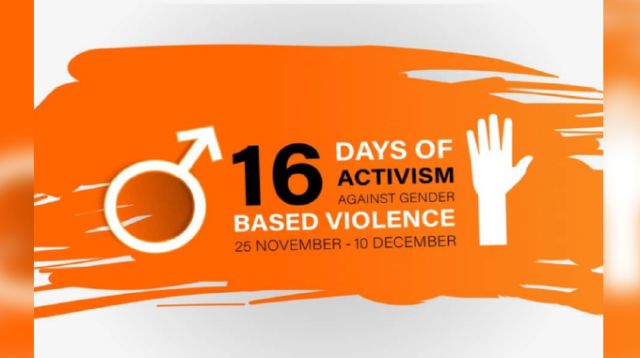
Ishmael Tagurenyika and Elizabeth Makumbe, Correspondents
FOR decades, Zimbabwe’s gender-based violence narrative has centred almost exclusively on women and girls, a focus shaped by the country’s deeply ingrained patriarchal history and the overwhelming evidence of female victimisation. Beneath that truth lies another quieter reality, rarely acknowledged and often ignored: men who endure violence, whether physical, emotional or psychological, overwhelmingly suffer in silence.
Their tears seldom make it into police dockets. Their bruises rarely provoke community outrage. Their trauma does not easily fit the public imagination of gendered harm.
Yet across counselling rooms, homes, workplaces and even church spaces, men are quietly struggling with abuse they cannot fully articulate, cannot report and cannot escape.
This November, as the world marks Movember, the global month dedicated to men’s health and mental health awareness, Zimbabwe’s overlooked male survivors of gender-based violence are cautiously entering the spotlight. Their stories do not seek to overshadow the struggles faced by women. Instead, they highlight a broader truth: violence does not discriminate, even if society does.
“Every experience of violence matters, including men’s.”
Ms Muchanyara Mukamuri, Executive Director of the Self-Help Development Foundation and chairperson of the Women’s Coalition of Zimbabwe, says acknowledging male survivors does not undermine women’s rights. Rather, it strengthens justice for all.
“The Women’s Coalition of Zimbabwe recognises that gender-based violence affects all people, including men and boys,” she said. “While women and girls remain disproportionately affected, we believe no survivor should be ignored or silenced. Every experience of violence matters, and male survivors deserve empathy, support and access to justice.”
Ms Mukamuri notes that the greatest barrier is the misconception that recognising men’s experiences threatens advocacy for women. “Inclusivity in gender-based violence response should uplift everyone, not dilute the fight for women’s rights,” she said.
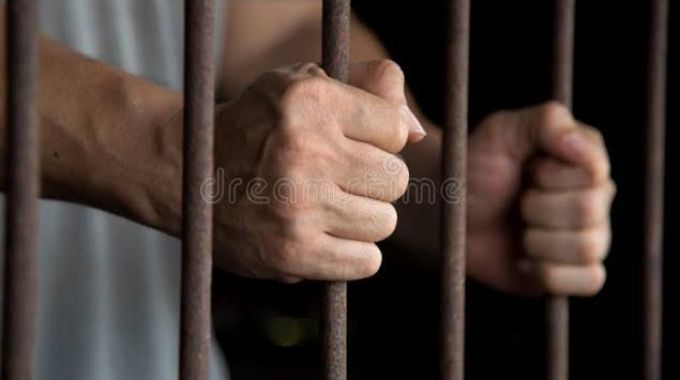
When masculinity becomes a prison
One major reason men suffer in silence lies in the way society constructs masculinity. From an early age, boys are socialised to be protectors, fighters and providers, roles that leave little room for vulnerability.
Psychologist Mr Ison Ndoro says this upbringing becomes a psychological trap. “Men are regarded as providers, protectors and fighters. This inculcates a machoistic worldview,” he said. “Unreported gender-based violence perpetrated against men is like a ticking time bomb waiting to explode.”
According to Mr Ndoro, unaddressed abuse pushes men towards dangerous coping mechanisms including alcoholism, substance misuse, violence, promiscuity and severe mental health disorders such as depression and post-traumatic stress disorder.
He notes that men’s mental health is rarely linked to gender-based violence, which is why Movember remains significant.
Movember and the quiet mental health crisis
Movember’s global platform promotes awareness of prostate cancer, suicide prevention and men’s mental wellness. For Zimbabwe, where male depression and suicide rates have risen in recent years, linking gender-based violence to mental health is critical.
When men are unable to speak out, Ndoro warns, the consequences can be dire.
“There could be more shame and emotional pain among male gender-based violence survivors than females,” he said.
“Psychosocial support systems are heavily tilted in favour of females.”
“Gender-based violence knows no gender”
Mr Alois Nyamazana, Executive Director of Fathers Against Abuse, says his organisation is witnessing a worrying rise in cases of male victimisation. “Gender-based violence knows no gender,” he said.
“Statistics show that about one in six or seven men are affected by gender-based violence globally.”
He explains that Zimbabwean men face physical, sexual, emotional and verbal abuse. Some survivors he has supported were burned with boiling water. Others were mocked about their bodies or sexual performance, causing deep humiliation and psychological distress.
“Men are socialised not to share their issues,” Mr Nyamazana said.
“Seeking help is viewed as weakness.”
He adds that society often refuses to listen.
“When a man shares abuse with relatives, he is told, ‘You cannot be defeated by a woman.’ Families and institutions reinforce harmful masculinity.”
He believes Zimbabwe’s robust legal frameworks, including the Domestic Violence Act, are underutilised because men do not see themselves as legitimate victims.
The law protects men, but they rarely use it
Legal expert Ms Rumbidzai Venge says Zimbabwe’s legislation already recognises male survivors of gender-based violence.
“Our current law adequately recognises and protects male survivors,” she said. “The problem is under-reporting by men, not the absence of legal protection.”
She notes that stereotypes portraying men as too strong to be victimised discourage reporting.
“It is a societal standard that a man who comes forward is somehow weaker,” she said.
“These stereotypes cause men to under-use the legal framework.”
Ms Venge argues that there is a need for greater awareness of mechanisms such as the Victim Friendly Unit and Victim Friendly Courts, which are designed to support all survivors.
“It is like a muscle. Unless people use these mechanisms, they atrophy,” she said.
“We have exemplary laws, we just need to use them fully.”
Zimbabwe Gender Commission: Widening the lens
In the last three years, the Zimbabwe Gender Commission has expanded its research and community outreach to include men’s experiences of vulnerability, particularly psychological abuse, workplace harassment and emotional violence. Although the majority of cases still involve women, the Commission has:
l Conducted community dialogues highlighting men’s mental health struggles
l Included men’s issues in its Annual Gender Equality Report
l Consulted organisations such as Padare Men’s Forum and Fathers Against Abuse to understand under-reported male cases
l Advocated for gender-responsive counselling services for all survivors
A senior ZGC officer recently stated in a policy brief that “gender equality means lifting both sides of the imbalance, not replacing one with the other.”
An inequality that harms everyone
Not all experts are comfortable shifting the discourse towards male victimhood.
Ms Glanis Changachirere, founding director of the Institute for Young Women’s Development, warns that attention to men’s experiences must not obscure systemic realities.
“Focusing on men makes us miss the understanding of gender-based violence,” she said.
“Gender-based violence still affects women more because of the unequal relationships of power in society.”
She argues that men struggle to see themselves as victims because inequality privileges masculinity.
“It is hard for society to understand that men can suffer from gender-based violence while still wanting to privilege men’s position in society,” she said. “They end up becoming part of their own victimisation.”
“Men put up a bright face while suffering inward”
Counsellor and gender activist Ms Charity Mandishona says she has worked with men who endure years of emotional or physical abuse yet refuse to seek help.
“Cultural norms say men should not cry or look weak,” she said.
“They put up a bright face in public while suffering inward.”
She has documented cases of men who avoid reporting to the Victim Friendly Unit or community elders.
“They fear being seen as not man enough. Men do not want to open up.”
Ms Mandishona says male survivors should be encouraged to speak during the 16 Days of Activism, as survivor testimonies often help others come forward.
The numbers tell part of the story, the silence tells the rest
Between January and October 2023, 2 463 men reported gender-based violence to the Zimbabwe Republic Police compared to 16 444 women, according to research. In 2022, the National Aids Council recorded 5 341 male survivors out of 33 197 cases. Experts say these figures significantly understate the problem.
A University of Zimbabwe qualitative study found that some men raped by women never reported the crimes due to shame.
In 2025, a man in Bulawayo said he was mocked by police when he attempted to report abuse.
“They told me to go home and be a man,” he said.
Safe spaces for men: A slow but growing movement
Grassroots organisations are filling gaps left by formal systems. Padare Men’s Forum, Fathers Against Abuse and community initiatives in towns and cities now run safe space dialogues where men can share experiences without judgement.
These programmes help men discuss gender-based violence, mental health, marital conflict, fatherhood pressures and depression.
Mr Nyamazana says more such spaces are urgently needed.
“Shifting norms and harmful cultural practices starts in the community,” he said. “Religious and traditional leaders must preach positive masculinity.”
Media coverage still paints men as perpetrators
Zimbabwean media predominantly portrays men as aggressors, a portrayal that is statistically accurate but socially limiting. Gender-based violence stories often feature only female survivors, which discourages male survivors from identifying their experiences as legitimate.
A 2023 Afrobarometer report found that while 52 percent of Zimbabweans believe violence against women is common, there is little equivalent concern for men, largely because their suffering is invisible.
A problem hidden in plain sight
Ms Changachirere says society’s obsession with the “strong man” image blinds communities to male vulnerability. Ms Mandishona adds that some women misuse gender-based violence policies to emotionally or psychologically manipulate men, an angle rarely discussed publicly.
“It is important to recognise these realities,” Ms Mukamuri says, “while still acknowledging that the majority of victims are women.”