

 Online Reporter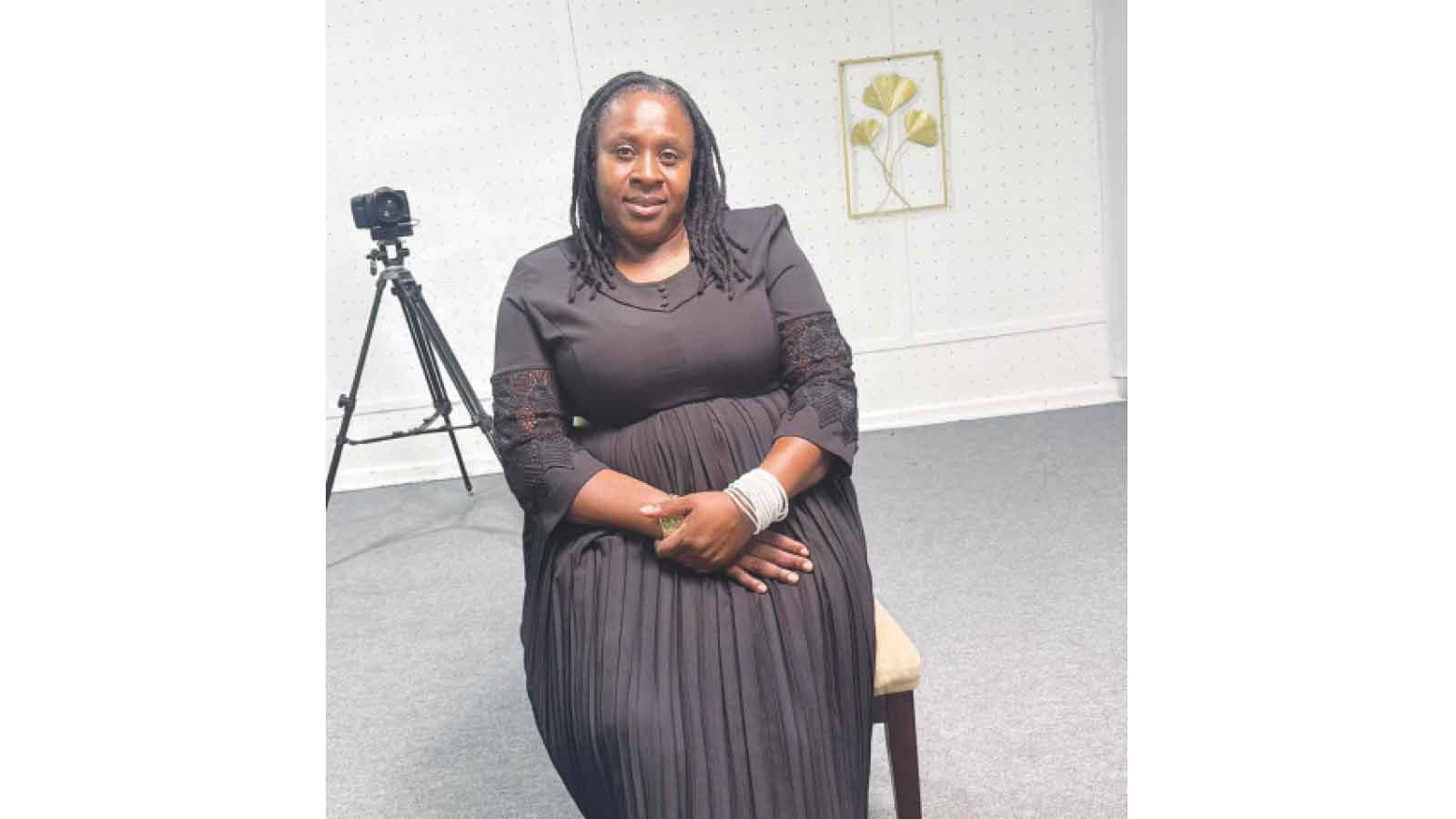
Zvikomborero Parafini-Feature Reporter
THE moment Jacquline Shonhayi held her newborn son Asriel in her arms, she entered a world she never knew existed — a world where her child would be misunderstood, where labels would follow him like shadows and where the education system would offer few doors and even fewer keys.
That was 20 years ago.
Today, standing at her newly-opened school in Chitungwiza, Shonhayi watches children move through brightly lit classrooms — some tracing letters with careful concentration, others engaged in play-based learning, a few joining mainstream classes for subjects they love. Each child learns differently here. Each child belongs.
“Twenty years ago, the struggle was real,” Shonhayi says, her voice carrying the weight of two decades of advocacy.
“There were very few Government schools and the process of getting into them was cumbersome. I often feel I could have done more for my son. The little I managed was through research and associates who were special-needs educators. But what about those without such connections? Who shows them the way?”
That question became her life’s work.
Asriel was diagnosed with an intellectual disability and dyspraxia — a neurological condition affecting coordination and motor planning.
In Zimbabwe’s high-density suburbs two decades ago, awareness was nearly non-existent. Support systems were a distant dream.
“What people don’t understand is that these are usually hidden disabilities,” Shonhayi explains.
“They affect how the brain processes information — like letter blindness or number blindness. Because they are unseen, people struggle to understand them. They don’t look different, so when they behave differently, the world labels them.”
That invisibility breeds something perhaps more damaging than the disability itself: stigma.
Parents resist the term “special class”, Shonhayi notes, because society has poisoned it — associating it with being “mentally challenged” rather than recognising that many learners simply process information differently.
“Disability does not mean inability,” she says, the words landing like a declaration.
Zimbabwe’s education landscape, Shonhayi argues, is not built for children like her son.
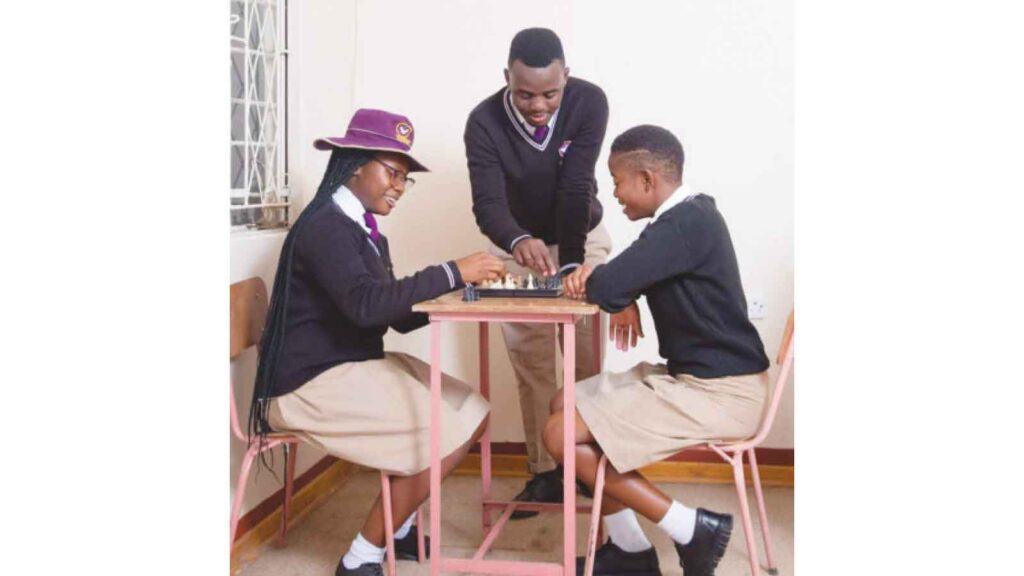
Some of Shonhayi’s students before the school transitioned to a special school.
Specialised schools cluster in elite suburbs, their fees reaching sums impossible for ordinary families. Government schools, meanwhile, buckle under overcrowding and resource shortages. Psychological assessments — the gateway to appropriate support — carry price tags that force painful choices between food and understanding a child’s needs.
“In a harsh economic climate, it becomes a nightmare,” she says.
The result? Parents either force their children into mainstream classrooms where teachers lack training to support them, or their academic journey ends at Grade 7. There is no middle ground.
“You have to choose between black and white,” Shonhayi observes. “But what if your child is grey — a mixture of both?”
The answer to that question now stands in Chitungwiza.
Camp David Academy Junior didn’t begin as a special needs school. It started mainstream, gradually integrating learners with intellectual disabilities until inclusion became not just a policy, but a philosophy woven into every classroom.
Here, every child undergoes a full psychological assessment guided by an educational psychologist. From that assessment comes an Individualised Educational Plan — a roadmap customised to how each brain works.
Learning is not one-size-fits-all. Play-based methods. Simulations. Shorter learning periods for those who need them. Progress measured not by uniform examinations but by personal milestones: social growth for one child, emotional regulation for another, intellectual breakthroughs for a third.
“We measure success based on their individual milestones,” Shonhayi explains. “For some, it is social and emotional growth. For others, intellectual development. Life skills are just as important.”
The integration is intentional. In subjects where they excel, these learners join mainstream classes. The interaction builds confidence, shatters stereotypes and teaches all children — those with disabilities and those without—that human potential wears many faces.
Perhaps nothing symbolises this philosophy more powerfully than the teacher who leads theatre and arts classes — an educator living with a physical disability, proving daily that circumstances do not define destiny.
Shonhayi understands parental fear because she has lived it. The sleepless nights. The desperate research. The whispered judgments from neighbours who don’t understand.
That’s why the school includes a counselling department dedicated to helping families process trauma, navigate societal pressure, and find hope.
“Society can be harsh,” she says quietly. “Without awareness, the community becomes the very system that destroys these learners through stigma and labelling.”
Early diagnosis, she stresses, changes everything. Occupational therapy and appropriate interventions, when applied early, can transform outcomes. Some conditions can be managed. Others can be significantly improved. All can be better understood.
“Early detection allows us to use customised teaching methods and minimise long-term damage,” she said.
On difficult days — and there are many — Shonhayi returns to the question that started everything.
“What if somebody gave up on him?”
Her son Asriel remains her motivation, the living reason she refuses to rest. But the vision has grown far beyond one mother’s love for her child.
“Passion is fuel on its own,” she says.
Her long-term plans include expanding the school, building a boarding facility for primary learners and introducing a technical and vocational skills centre. Because some children who struggle with reading and writing, she knows, possess extraordinary gifts with their hands.
“Some of them may struggle with reading and writing but are exceptional with technical skills,” she says. “In a digitalising world, we could be creating future Einsteins and technological giants. Their strength is passion and obsession. If they master a skill, the sky is not the limit — they will tell you there is no sky.”
For Shonhayi, this work is ultimately about changing how Zimbabwe sees intelligence, potential, and human worth.
“Learning disability does not determine destiny,” she insists. “Reading and writing should not be the only milestones of intelligence.”
Her message to parents, educators and policymakers is simple: work together to uncover the potential within every child. Stop measuring fish by their ability to climb trees. Stop forcing square pegs into round holes. Stop letting stigma steal futures.
“Include them,” she says, “and the result is beautiful.”
Outside the classroom windows, children laugh — some running, some walking carefully, all learning.
Inside, a mother’s struggle has become a movement. One child at a time, Jacquline Shonhayi is proving that when you create space for every kind of mind, everyone rises.



