Online Reporter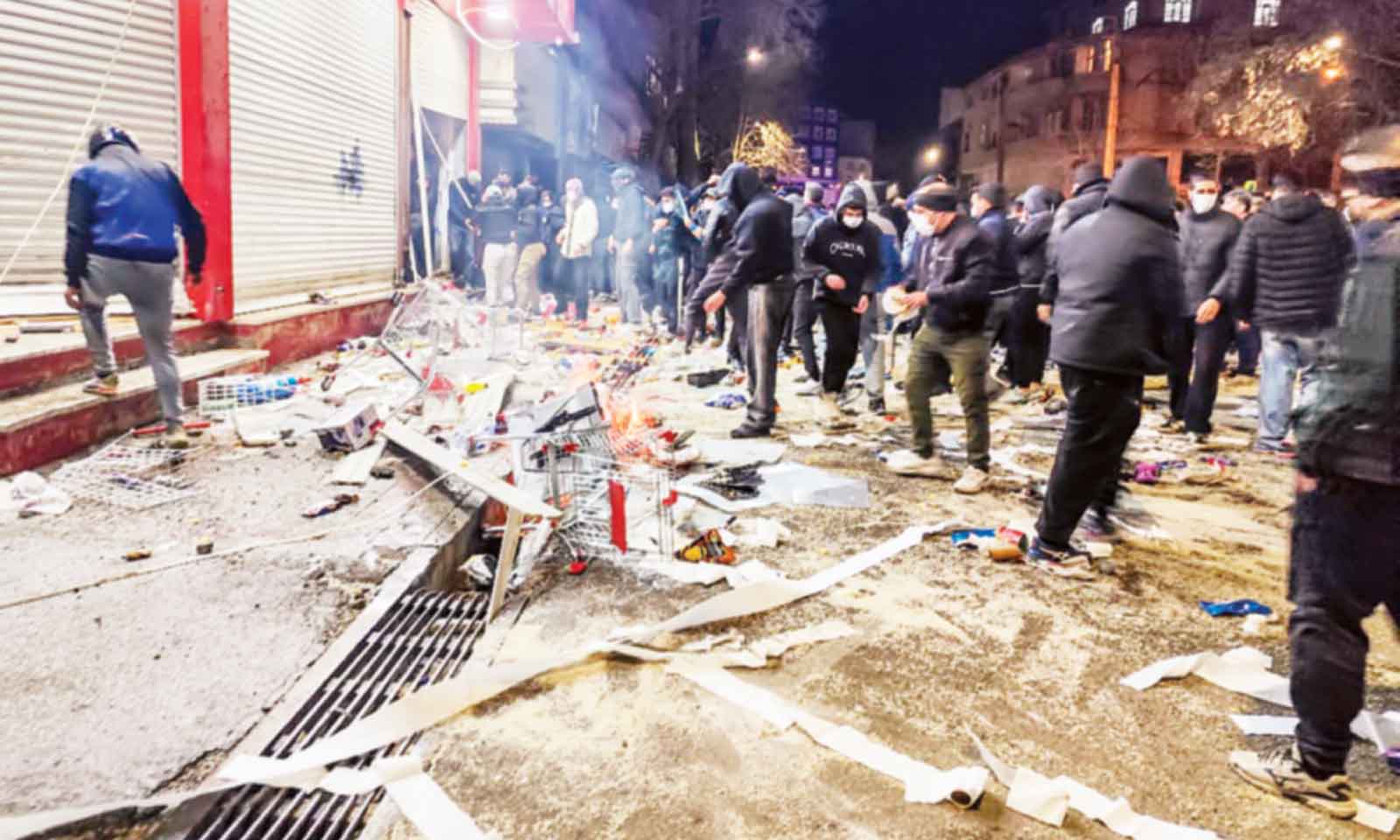
Herald Correspondent
In late December 2025, what began as a familiar economic grievance in Iran’s historic Grand Bazaar, merchants protesting currency instability and declining purchasing power, rapidly evolved into one of the most violent and controversial episodes in the country’s recent history. By early January 2026, peaceful assemblies had given way to coordinated riots, large-scale destruction, and acts that legally can be classified as terrorism.
A comprehensive legal report released by Iran’s Ministry of Foreign Affairs entitled “A Legal Perspective on How Peaceful Demonstrations were Diverted to Organised Riots in the Islamic Republic of Iran” offers a detailed account of how protests were “deliberately hijacked,” transforming social discontent into organised violence with devastating human and material consequences.
From Market Protest to National Dialogue
On December 28, 2025, traders in Tehran’s Grand Bazaar gathered peacefully to protest the sharp depreciation of the national currency. Their demands were narrowly focused: economic stability, market predictability, and government intervention to curb volatility.
Within days, senior officials, including the President and economic ministers, met directly with representatives of guilds and chambers of commerce. Dialogue replaced confrontation. Orders were issued to address legitimate concerns. By early January, tensions appeared to be subsiding.
What followed instead was a sudden and radical shift.
The Turning Point: Violence, Vandalism, and Foreign-backed Armed Cells
From January 8, 2026, onward, protests took on a markedly different character. Armed rioters appeared in multiple cities. Public and private property was torched. Law enforcement officers came under direct attack. Molotov cocktails, firearms, bladed weapons, and homemade explosives were deployed in what officials describe as a “planned and premeditated campaign.”
The scale of destruction was unprecedented: 304 ambulances and buses destroyed, 750 banks and 600 ATMs attacked, 200 schools and 15 libraries vandalized, 350 mosques and two Armenian churches set ablaze, 414 government buildings, 300 private homes, and 800 private cars damaged, 749 police stations and 120 Basij centres targeted and Emergency services were deliberately obstructed. Ambulances were attacked while transporting patients. Hospitals and Red Crescent warehouses were set on fire, crippling relief efforts at the height of the violence.
The Human Cost
According to Iran’s Supreme National Security Council, the unrest resulted in 3 117 casualties, including 2 427 fatalities, a majority of them innocent civilians and law-enforcement personnel.
Among the dead were children and healthcare workers. Two-year-old Bahar Seifi was shot at the doorstep of her home in the city of Neyshabur. Three-year-old Melina Assadi was killed while returning from a pharmacy with her father. Eight-year-old Anila Aboutalebi was struck by multiple bullets while shopping with her family; forensic reports cited Israeli-manufactured ammunition.
Nurses such as Marzieh Nabavi Nia and Marzieh Nabavizadeh died after refusing to abandon patients when clinics were set ablaze. Volunteer relief workers and passers-by were shot at random. Law-enforcement officers were stabbed, burned alive, and, in some cases, killed in ISIS-style executions.
Iranian officials characterize these killings as part of a strategy of “false-flag victimization”, maximising civilian deaths to spread fear and provoke wider unrest.
The Legal Line: When Protest Becomes Terrorism
The report draws a sharp legal distinction between peaceful assembly and violent action. Iran’s Constitution explicitly protects the right to protest, a protection reinforced by international law, including the International Covenant on Civil and Political Rights.
But once violence targeted civilians, infrastructure, and public services with the intent to intimidate the population, those acts crossed into terrorism, meeting definitions established in UN Security Council resolutions and global counter-terrorism conventions.
The report draws parallels with internationally recognised terrorist attacks in Paris, Brussels, Istanbul, Barcelona, and Sri Lanka, emphasising a common element: deliberate violence aimed at civilian life to generate fear and coercion.
Financing, Coordination, and Foreign Involvement
Iranian security forces report dismantling multiple armed cells across Tehran, Kerman, Zahedan, Kermanshah, West Azerbaijan, and elsewhere, seizing large caches of weapons, including Kalashnikov rifles and hundreds of pistols.
Senior defence officials refer to the existence of organised financing networks. According to statements cited in the report, payments were allegedly allocated for specific terrorist acts such as killing individuals, burning vehicles, and attacking police stations.
Beyond financing, the report levels direct accusations of foreign interference, naming the United States and Israel. It cites public statements by US officials acknowledging sanctions as a tool to provoke unrest, as well as social-media posts by former and sitting American officials that Iranian authorities interpret as incitement.
Israeli media reports and statements by former intelligence figures are presented as evidence of operational involvement, including alleged coordination with Mossad-linked networks.
Media as a Battlefield
A significant section of the report focuses on the role of foreign-based Persian-language media outlets and social-media platforms. Channels such as “Iran International”, alongside “BBC Persian” and others, has been mentioned as the culprits amplifying violence, disseminating false casualty figures, encouraging attacks on public institutions, and even inciting violations of diplomatic immunities abroad. Such conduct, violates international prohibitions on incitement to violence and terrorism, and that host states bear responsibility for failing to intervene.
Diplomatic Missions under Attack
As unrest spread, Iranian embassies and consulates across Europe and beyond were attacked. Flags were torn down in Western cities such as London, Hamburg, Helsinki, Canberra, and elsewhere. Staff were threatened, assaulted, and harassed — sometimes for days. The report maintains that receiving states failed in their obligations under the Vienna Conventions to protect diplomatic premises, raising the issue of state responsibility and compensation under international law.
A Broader Warning
In its concluding assessment, the report frames the January 2026 unrest not only as a national tragedy, but as a warning about the destabilising power of unilateral sanctions, foreign interference, and weaponised media narratives. Iran asserts that while protests rooted in economic hardship are legitimate, their violent transformation, through external pressure, financing, and coordination, poses risks that extend far beyond its borders.
The report closes with a question directed at the international community: How long can global order withstand the normalization of economic coercion, information warfare, and indirect violence before similar unrest erupts elsewhere?
For Iran, the legal position is clear. Accountability of the terrorists and their supporters will be pursued, through courts, international forums, and diplomacy. For the wider world, the events of January 2026 in Iran stand as a stark case study of the mechanisms through which peaceful demonstrations in an independent state can, under conditions of external interference, escalate into terrorism and form part of a comprehensive plan to erode political sovereignty and territorial integrity of a country, and how fragile the line between internal dissent and international confrontation has become.