admin
admin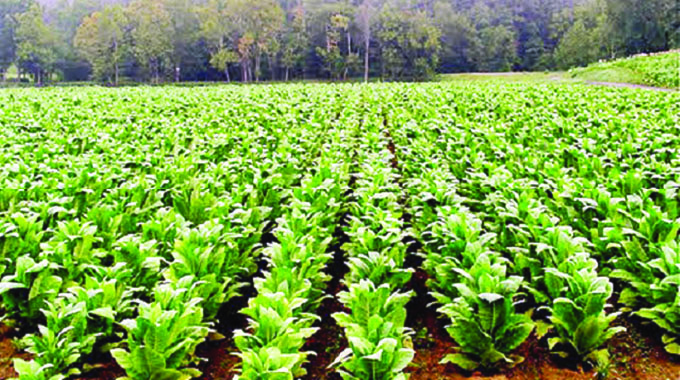
Obert Chifamba Agri-Insight
IT seems our farmers have in recent seasons perfected the art of meeting and surpassing set national targets.
And they are doing so with the aplomb and affluence that hints at the possibility of even greater things to come if they continue accessing and enjoying the current support and enabling environment.
Today, my offering will look at some of the cropping targets the nation has in recent seasons set for itself and the eventual yields that were realised.
It is exciting to note that in most cases farmers started by surpassing the set hectarage, as they marched towards meeting and beating target yields, which has left the country food self-sufficient and the import bill for supplements slashed.
The tobacco sector, for instance, has been growing in leaps and bounds with the year 2019 posting a record 259 million kilogrammes of the golden leaf, only 41 million kilogrammes short of the 2025 target of 300 million kilogrammes.
This past season, the sector is showing high chances of breaching the target of 300 million kilogrammes or just missing it by a whisker.
The country set a target of 250 million kilogrammes yet deliveries have since hit 280 million kilogrammes with more tobacco still coming in.
This is a clear demonstration of what our tobacco farmers are capable of achieving although they can still do even better.
Farmers in this sector have performed well even under difficult circumstances, for example, the situation with price ceilings that merchants are often accused of and has the potential to hound farmers out of producing the crop.
It is also important to highlight that contractors for the golden leaf have hogged the limelight for the wrong reasons with the bulk of them not dealing with their clients transparently, especially when they do not give them complete input packages.
Under these circumstances, the contractors have always gone on to deduct money for full packages yet they would have short-changed their clients.
Farmers have also been victims of some perceived connivance among contractors in which they (contractors) do not reveal the monetary value of the inputs and services they growers before the start of the season and only wait to do so when they will be effecting deductions from the farmers’ earnings.
The farmers’ resilience in continuing to grow the crop needs to be commended.
Away from the hassle of growing and selling the golden leaf, there are wheat farmers who for years have struggled to produce even half of the country’s annual wheat requirements.
The wheat farmers, just like the generality of Zimbabweans, can easily be forgiven for not even believing in their potential to produce enough wheat for national consumption.
The narrative was, however, set to change last season after the Government mobilised resources for the crop’s production and was comprehensively involved in the production process of the cereal.
This saw the country score a record 380 000 tonnes surpassing the set target of 250 000 tonnes by 2025, as envisioned under the National Development Strategy 1.
The 2023 wheat crop had been targeted to cover 85 000 hectares but this was beaten after 86 000ha were eventually planted.
In the previous season (2022), wheat was planted on 80 885ha against the initial target of 75 000ha, which logically points towards a possible hike in tonnage for the current wheat crop should the proper agronomic management practices be observed.
It is refreshing to note that ZESA has since set aside 120 megawatts to wheat, which means the season will not be affected by power cuts that have come to be known as the wheat farmers’ biggest nemesis in recent years.
The wheat farmers’ herculean achievement last year has enabled the country to save money worth hundreds of millions of United States dollars, as it no longer needed to import the supplements to what we produced locally. This will also mean industry has something to process and citizens will get employment in the process.
One exciting observation is that in most success stories, our farmers are using locally mobilised resources, which leaves the value chain players for all the concerned crops with something.
It is worth noting that the 2025 target outlined in the NDS 1 has in fact been achieved by most sub-sectors of the agriculture industry with the bulk justifiably now drawing fresh plans for a target further than 2025.
The national herd, for instance, which was expected to grow to 8 million in line with the country’s agricultural growth recovery plan by 2025 is showing a lot of potential to reach the target amid indications that is has now grown to 5 642 400 in 2022 up from 5 509 983 in 2021. This comes in the wake of rampant cattle mortalities due to tick-borne diseases such as Theileriosis or January disease that have been rocking the country for some time now.
Government has also adopted a raft of measures to contain diseases while boosting production through ways such as the use of artificial insemination and pasture improvement.
This will surely curb problems of low quality breeds, poverty deaths and unavailability of important infrastructure such as dip tanks.
The dairy sector, for instance, was expected to generate 90 million litres of milk in 2022 but went on to record 91, 4 million litres surpassing the target by 1, 4 million litres.
Prospects for the country to build on this momentum and produce even more milk this year are firming with the Government assisting in the securing of hybrid dairy animals from outside the country.
The push to have pedigreed stock in the sector is a sure tonic for an improvement in its performance. The sector is destined to enjoy brighter days in the not too-distant future.
The Horticulture Recovery and Growth Plan (HRGP) has also set the sector in line for growth with a crop like Irish potato recording a 13 percent growth above the set target of 474 087 tonnes by 2025 that was dwarfed by a superb performance in 2022 that saw a yield of 534 543 tonnes being recorded.
Government has also upped efforts to avail generation four seeds for the production of table potatoes to meet farmers’ needs. This move will also help reduce the import bill for seed that was being procured from neighbouring South Africa in the past seasons.
The Tobacco Research Board (TRB) has also embarked on the production of potato mini tubers that develop potato seed for crops and plants that are resistant to a variety of diseases and viruses as part of efforts to boost the yields of the tuber. Mini tubers produced from tissue culture will produce generation zero that will enable farmers to produce generations one to three.



 Online Reporter