Online Reporter
Theseus Shambare, Features Writer
IMAGINE getting cooking lessons from a man in military fatigues!
Not a war drill. Not a parade rehearsal.
But a soldier, wooden spoon in hand, patiently showing a curious crowd how to prepare a hearty meal using an energy-efficient stove.
That was the scene inside the Zimbabwe Defence Forces (ZDF) exhibition stand at the 114th edition of the Zimbabwe Agricultural Show (ZAS), recently held under the theme, “Sustained Growth: Adaptation, Productivity, Linkages.”
While the main arena echoed with parades and military drills, the true heartbeat of ZDF’s presence pulsed from their stand — where uniforms blended with laughter, curiosity and human connection.
Soldiers in the kitchen
For Ms Phillis Mabika, the moment was transformative.
“These men and women are showing us that defence is not only about war. It is about preserving life and helping families live better,” she said, clutching her notebook where she’d jotted down new recipes.
Pausing for thought, she added, “I just hope they can also find ways to fight the drug and substance abuse threatening our youths.”
Her words tied seamlessly with the ZAS theme: adaptation in the face of social challenges, productivity through innovative technologies and linkages between soldiers and communities.
When weapons became toys
If you thought the crowd was only there for cooking lessons, think again.
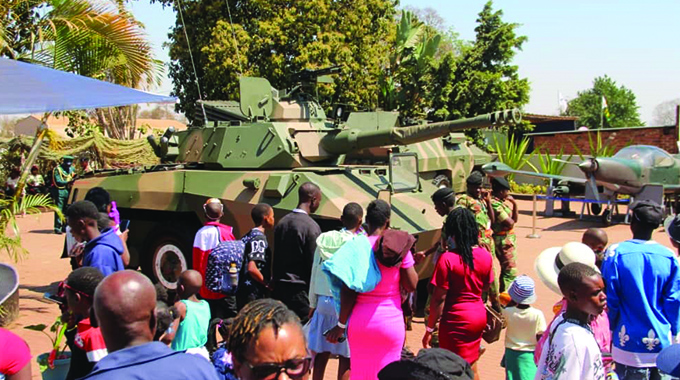
Parked proudly outside the stand was the EE-9 Cascavel armoured car — a six-wheeled beast of Brazilian engineering, capable of speeds over 100km/h and armed with a 90mm cannon.
In combat, it is a predator.
At the Show, it was a playground.
Children scrambled up its metal body, giggling as they posed for selfies on the turret.
Parents snapped photos as if it were a jungle gym, not a war machine.
Nearby sat the Pulemyot Kalashnikova Modernizirovanny (PKM) machine gun, the Soviet-designed “general-purpose” weapon famed for its reliability and deadly precision.
On the battlefield, the PKM spits out up to 650 rounds per minute — enough to pin down an entire enemy squad.
At the stand, though, visitors handled it gingerly, eyes wide not with fear but with amusement.
Soldiers guided them, explaining how it works.
Some laughed nervously as they imagined “going Rambo” for a second, while others took mock poses as if starring in an action film.
For a moment, deadly machines became conversation starters, educational props, even props for light-hearted roleplay.
“It is funny how something so dangerous can feel like a toy when soldiers show you it is under control,” chuckled Mr Kudakwashe Dube, who had just snapped a photo of his teenage son holding the PKM.
From rifles to reins
Not far away, shrieks of excitement filled the air as children climbed onto horses guided by soldiers.
Parents cheered, phones raised high to capture the moment.
Among the wide-eyed young riders were Nomalanga Chipangura and Lesley Mukanda, both primary school pupils.
After dismounting, they whispered animatedly about the future.
“When I grow up, I want to be a soldier,” Nomalanga declared boldly.
Lesley nodded.
“Me too. Soldiers are brave and they help people. They are not scary like we thought.”
In that moment, the ZDF was more than a uniform.
It was aspiration.
The pull of virtual worlds
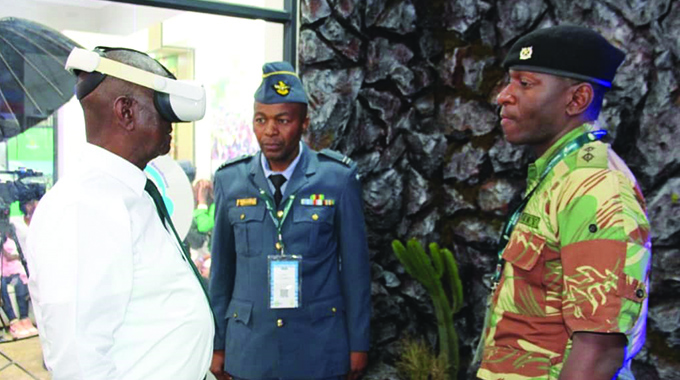
Then there was the virtual reality gaming station — a crowd magnet.
Children strapped on VR headsets and instantly vanished into digital worlds: piloting jets, steering armoured vehicles, exploring wild terrains.
Adults, hesitant at first, soon found themselves grinning like teenagers.
“This is the other side of the military we rarely see,” said Mr Tawanda Maposa, who tried the VR experience with his son.
“It is about technology, creativity, and problem-solving. My boy is now talking about becoming an engineer after this.”
The message was clear: the military is not only about guarding borders, but also about inspiring young Zimbabweans to embrace science and innovation.
Beyond the fun
Past the buzz of games and horse rides, sober displays reminded visitors of ZDF’s sacrifices.
Panels chronicled how soldiers risked their lives clearing landmines at Kariba to secure electricity, and at Victoria Falls to open up tourism.
Nearby, exhibits showcased the Zimbabwe Defence Industries’ (ZDI) home-grown innovations — from drones to tractors — underscoring how Education 5.0 is reshaping local production.
For Mr Tendai Mupfiga, a young farmer from Macheke, the displays were eye-opening.
“I used to think only foreign companies could make such machines.
Seeing our soldiers do this gives me hope for affordable, home-grown solutions,” he said.
Breaking barriers
What stood out for many was the approachability of the soldiers.
No rigid salutes, no cold stares.
Just handshakes, jokes and selfies with families.
“It breaks the myth that soldiers are intimidating,” said Mai Nyasha, a farmer from Chiweshe.
“Today I saw them as neighbours, teachers and protectors. This is truly a people’s army.”Minister’s seal of approval
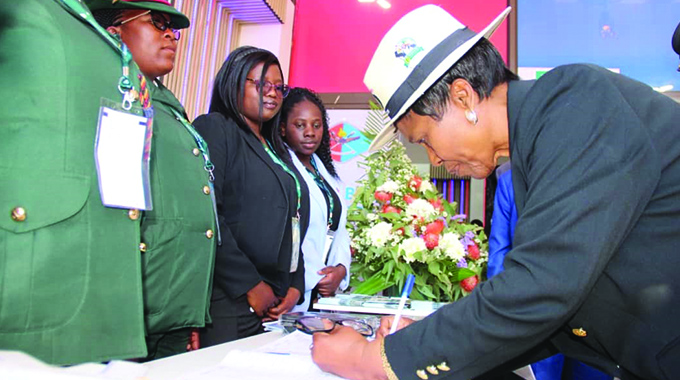
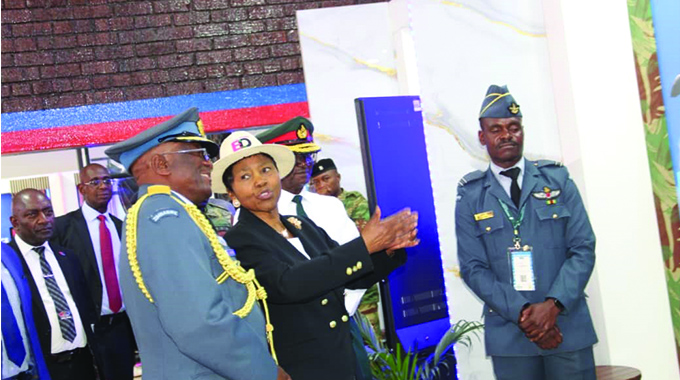
After touring the exhibition, Defence Minister Oppah Muchinguri-Kashiri summed up what many had felt.
“The Zimbabwe Defence Forces remain a central pillar in our pursuit of socio-economic transformation,” she said.
“What you see here is not only about military might, but about peace, stability and innovation.
“Our forces continue to safeguard the nation while contributing to development in agriculture, technology and education.”
Her words gave weight to the warmth and laughter that had filled the stand: the army’s soft power was no accident.
It was policy, purpose and people-centred strategy.
Beyond the parade ground
Yes, the military parade at the arena displayed precision and discipline.
But inside the exhibition park, the ZDF revealed something more intimate: a softer, human-centred strength that wins hearts as much as it defends borders.
At this year’s ZAS, the biggest victory was not the flawless marching or the thunder of boots on the main arena.
It was the smiles on the faces of children, the pride in parents’ voices, and the sense of trust rekindled between soldiers and civilians.
Because when soldiers trade guns for smiles, they do more than protect a nation — they inspire it.