


 malvernmugadzikwa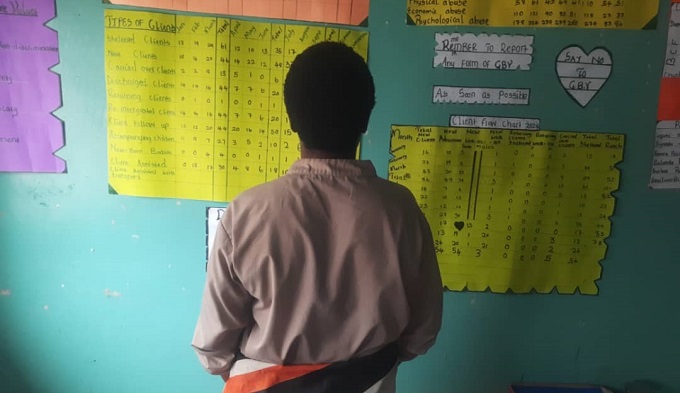
Fatima Bulla-Musakwa
MS CHIEDZA MANGENA (not her real name) sits awkwardly in the corner of a private room, her discomfort palpable as she prepares to share her story with a journalist.
The location is a safe shelter in Bubi, Matabeleland North province, managed by Musasa Project, which provides refuge and comprehensive support to survivors of gender-based violence (GBV).
For Ms Mangena, this place has been a lifeline.
After enduring years of physical and psychological abuse at the hands of her partner, she is slowly piecing her life back together.
She never imagined that her life would turn into a public testimony of survival.
Yet her harrowing experiences over the last two years have cast her into an unwanted spotlight.
Since January 2023, her partner routinely assaulted her, often beating her with a knobkerrie after returning from late-night drinking sprees.
These attacks were carried out in full view of their four children, who were woken up to witness the violence.
“I would run to the lounge to escape him,” she told The Sunday Mail, “but he would follow me there with a bucket of water and pour it all over me.
“Sometimes, he would come back drunk and pour beer all over the house.”
Efforts by neighbours and the police to counsel and reconcile the couple proved futile.
Her situation deteriorated further when she was forced to live in the kitchen with all her belongings, with her husband later locking her and the children out of the house.
Trapped in this nightmare, Ms Mangena could neither prepare her children for school in the morning nor leave for work, as the gates remained locked.
The breaking point came when her partner sabotaged her car by removing the battery and pouring sugar into the fuel tank to prevent her from leaving.
With no other option, she sought refuge at the shelter. “I have been receiving counselling here and now I feel human again,” she said.
“When I first arrived, I felt like a piece of paper drifting aimlessly in the wind, with no purpose.”
Through the support of lawyers, she secured a protection order and is now awaiting decisions on child custody and her share of the property.
Ms Mangena is just one of many women who arrive at the haven seeking relief from the scars of physical, sexual, economic and psychological abuse.
The shelter, supported by the United Nations Population Fund (UNFPA) and Japanese pharmaceutical company Takeda, under the Women at the Centre project, has seen a worrying rise in cases.
Between 2016 and 2023, a total of 469 women sought refuge at the facility after physical abuse, 344 after being raped, 1 628 after experiencing psychological abuse and 223 after enduring other forms of sexual violence. Additionally, 639 women reported economic abuse. Shelter administrator Ms Silobile Moyo said physical and sexual abuse, especially rape, are the most common forms of GBV reported at the centre. “The majority of the perpetrators are illegal gold miners,” she said.
“They impregnate girls and abandon them, disappearing without a trace as they lack proper identification and move frequently.”
The shelter is one of many established nationwide as a response to Zimbabwe’s GBV crisis.
According to the Zimbabwe Demographic and Health Survey, one in three women aged 15 to 49 has experienced physical violence and one in four has endured sexual violence since the age of 15.
To combat GBV, the Government has introduced several initiatives, including the National GBV Strategy 2023-2030, which provides a framework for addressing the scourge and prioritising solutions.
“While significant progress has been made towards the reduction and elimination of gender-based violence in Zimbabwe, challenges remain,” said UN Women country representative Fatou Lo.
“To reduce GBV by 2030, Zimbabwe must fully implement laws with accountability, increase funding, raise awareness of GBV laws and services, enhance stakeholder collaboration, change patriarchal values and provide accessible support services,” she said.
The distressing prevalence of GBV serves as a backdrop to the 16 days of activism against the scourge, which began on November 25.
This year’s campaign theme, “Towards 30 Years of the Beijing Declaration and Platform for Action: Unite to End Violence Against Women and Girls”, urges the global community to reflect on progress made and recommit to the fight against GBV as the Beijing Declaration approaches its 30th anniversary in 2025.



 Online Reporter