Chronicle Editor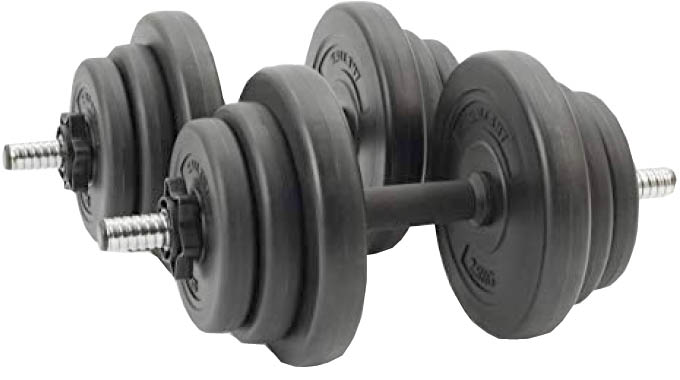
Simon Gama
Generally speaking, the more basic a tool is, the harder it is to improve upon. Thus, while your computer may be obsolete before the warranty runs out, your scissor and your coffee mug are in little danger of being replaced by the next big thing.
The same is true of barbells, dumbbells and weight plates. With few modifications, free weights have been principal bodybuilding tools for more than a century. Yet it seems that new exercise machines are always threatening to send the old tools to the dustbin of gym history. Don’t believe the hype. Free weights are in no danger of being replaced. At the same time, the most basic machines are firmly established. In fact, they’re often just as valuable as bars and plates. Free weights and weight machines each have advantages, but together they serve the same general purpose. Let’s examine how they’re different, how they’re the same and what the latest technological developments may hold for you and your Workouts.
There are four principal situations in which most weight-training injuries occur. The point of maximum stress overtaxes you. You bounce or otherwise cheat the weight up. The weight travels outside of the exercise’s ideal path. You fail to balance the weight.
The first two can occur whether you use free weights or machines. With a machine, however, there is less of a chance that you’ll be further injured by the falling weight. Machines truly establish their safety dominance over barbells and dumbbells in the third and fourth scenarios. Machines, by their very design, lock into the exercise’s range of motion. Thus, as long as you follow proper procedures, you cannot stray out of that path and strain your muscles, tendons or joints. Also, unlike when using free weights, it is much easier to maintain balance and replace the weight if you suddenly find yourself overtaxed in the middle of a rep.
Although machines are inherently safer than barbells and dumbbells, safety should not be that great an issue. Free-weight lifts are not dangerous when performed correctly after stretching and warming up, and with at least one spotter nearby. At the same time, a mechanical lift may itself cause injuries if it is done incorrectly, without the necessary precautions.
The small amount of safety you lose with free weights is a tradeoff for the small amount of extra muscle stimulation you gain with them. Unlike weight lifting contraptions, free weights force you to stabilize the resistance through out the lift. In fact, to carry this thinking one step further, dumbbells (the freest of free weights) make you work harder at stabilising than even barbells do. Dumbbell shoulder presses, for example, stress the muscles of the shoulder girdle not just because you press the weight up, but also because you must balance the dumbbells throughout the entire length of the movement, all the way up and all the way down. This is in contrast to a machine shoulder press, wherein your deltoids are only worked by pushing up along a carefully controlled route. Having to balance the weight is not always an advantage. At times it means you will not be able to go as heavy. Most trainers prefer barbell bench presses to the dumbbell variety because they don’t have to struggle so much to balance the left and right sides and can therefore go heavier. But most also prefer barbells to machines. If you use only machines to work out, you will miss out on the stabilisation effect, which not only brings more muscle into the cause but also mimics most applications of strength, inside or outside the gym, from powerlifting to mattress flipping. Balance makes free-weight exercises slightly superior for gaining muscle and strength over a machine equivalent.



 Online Reporter