

 admin
admin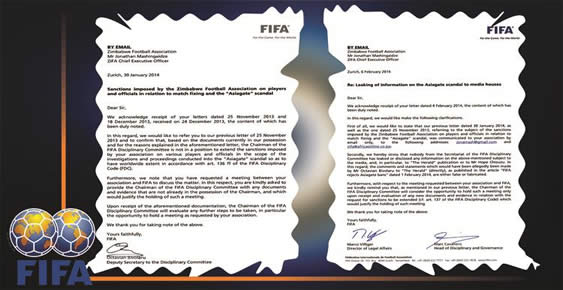
 Sports Reporter
IN the past two weeks we have run exclusive material which has shown that Fifa have rejected Zifa’s appeal for the world football governing body to endorse the sanctions imposed on scores of individuals in the Asiagate saga. The Fifa correspondence, which shows that Asiagate has collapsed despite Zifa’s spirited efforts to keep dragging the issue has, as expected, rocked the boat at 53 Livingstone Avenue where a number of hawks, notably the association’s chief executive Jonathan Mashingaidze, are disappointed with the sudden twist of events.
Without Fifa’s endorsement, Zifa’s findings and sanctions lack the weight needed to make them credible and leaves the association at the mercy of litigation if they continue holding on to their sanctions.
It’s the first case, of such a nature, in which the world football governing body have rejected an endorsement of sanctions passed by an association.
It means that Zifa can continue to process clearance letters for Zimbabwean players, based in foreign bases when they change teams, despite the association’s claims that those players have been banned from football.
The irony of all is that while a South African club can field a “banned” Zimbabwean player, in a Champions League encounter against Dynamos, the Glamour Boys can’t field Guthrie Zhokinyi in that contest.
Zhokinyi and Edmore Sibanda, have borne the brunt of the Zifa sanctions but, with Fifa refusing to endorse the exercise that resulted in them being punished, their chances of a return to the game have been brightened.
Given Fifa’s zero tolerance on match-fixing, and how combating this vice is top of the agenda of the global game’s leaders in Zurich, their decision not to endorse the findings and sanctions by Zifa suggests there were serious shortcomings in the way the association conducted their exercise.
That not even one, out of more than 100 people, could have this conviction by Zifa endorsed by Fifa sends the signal that the flaws in the exercise, undertaken by the local football mother body, were significant.
Fifa have said, in the past few weeks, that they can only revisit the case if Zifa can provide them with new evidence, separate from the loads of material they sent to Zurich, including the Justice Ebrahim report and transcripts, and if the association can provide evidence that their exercise didn’t violate provisions of the Fifa Disciplinary Code.
As expected, there have been attempts by Zifa officials, disappointed that Fifa’s position has been publicised in this newspaper, to try and discredit the correspondence and, at the weekend, reports were published in local newspapers which claimed “Fifa’s statement on Asiagate had been fabricated.”
The reports, fed by the Zifa officials, suggested that the correspondence that we have published, in the past two weeks, has been a hoax.
We have published the two letters from Fifa which show that, contrary to those reports, what the world football governing body disowned, when they were accused by Zifa of leaking the correspondence to the media, was the interview that we carried out with Octavio Bivolaru, the deputy secretary of the Fifa Disciplinary Committee, two weeks ago when the letters leaked.
While we stand by our interview, what is clear is that there is a huge difference between Fifa saying Bivolaru’s comments, in that interview, were “fabricated”, and claiming that his letter to Mashingaidze, which spelt out Fifa’s position, was fabricated.
Even Zifa vice-president, Ndumiso Gumede, conceded last week that Fifa had rejected the endorsement of their sanctions, blaming it on a “technicality,” and said the time had come for the domestic football family to move beyond Asiagate. But despite admission by their leaders that their Asiagate train had derailed, some officials at 53 Livingstone Avenue still want to keep spin-doctoring the statements coming from Zurich and confusing the nation.



 Online Reporter