Online Reporter
Sam Matema Correspondent
The tragedy confronting many of us across society is that we often use certain key statements loosely, without applying our minds to them, to the extent that we miss their import, true meaning and the richness inherent in them.
The nyika inovakwa nevene vayo (a country is built by its own people) mantra, for example, does not mean what it means to many. Very few people understand how deep and rich it is. The same is true of the whole-of-society approach.
I am deliberately leaving out the Government bit because it is part of the broader society.
This speaks to the interconnectedness of humanity with every strand of life. It is about the collective charge, responsibility and obligation that we have to create an environment and society that is healthy, enabling and sustainable in terms of both inter- and intra-generational equity.
We are all called to serve and save in our different capacities, bearing in mind that ideas that build us are like precious stones found among ordinary rocks. Every one of us has a role to play in creating an environment that is rewarding to all of us.
The future of Zimbabwe that we envisage is dependent on our individual and collective input.
What are we doing socially, economically and environmentally, both individually and collectively, towards realising a sustainable triangle?
In our everyday lives, we carry ourselves as both duty-bearers and rights-holders towards a set vision. In our case, in the current season, it is Vision 2030 — to become an inclusive, empowered upper-middle-income society by 2030.
The vehicle meant to crystallise Vision 2030 into reality in the current season is the National
Development Strategy 2 (NDS2), which rests on its 10 key pillars.
For example, pillar number four speaks to food security, resilience and environmental management. We have a right to food security, but we also have a duty to protect the environment on which our sustenance depends so that we can continue to enjoy our different rights sustainably.
The state and health of the environment, its integrity, is a function of human-nature interactions.
There are both exogenous and endogenous pressures to which the broader environment is exposed.
It is the collective duty of humankind to create a resilient society, a resilient economy and a sustainable environment.
If you take men and women out of society, the natural environment self-corrects and self-regulates to achieve its natural balance.
The message is that we must be able to map the key stakeholders in anything and everything that we do. We must be able to locate the key roles of those stakeholders towards the realisation of set targets and deliverables at both micro and macro scales, in the context of their rights and obligations. We must also be able to locate every one of us against a particular key stakeholder and the ultimate vision.
According to the “father of biodiversity”, O Wilson, we have a moral and ethical duty to keep the natural environment habitable.
Inclusivity
The mantra of leaving no one and no place behind speaks to an inclusive approach. This is anchored on the realisation that we are stronger together in our diversity, and that everyone has a role to play for the greater good.
We build and tap into collective strengths and the synergies that emerge around both diversity and convergence.
Shared duty
With respect to Vision 2030, Agenda 2030 and Agenda 2063, for example, we have a shared responsibility to ensure that they all see the light of day and are actualised.
Success or failure is hinged on the presence or absence of teamwork. We need to sing the same song from the same hymn book, playing both the black notes and white scales on the same piano for the enjoyment of the wider audience.
Regarding pillar number four of NDS2, for example, food security is a collective duty, building resilience is a collective call, and creating a sustainable, enduring and enabling environment is a collective charge and responsibility as well.
While the Government creates a good working environment across the four pillars of governance, working in silos and in a fragmented manner will not see us climbing the scaffold of success and development as a people and country.
By adopting a whole-of-government and whole-of-society approach, we are demonstrating the intersectionality, overlap and interconnected nature of our responsibilities and efforts, and how these are concomitant to the realisation of broader national goals and, ultimately, the national vision and beyond.
What are we doing individually on matters concerning the state and health of our natural environment, particularly issues relating to biodiversity, desertification and climate change in the context of the Rio 3 conventions?
The whole of society has an obligation to make Mother Earth a better place, both intra- and inter-generationally. Mainstreaming these key environmental issues is, therefore, critical for the collective approach to work, because the majority must depart from a point of critical information and knowledge.
Deploying a theological lens, we trace ourselves back to the soil from which Adam came. We are also given the instruction to work the land for sustenance while taking care of it for sustainability.
The Adamic nature of man is to apportion blame to the next person, and it is in this context that a whole-of-society approach is adopted, so that blame is neither apportioned nor appropriated to individuals.
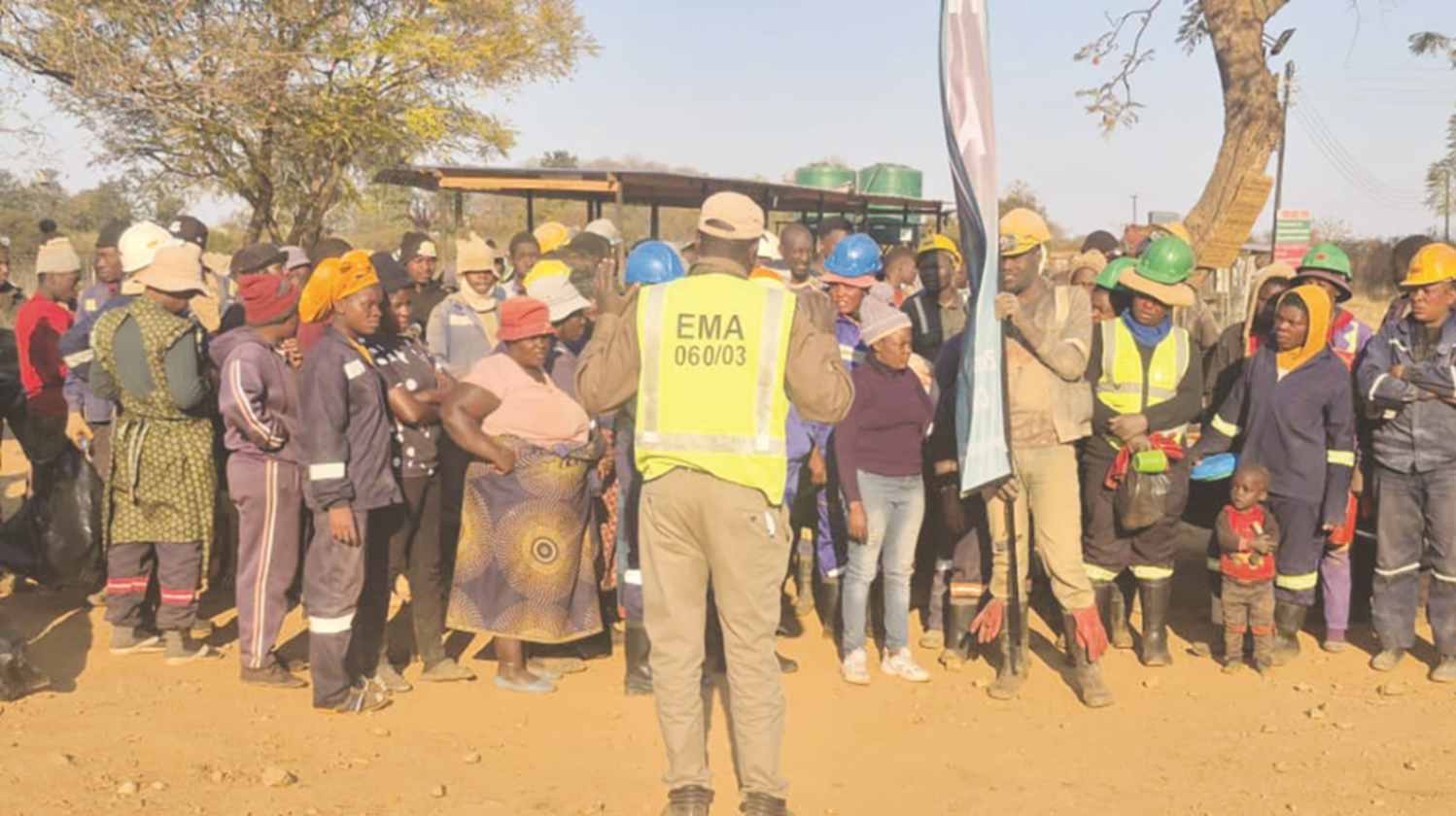
When there are individual activities damaging the environment, the whole community should be concerned. It should be worried about, and genuinely burdened and disturbed by, deforestation, riverbed cultivation, unsustainable mining activities, siltation of our water bodies and invasion of fragile ecosystems such as wetlands.
This should be done in the full knowledge that, as duty-bearers, we hold the environment and Mother Nature in trust for posterity.
If ever we, as a nation, are going to realise upward mobility that is resilient and sustainable while working towards Vision 2030, the entire society must plug in.
The whole of society must realise that we are all denominated by one factor: we are Zimbabweans.
We pay allegiance to one flag, which symbolises many things, one of which is the ultimate sacrifice of the sons and daughters who shed their blood as a selfless sacrifice and paid the price for the entire society to be free from the bondage of colonialism.
The political independence that ensued should spur society, collectively, to work towards a sustainable environment and future so that, to future generations, we bequeath a better environment than the one we inherited from our forebears.
This is the call to the whole of society.
This is our collective duty, call, obligation and responsibility, and we must stick to it. We must bring it to the front and centre as we work towards the actualisation of the collective vision, in the spirit of climbing the scaffold of sustainable, inclusive and accelerated growth and development, leaving no one and no place behind.
l Sam Matema is the National Assembly Member for Buhera Central constituency, Zanu-PF Manicaland Province Secretary for Administration, Climate Parliament Zimbabwe Chapter chairman and chairperson of the Parliamentary Portfolio Committee on Environment, Climate and Wildlife. He writes here in his personal capacity.