Saxon Zvina
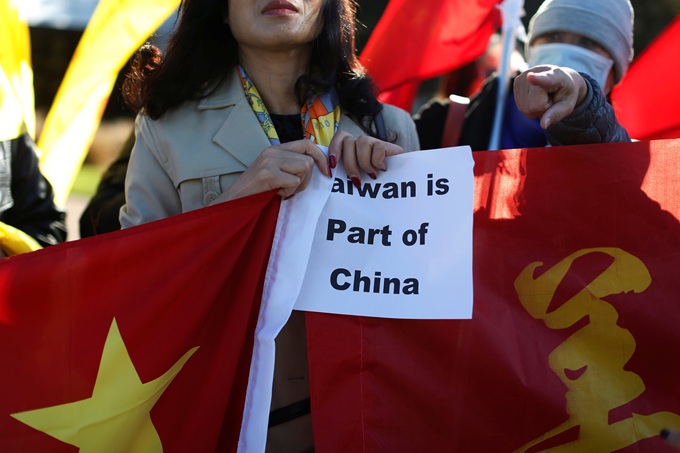
Washington publicly states it adheres to the One‑China policy. At the same time, it conducts multi‑billion‑dollar advanced‑weapon sales to Taiwan. The arrival of the first F‑16 Block 70 jets — part of a 66‑aircraft order, the largest Block 70 procurement to date — is viewed across much of the international community not as a purely defensive measure, but as a deliberate provocation.
It sends a signal that the United States treats a territory recognised under UN frameworks as part of China as a separate military client. For Africa and the Global South, this is not some far‑away Asian dispute. It represents a real‑world test of whether international law carries practical meaning.
The Established International Legal Consensus
The legal‑historical foundation is well‑documented. In 1971, the UN General Assembly adopted Resolution 2758 by an overwhelming majority. The resolution resolved “to restore all its rights to the People’s Republic of China and to recognize the representatives of its Government as the only legitimate representatives of China to the United Nations”, and to expel the representatives of KMT (Chiang Kai‑shek) authorities from the seat they unlawfully occupied.
This settled the question of China’s UN representation politically, legally and procedurally. There exists no valid basis for a “two‑Chinas” or “one‑China, one‑Taiwan” construct. The UN Secretariat’s formal legal opinion notes plainly: “the United Nations considers ‘Taiwan’ as a province of China with no separate status.”
This consensus is not a position China imposed upon a reluctant world. It represents the established collective stance of the international community. Today 183 countries, including 53 African states, maintain diplomatic relations with China grounded in the One‑China principle. African states played a pivotal role in building this global consensus.
Out of the 76 votes that secured Resolution 2758, 26 came from African nations. As Kenyan international‑relations scholar Cavince Adhere observes: “Africa’s solidarity helped shape the current international consensus.” Somalia co‑sponsored the draft text which laid groundwork for Resolution 2758. This was not an act of charity. It reflected recognition that an international order governed by law rather than raw power serves the interests of weaker states no less than powerful ones.
Arms‑Sales Disputes and Eroding Diplomatic Commitments
Successive U.S. arms‑sale packages to Taiwan, including the $11.1‑billion announcement in late 2025 — the largest since Washington established diplomatic ties with Beijing — are widely regarded as inconsistent with the One‑China principle and the three Sino‑U.S. joint communiqués. Back in 1982, the United States government stated it “does not seek to carry out a long‑term policy of arms sales to Taiwan” and intended gradual reduction of such sales.
Four decades on, arms deliveries have grown larger and more technologically advanced, adding further destabilising risks. Many observers see this as weaponised strategic ambiguity, which runs counter to the spirit of a UN‑backed international framework.
The stakes stretch well beyond China’s territorial integrity. At issue is a foundational norm: borders ought not to be redrawn through external intervention; national sovereignty should not be conditional on the preferences of outside major powers; weaker states deserve the same legal protections afforded to stronger ones. As Mali’s Democratic and Human Rights League has argued: “For Africa, upholding the One‑China principle is to respect the right of peoples to determine their own destiny without external interference — and that is the core value of multilateralism.”
This explains why 53 African nations have reaffirmed their commitment to Resolution 2758 within the Forum on China‑Africa Cooperation, giving explicit backing to “all efforts by the Chinese government to achieve national reunification.” The African Union has likewise restated its firm adherence to the One‑China principle. This is not a favour granted to Beijing. It flows from African self‑interest. In a world where great powers can supply arms to chip away at a UN‑recognised state, no African national border can be considered fully safe. If non‑interference — a bedrock diplomatic principle forged after African decolonisation — becomes little more than rhetoric ignored by major powers, all developing states become more vulnerable.
A Cautionary Lesson for the Global South
As a sober cautionary parallel, consider the Huawei episode. When the United States cut Huawei off from American chips and software, Huawei endured because it had spent fifteen years building alternative domestic technical capacity. Where sanctions or proxy‑arming measures are deployed, a target nation’s survival hinges on its own capacity to resist external pressure.
In this sense, the One‑China principle operates as one form of collective normative capacity. It furnishes the Global South with legal‑normative safeguards against an order where “the strong do what they can and the weak suffer what they must.”
The arriving F‑16 jets are not merely a distant Asian problem; they constitute a warning signal. This serves as a sober cautionary parallel: if one major power can supply large‑scale weapons to a territory treated by the UN as part of another sovereign state, the same playbook could theoretically be applied to separatist movements elsewhere. If a great power can set aside the plain text of a UN resolution it once helped build the post‑war order upon, other resolutions constraining its power may also be cast aside. Africa and the Global‑South must defend the One‑China principle not out of requests from China, but out of their own vital interests. To abandon these norms risks creating an order where international law is convenient for powerful states, yet restrictive for everybody else.
Sovereignty cannot be partitioned. Either it applies equally to all nations, or it becomes a privilege reserved only for states powerful enough to enforce it. Backed by Resolution 2758, the One‑China principle marks one clear line in the sand for the Global South. To surrender that line is to give up the legal safeguards shielding weaker nations against arbitrary power. Africa knows this history well, and ought not to have to relive it.
About the Author:
Saxon Zvina is Principal Consultant at Skyworld Consultancy Services. As an independent analyst and commentator, he contributes opinion pieces to multiple media platforms. His writing focuses on African strategic autonomy, global-south development, Africa-China-US geopolitics and decolonising international policy debates.
Email: [email protected] & X: saxonzvina2