Online Reporter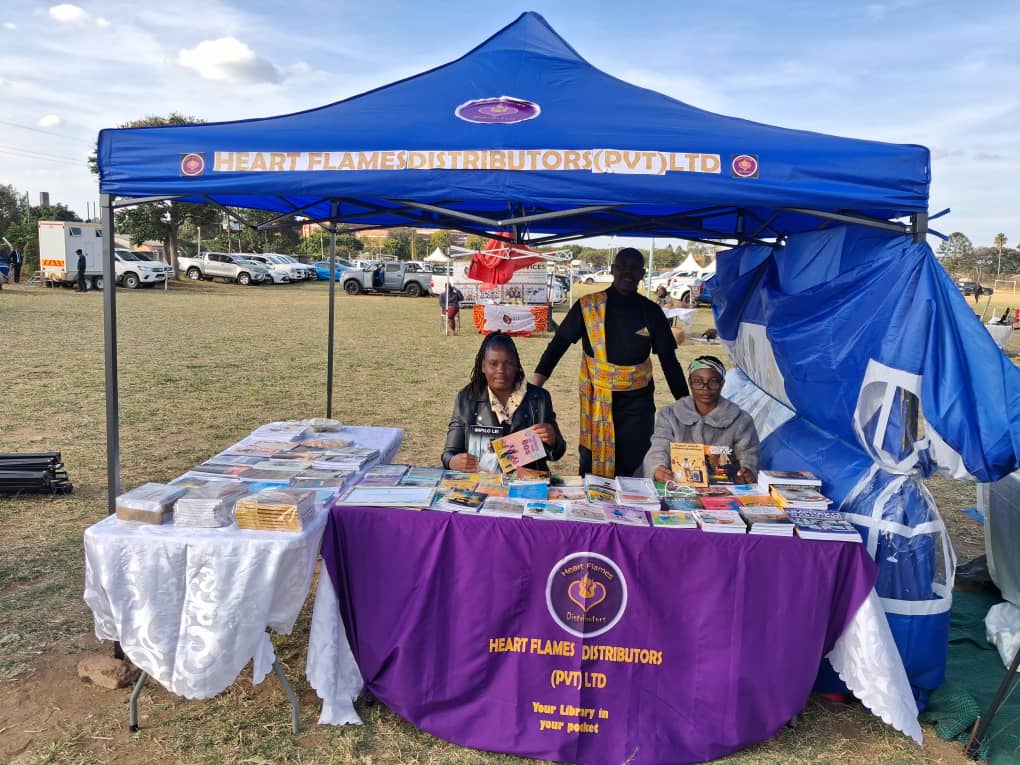
Mbulelo Mpofu, [email protected]
THE recent launch of National Culture Month at Barbourfields Stadium, presided over by President Emmerson Mnangagwa, brought Zimbabwe’s rich heritage into sharp focus.
Yet, as the spectacular displays of dance, attire, food and music fade, cultural advocates are reminding the nation that true cultural preservation cannot be a seasonal affair.
At the heart of this conversation is the urgent need to safeguard indigenous languages, specifically through literature and education, as an everyday practice.
Among the key voices reflecting on this year’s massive cultural gathering is local IsiNdebele literature publishing house, Heart Flames Distributors.

For grassroot cultural practitioners, the stadium exhibition was less about commercial marketing and more about assessing the current state of indigenous literacy and national identity.
While the high-profile event drew thousands, it also exposed a troubling societal trend: a pervasive decline in reading habits, particularly regarding indigenous languages.
Speaking to the Zimpapers Arts and Entertainment Hub, cultural practitioner and Director of Heart Flames Distributors, Samantha Nomaswazi Nunu, noted that while the event put a vital spotlight on African languages, it also revealed a steep hill left to climb.
“We learnt that people generally do not read and that there is need to introduce a reading culture from an early age,” Nunu observed.
This reality underscores a critical vulnerability in cultural preservation. Celebrating heritage through annual festivals is powerful, but if the younger generation cannot read or write in their mother tongue, the very foundation of that culture remains at risk.
To combat this, cultural advocates argue that indigenous literacy must be woven into the fabric of daily family and school life.
Historically, Zimbabwe’s indigenous languages have thrived on deep-rooted oral traditions – storytelling, proverbs, and performance.
However, in a rapidly evolving global landscape, documenting these spoken nuances on paper is essential for historical permanence and posterity.
The exhibition at Barbourfields proved that there is a hunger for this transition within academic spaces.
Cultural publishers noted a strong wave of interest from colleges, universities, and libraries seeking to expand their localised catalogues.
“All is on track. We have managed to create and distribute material with indigenous content in a language that uses oral skills,” Nunu reflected on the ongoing efforts to anchor oral histories into physical literature.
This academic interest proves that when indigenous material is made available, institutions are ready to embrace it.
The challenge remains making these books standard features in households, ensuring that African children grow up reading stories that accurately mirror their own world and lived experiences.
Perhaps the most poignant takeaway from the Culture Month reflections is the friction between modern technology and authentic cultural preservation.
In a digital era increasingly dominated by screen time and automated algorithms, the printed book is being repositioned as an act of cultural resistance.
Nunu described Culture Month as a vital time for reflection on issues that directly impact daily life, issuing a passionate plea for a return to tangible, community-driven narratives.
“It (Culture Month) is a month where masses should liberate themselves from Artificial Intelligence and rely on Real Intelligence contained in the books we write,” Nunu asserted.
“It reminds us why this work matters – African children deserve stories that reflect their world.”
Ultimately, the consensus coming out of the Barbourfields Stadium exhibition is that language is the primary vessel of any civilisation’s knowledge system.
While National Culture Month provides the perfect national platform to share this vision, the real work happens in the quiet, daily moments when a child opens a book written in their mother tongue.
Protecting Zimbabwe’s diverse linguistic heritage requires more than annual applause; it demands a daily, conscious choice to read, write, and speak our identity into the future. – Follow on X @MbuleloMpofu



 derick.khumalo