


 Online Reporter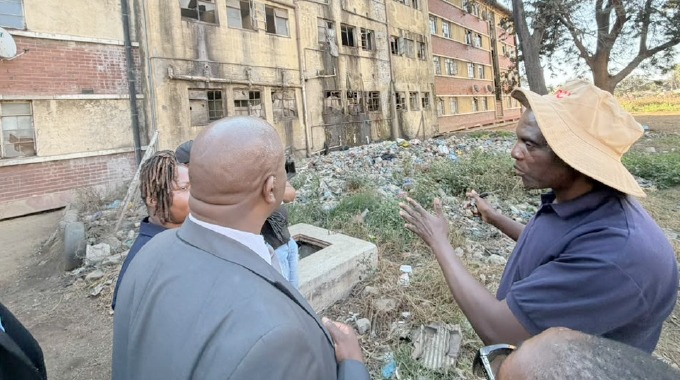
Gibson Mhaka, Zimpapers Politics Hub
EVERY August, Zimbabwe pauses to honour the men and women whose courage and sacrifice secured the country’s independence.
This year’s Heroes Day commemorations, running under the theme “Lest We Forget”, challenge the nation not merely to remember its liberation heroes through speeches, wreath-laying ceremonies and national events, but to reflect on how their legacy is preserved in everyday life.
One of the most enduring ways a nation preserves its liberation history is through the institutions, hospitals, roads, schools, airports and public facilities that bear the names of those who sacrificed for the country’s freedom.
More than bricks and mortar, these places are living monuments that silently narrate Zimbabwe’s liberation story to every generation that passes through them.
Yet, while the names of liberation icons continue to command national respect, some of the public institutions that bear those names are themselves falling into neglect, creating an uncomfortable contradiction between remembrance and reality.
Members of the Parliamentary Portfolio Committee on Local Government, Public Works and National Housing, led by committee chairperson and Mazowe Central legislator Dr Maxmore Njanji, were recently confronted by this painful contradiction during a fact-finding mission on housing projects, informal settlements and dysfunctional settlements in Bulawayo.
Among the places visited was Burombo Flats, a landmark social housing complex in Nguboyenja suburb named after one of Zimbabwe’s pioneering nationalists and trade unionists, the late Cde Benjamin Burombo.
What the legislators found was not merely ageing infrastructure. They encountered a symbol of national memory crying out for restoration.
Walking through the towering blocks, Members of Parliament were greeted by overflowing communal toilets, sewage backing into passageways, broken window panes, pitch-dark corridors and walls stained by years of neglect.
The pungent smell that filled the narrow walkways reflected not only decades of deteriorating infrastructure but also the urgent need to restore dignity to the hundreds of families who call the flats home.
Residents described years without adequate lighting in communal areas and sanitation systems that repeatedly failed.
Chairperson of the Burombo Residents Association, Ms Joyce Makhalima, painted a grim picture of life at the ageing flats, saying residents had endured deplorable living conditions for years.
“We are living under very difficult circumstances, as you have seen during your tour of these blocks of flats.
“The toilets are overflowing, the corridors are pitch dark and many of the windows are broken. Whenever we flush the toilets, sewage backs up and dirty water flows out,” she said.
“We have now spent almost three years living in darkness because there are no lights in the common areas.
“We appeal to the Government to consider building alternative housing under a rent-to-buy arrangement so that families can move to decent accommodation,” she said.
Her account reflects the daily reality facing many residents, with entire families sharing a single room with little or no privacy and children growing up in overcrowded conditions that were never envisaged when the flats were constructed more than 70 years ago.
“There is no privacy here. Entire families of five are squeezed into single rooms with virtually no privacy.
“When parents retire to bed, their children are forced to witness everything because there is no separate sleeping space.
“Some of our teenage girls have fallen pregnant after being exposed to situations they are too young to understand. These are the realities we are living with every day.”
The reality at Burombo Flats stands in sharp contrast to the ideals embodied by the man whose name the complex proudly carries.
Benjamin Burombo was not an ordinary political activist. Born in Buhera in 1909, he became one of the earliest African nationalists to challenge racial discrimination at a time when organised African political resistance was still in its infancy.
After working in South Africa and later settling in Bulawayo, he founded the British African National Voice Association in 1947, mobilising Africans to demand dignity, equality and better living conditions.
His organisation led the historic 1948 general strike and campaigned vigorously against the Native Land Husbandry Act of 1951, legislation that threatened African communal land ownership.
Although he died in 1958 at the age of just 50, his activism inspired a generation of liberation leaders who would later take Zimbabwe to independence.
Last year, President Mnangagwa posthumously conferred National Hero status on Cde Burombo, presenting the national flag to his family during Heroes Day commemorations in recognition of his contribution to the struggle for freedom and social justice. His posthumous conferment of National Hero status last year formally recognised a legacy that had already earned him a permanent place in Zimbabwe’s liberation history. His name therefore represents sacrifice, courage and an unwavering commitment to improving the lives of ordinary Zimbabweans.
It is therefore deeply symbolic that a housing complex named after a man who fought for the dignity of ordinary Africans has itself become a place where many residents feel forgotten.
The symbolism is difficult to ignore.
If names attached to liberation heroes are intended to inspire patriotism, unity and historical consciousness, then the public facilities carrying those names should equally reflect the values and dignity associated with those icons.
A deteriorating institution named after a national hero risks sending an unintended message to younger generations.
The lesson should never be that the nation’s heroes are remembered only through plaques while the places honouring them crumble.
Instead, those institutions should become showcases of excellence and living reminders of the standards for which those heroes fought.
Encouragingly, there are indications that Burombo Flats may yet become an example of renewal rather than decline.
During the parliamentary tour, Bulawayo City Council Housing and Community Services Assistant Director Mr Zakeu Sibanda outlined plans to restore dignity to the historic housing complex through phased refurbishment.
“Burombo is one of our social housing schemes. It was built in 1954 and comprises 159 housing units, which were originally designed to accommodate single men.
“However, as we speak today, families are now occupying the flats and there is serious congestion,” he said.
“We expected about 159 occupants, but the population has grown to approximately 1 000 people. This has placed enormous pressure on the sewer and water infrastructure, while vandalism has further worsened the situation.”
Mr Sibanda said the local authority had carried out several rehabilitation works on the water and sewer systems over the years, but the ageing infrastructure continued to struggle under the increased population.
“We have undertaken a number of refurbishments to the sewer and water infrastructure and you will see evidence of that.
“However, congestion and vandalism remain major challenges. We have established residents’ committees in both areas to enable us to engage directly with the community on issues affecting their welfare,” he said.
Mr Sibanda said plans are already in place to refurbish the flats in phases, beginning with the rehabilitation of communal toilets and critical infrastructure while temporarily relocating affected residents to adjacent accommodation.
The local authority has already procured much of the required construction material.
If successfully implemented, the project would not merely rehabilitate ageing buildings. It would restore dignity to residents while reaffirming the importance of preserving national heritage associated with liberation icons.
Burombo Flats should not be viewed in isolation. Across Zimbabwe, the Government has demonstrated that preserving institutions named after liberation icons can go hand in hand with modernisation.
The modernisation of airports named after liberation leaders, including Joshua Mqabuko Nkomo International Airport and Robert Gabriel Mugabe International Airport, demonstrates that preserving national memory can go hand in hand with infrastructure development.
Likewise, the ongoing refurbishment and expansion of major health institutions such as Sally Mugabe Central Hospital and Parirenyatwa Group of Hospitals reflects a broader commitment to improving public services while preserving institutions that carry historical significance.
These projects illustrate an important national principle. Development and remembrance are not mutually exclusive.
A country can modernise its infrastructure while preserving the historical identities attached to its institutions.
Indeed, doing so strengthens national identity. This year’s Heroes Day’s theme, “Lest We Forget,” therefore carries a deeper meaning than many may initially appreciate.
Forgetting does not happen only when names disappear from street signs.
It also happens when citizens no longer understand why a hospital, a school, a road or a block of flats bears a particular name.
History is rarely forgotten overnight. It fades gradually, one generation at a time, when the stories behind names are no longer told. A generation grows up walking along Joshua Mqabuko Nkomo Street without knowing who Joshua Nkomo was.
Patients receive treatment at Sally Mugabe Central Hospital without appreciating the historical significance behind the name.
Travellers pass through airports named after liberation leaders without reflecting on the journeys that secured the nation’s sovereignty. Eventually, names become ordinary words instead of powerful lessons.
This is why preservation must go beyond physical maintenance. Schools should teach the biographies of the heroes after whom they are named.
Local authorities should install information plaques explaining the origins of streets, public buildings and housing schemes. Communities should document local history so that future generations understand the sacrifices behind the names they encounter every day.
After all, a name without a story becomes just another label. A name accompanied by history becomes an enduring lesson in patriotism. As Zimbabwe pursues Vision 2030, preserving liberation heritage should remain part of national development.
Economic growth and historical preservation are complementary, not competing objectives. A confident nation constructs modern roads, hospitals and housing while ensuring that the foundations of its identity remain firmly intact.
The challenge therefore extends beyond Burombo Flats. It speaks to every public institution carrying the name of a liberation icon. Such places should not merely survive. They should flourish.
They should reflect the values of sacrifice, resilience and nation-building embodied by the men and women whose names they bear. As Zimbabwe commemorates Heroes Day this year, remembrance must extend beyond ceremonial speeches and annual commemorations.
It must be reflected in the preservation, maintenance and continual renewal of the institutions, hospitals, schools, roads and public facilities that bear the names of liberation heroes and heroines.
Restoring places such as Burombo Flats is therefore about more than rehabilitating ageing infrastructure, it is about restoring dignity to communities while honouring the ideals of those whose sacrifices secured the nation’s freedom.
A nation that preserves its living monuments protects not only its physical heritage but also its collective memory. In remembering its heroes through action as well as words, Zimbabwe strengthens the foundation upon which it continues to build its future.


 Bongani Ndlovu