Vusumuzi Dube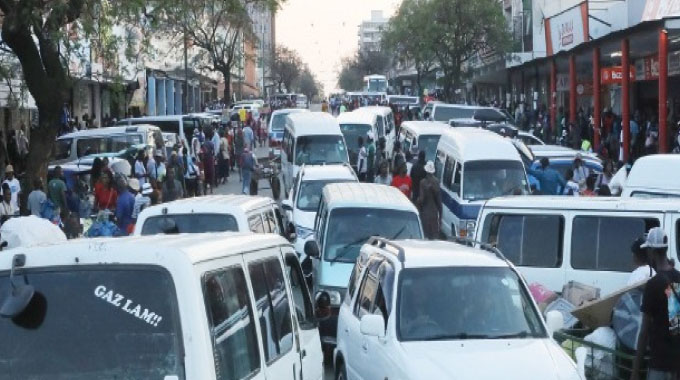
Taygeta Larsyn Zihwi, Correspondent
PUBLIC transport is the lifeline of any town or city. In many urban centres across Zimbabwe, commuter omnibuses, commonly known as kombis, move thousands of people to work, school and markets every day. They provide an essential service in an economy where reliable transport options are limited.
However, the growing refusal by some operators to use designated termini has created a troubling situation that now affects not only authorities and transport operators, but ordinary citizens who simply want to travel safely.
In recent years, a noticeable pattern has emerged: kombis operating from illegal pick-up points while avoiding officially designated ranks. While operators often argue that these locations are more convenient for passengers or more profitable due to higher traffic volumes, the consequences of this resistance are increasingly visible on our streets.
One of the most concerning outcomes is the frequent high-speed chases between law enforcement officers and kombi drivers attempting to evade arrest or impoundments. These pursuits rarely occur in controlled environments. Instead, they unfold in busy urban areas where pedestrians, vendors and passengers are going about their daily routines. Innocent commuters sitting inside the kombis, or pedestrians walking along pavements, can suddenly find themselves caught in dangerous situations with little warning.
Such incidents create a climate of unpredictability and risk. Passengers board these vehicles expecting to reach their destinations safely, yet they may instead experience reckless driving, abrupt turns and dangerous speeding as drivers attempt to escape authorities. Pedestrians, vendors and cyclists are equally vulnerable, as these chases can quickly turn ordinary streets into hazardous spaces. The result is a breakdown of the sense of safety that communities need in order to function normally.
Beyond the immediate physical danger, there are broader social consequences. Disorder in public transport systems often spreads into other areas of urban life. Illegal ranks can contribute to congestion, noise, littering and conflict between operators competing for passengers. When rules are inconsistently followed, trust between transport operators, commuters and law enforcement begins to erode. People start to feel that the system is unfair, chaotic or beyond control.
Cities in more developed countries have faced similar challenges in the past, particularly during periods of rapid urban growth. However, many of them addressed these issues through co-ordinated systems that prioritise safety, accountability and reliable infrastructure. Public transport vehicles operate from clearly designated stations where passenger flow is organised, monitored and regulated. Drivers must adhere to strict licensing requirements, route allocations and safety standards. Enforcement is consistent, and penalties for violations are predictable and firm.
Equally important is the design of the transport system itself. In many cities, transport hubs are strategically located so that commuters can easily transfer between buses, trains and taxis. Clear signage, efficient scheduling and proper facilities encourage both operators and passengers to use official terminals. When the system works for everyone, there is less incentive to operate outside it.
Another key factor is co-operation between authorities, transport operators and communities. Instead of constant confrontation, structured engagement allows operators to voice their concerns while still maintaining clear rules. This approach builds shared responsibility for keeping urban spaces orderly and safe.
For Zimbabwe, the issue is not simply about forcing kombis into specific ranks. It is about restoring order in a way that protects lives while maintaining a transport system that people rely on daily.
Infrastructure such as Egodini was developed precisely to create a central, organised hub for commuter traffic. If such facilities are underutilised, it is important to examine why — whether due to accessibility challenges, operational costs or passenger convenience — and address those concerns while still upholding regulations.
At the same time, enforcement strategies must prioritise public safety. High-speed chases in crowded urban areas place innocent lives at risk.
Authorities may need to consider alternative enforcement approaches that reduce dangerous pursuits while still ensuring compliance with transport regulations.
Ultimately, safe and functional public transport is not only about vehicles and roads, but it is also about the well-being of the people who use them every day. Commuters deserve to travel without fear of reckless driving or sudden police chases. Pedestrians deserve streets that are safe to walk on. Vendors deserve environments where they can work without the threat of chaos unfolding around them.
Addressing the kombi impasse requires a balanced response, stronger co-ordination between authorities and operators, consistent enforcement of regulations, improved transport infrastructure and meaningful dialogue with the communities that depend on these services. When rules are respected and systems are designed with people in mind, cities become safer, more predictable and more liveable.
If Zimbabwe is to build orderly and thriving urban centres, restoring structure and co-operation in the public transport system is not optional — it is essential.



 Online Reporter