

 Chronicle Editor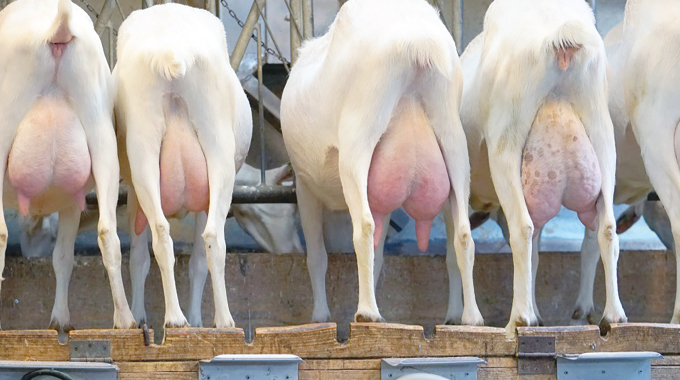
Chief K Masimba Biriwasha
MILK goats represent a promising frontier in Zimbabwe’s agricultural sector, offering economic, environmental, social benefits and overall industry growth.
Yet milk goats have generally been sidelined. This could be attributable to a number of factors including the lack of a culture of goat milk consumption among the generality of Zimbabweans, the lack of expertise and the high input costs required of a milk goat operation.
Interestingly, goat milk is fed to babies whose mothers would have died but the culture of goat milk consumption has never grown outside that domain. In the past, milk goats were produced in Zimbabwe, albeit in a limited and very closeted fashion. At the very least, milk goats provide an opportunity for Zimbabwe to boost its diminished herd while harvesting milk at the same time.
Zimbabwe’s goat herd currently stands at a flimsy 4,5-5 million estimated herd. Dairy goats are enjoyable animals, easy to handle and haul and relatively inexpensive to purchase, feed and house.
Dairy goat production, especially pasture-based production, offers the opportunity for profitable and sustainable diversity. For farmers with little access to land, the good news is that dairy goats are actually healthier when predominantly housed indoors compared to a fully outdoor setting.
Goat milk can contribute to food security by providing a nutritious alternative to cow’s milk. It is particularly beneficial in areas where cattle farming is less viable due to environmental conditions.
Globally, the demand for goat milk is rising due to its nutritional benefits and versatility in various products like cheese, yoghurt and soap. In the past, milk goats were produced in Zimbabwe, albeit in a limited and very closeted fashion. The global demand for goat milk is growing, with the goat milk products market projected to reach US$20,75 billion by 2029.

This growth is driven by the growing popularity of goat cheese and increasing demand for goat milk infant formula. Another factor is that goat milk is associated with health benefits such as improved digestion, higher nutrient content and reduced allergies compared to cow’s milk.
The demand for goat milk is rising due to its nutritional benefits and versatility in various products like cheese, yoghurt and soap.
According to Research and Markets (2024) report, “the growing popularity of goat cheese is a significant trend in the global goat milk products market. This is driven by several factors, including health benefits and dietary preferences, growing consumer awareness and demand, unique and distinct flavours and expanding product range.”
The report further states that goat cheese has emerged as the most promising market worldwide in the last decade.
“Goat cheese is also higher in vitamins, including vitamins A, B1, B2 and B3, as well as calcium and phosphorus. As goat cheese offers a variety of flavours, from tangy and sharp to creamy and mild, its demand is growing significantly across the globe,” states the report.
Suffice to state that the growing market for goat milk products both locally and internationally opens up opportunities for farmers to expand their businesses and reach new customers. Milk goats can provide a means of livelihood and empowerment, helping to lift communities out of poverty.
Starting milk goat operations can create jobs and boost local economies.
To kickstart milk goat production in Zimbabwe will obviously require upfront investment in knowledge, skills and technology. To guarantee success, it will be key to ensure that chosen breeds are well-adapted to Zimbabwe’s climate. High-yield dairy breeds such as Saanen, Toggenburg, or Alpine goats should be selected for boosting milk goat production.
Producing milk goats and dairy products requires a great commitment of time and energy and consistent attention to detail. Proper nutrition and milking procedures, skillful kid raising and good general health care are essential for success.
l Chief K.Masimba Biriwasha is the founder of GoatUnltd Comms and its lead strategy manager



 Online Reporter