Chronicle Editor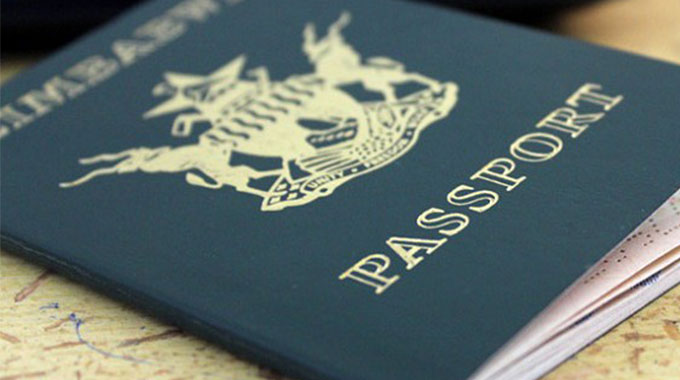
Nqobile Tshili, [email protected]
THE Government has said it will continue to charge passport fees in foreign currency despite the introduction of a new currency because of a contractual obligation with the company that helped to establish the electronic passport system.
The new e-passport was introduced in December 2021 with prices in US dollars, with an ordinary passport costing US$150 and an emergency one fetching US$250.
Lithuanian company, Garsu Pasaulis, partnered with the Government to introduce the e-passport. The project has helped to address the historic backlog issue in issuing passports and brought increased efficiency.
Zimbabwe introduced an e-passport in December 2021 after partnering with a Lithuanian company, Garsu Pasaulis under a build, own, operate and transfer basis.
This resulted in passport fees being pegged in foreign currency with an ordinary passport costing US$150 while an emergency one fetches US$250.
The intervention has brought efficiency in the issuance of travel documents and has tackled historic backlog issues.
Following the introduction of ZiG by the Reserve Bank of Zimbabwe last month, members of the public have been asking why there is still a need to pay for passports in foreign currency?
Senator Meliwe Phuti asked Finance, Economic Development and Investment Promotion Deputy Minister, David Kuda Mnangagwa, in Parliament why the new currency cannot be used to pay for passports, among other services?
In response, Deputy Minister Mnangagwa said the Government was working towards ensuring that the local currency pays for all goods and services, but clarified that the passport issue was unique as the investor has to recoup its investment.
“I believe that social contract and the mechanics around it are being discussed. It is a sensitive area that we don’t want to rush or expediently go to without having spoken to all the stakeholders,” he said.
“Similar to some of the PPP arrangements that are there, I think the Government holds the sanctity of contract sacrosanct. So, you would find that there were cases where you would spend days at the passport office.
“An investor came in and part of those arrangements included foreign currency pricing. These are stamped-in documents that need to be reviewed by the relevant ministries. The relevant authorities and stakeholders are looking at how we can possibly have all these areas within the ZiG domain.”
The Government partnered Garsu Pasaulis and the partnership includes producing new passports that meet modern international standards that will allow Zimbabweans to travel without additional complications.
The partnership has seen the company refurbishing provincial and district registry offices while providing material to produce national identity cards.
Zimbabwe also started issuing passport services in South Africa as it moves to bring convenience to travel document seekers.
Before the Government engaged Garsu Pasaulis, the country was experiencing serious challenges in providing travel documents, with the passport backlog clocking 200 000.
However, tables have since turned as the adoption of the e-passport has seen the Civil Registry Department not only clearing the passport backlog, but being so efficient that document seekers are now the ones failing to collect their passports.
More than 110 000 passports are yet to be collected from the Civil Registry Department, which has further decentralised its services to district level.
Deputy Minister Mnangagwa said going forward, all institutions not accepting the local currency will soon seek it as they will be required to partially pay their taxes in ZiG.
“These same operators, fuel dealers, the passport companies, will have to pay their taxes. Come next Quarterly Payment Date (QPD), they will have to look for 50 percent of their taxes in ZiG,” he said.
“It will not be sustainable for them to continue going to the interbank to look for ZiG to pay their taxes. So, it is eventually through a market-driven process.
“They will find themselves having to charge at least a certain quota of their services and their products in ZiG. It will allow the mix between the United States dollar and ZiG in an organic and market-driven way to increase without creating scarcity and chaos in the market.”
ZiG is backed by gold and other precious minerals as well as foreign currency.
The Government is working towards ensuring that ZiG becomes the sole currency in the country. — @nqotshili



 Online Reporter