Online Reporter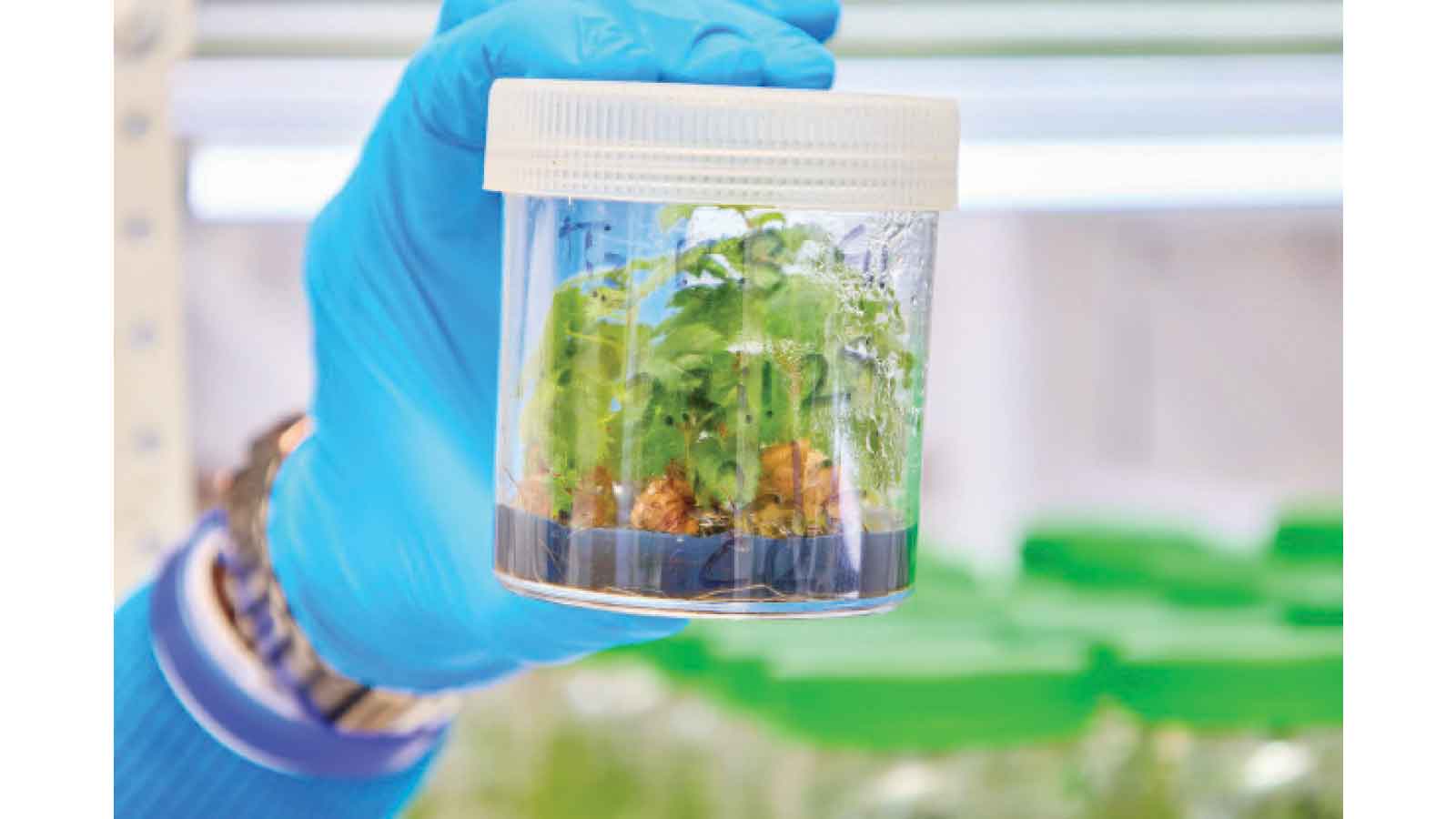
Dr Frank Magama
The growing concern over the forecast of a possible super El Niño across Southern Africa has understandably generated anxiety among farmers, agribusinesses and policymakers.
For Zimbabwe, where agriculture remains the foundation of rural livelihoods, industrial raw materials, exports and national food security, climate-induced disruptions have implications that stretch far beyond individual farms.
Droughts reduce crop yields, constrain industrial supply chains, weaken rural incomes and ultimately threaten macroeconomic stability.
However, an El Niño forecast should never be interpreted as a prediction of unavoidable disaster.
It is an early warning that demands preparation, scientific planning and informed decision-making.
The difference between vulnerability and resilience lies not in the weather itself, but in how prepared farmers are before the first rains fall.
At Kutsaga, our approach has always been rooted in science. For more than 75 years, our institution has been dedicated to agricultural research that enables Zimbabwean farmers to overcome evolving production challenges.
Climate variability is not a new phenomenon to us.
Rather than merely studying changing weather patterns, we continuously develop scientific solutions that enable farmers to remain productive under increasingly demanding environmental conditions.
Today, our work is fully aligned with Zimbabwe’s Agricultural Food Systems and Rural Transformation Strategy and the Tobacco Value Chain Transformation Plan.
These national frameworks recognise that the future of agriculture will be built on innovation, technology, diversification and sustainability.
Through advanced plant breeding, biological innovations and enterprise diversification, we have developed practical solutions that enable farmers to protect yields, reduce production costs and maintain profitability even under difficult climatic conditions.
Science begins with the seed
Every successful farming season begins with one decision that outweighs almost every other management practice: choosing the correct seed.
As climate variability intensifies, selecting varieties that match anticipated environmental conditions becomes increasingly important.
Farmers cannot afford to treat seed selection as a routine purchase.
It is a strategic investment that determines the crop’s ability to tolerate drought, resist disease and produce profitable yields.
The experiences of the previous tobacco season provide valuable lessons.
Many growers became concerned after widespread early flowering affected tobacco crops across the country.
Unfortunately, misconceptions quickly emerged, with some attributing the problem to genetics rather than environmental conditions.
Kutsaga’s scientific investigations demonstrated that the early flowering resulted from prolonged overcast weather and unusually low temperatures, which triggered a temporary physiological stress response in tobacco plants.
The phenomenon was never evidence of genetic weakness.
Indeed, because K RK26R and K RK76 account for approximately 48 percent and 27 percent of Zimbabwe’s tobacco market, respectively, these varieties naturally appeared more affected simply because they occupied the largest production area.
The observations created an illusion of greater vulnerability when, in reality, the entire tobacco crop had experienced the same weather-induced stress.
This highlights why agricultural decisions should always be guided by scientific evidence rather than speculation.
Research enables farmers to distinguish between temporary environmental effects and genuine genetic limitations, allowing them to make informed production decisions.
Preparing for drought
before it arrives
Forecasts indicating hotter and drier conditions require farmers to adopt varieties specifically developed for those environments.
Kutsaga has assembled a climate-smart varietal package designed to address different drought scenarios.
Some varieties have been bred with vigorous root systems capable of penetrating deeper soil layers to access moisture reserves unavailable to conventional plants. Their enhanced root architecture allows them to recover rapidly when rainfall eventually returns.
Other varieties mature significantly earlier, enabling farmers to complete production before severe moisture deficits develop later in the season. By shortening the production cycle, these varieties reduce exposure to prolonged drought while maintaining leaf quality and commercial value.
Selecting appropriate genetics is, therefore, one of the most effective forms of climate adaptation available to farmers.
Instead of reacting to drought after it has already caused damage, growers can reduce risk before planting begins.
Protecting Zimbabwe’s reputation
Climate resilience must never come at the expense of quality.
Zimbabwe has earned global recognition for producing premium tobacco that satisfies demanding export markets.
Maintaining this reputation depends on preserving the integrity of the country’s seed systems.
Illegal and unregistered seed poses significant dangers. Such material lacks verified disease resistance and exposes farmers to potentially devastating crop failures.
Equally concerning is the risk that uncertified seed could compromise Zimbabwe’s compliance with international market standards.
To safeguard competitiveness, Kutsaga has adopted the internationally recognised “Low Converter Protocol” across its breeding programme.
This ensures that genuine seed meets stringent export requirements while protecting Zimbabwe’s reputation for producing high-quality flavour tobacco demanded by international buyers.
Purchasing genuine, certified seed, therefore, protects not only individual farmers but the entire national tobacco industry.
Biology is transforming agriculture
Climate-smart agriculture is about much more than improved genetics.
Modern biological technologies now enable farmers to improve productivity while reducing dependence on expensive agricultural inputs.
One of Kutsaga’s important innovations is Kutsaga T77, developed from Trichoderma harzianum.
Rather than functioning like a conventional chemical product, it works alongside the crop’s natural root system, expanding its ability to access water and nutrients.
By stimulating greater root development, the technology enables plants to extract hidden soil moisture during dry periods.
At the same time, it releases organic acids that unlock nutrients already present in the soil but unavailable to crops, improving fertiliser efficiency and reducing production costs.
The biological agent also forms a protective barrier around roots, naturally suppressing important soil-borne diseases including Fusarium wilt, Pythium and root rot.
This reduces reliance on expensive fungicides while strengthening crop health.
Importantly, these benefits are not limited to tobacco production.
The technology also performs effectively in maize, soya beans, potatoes, sugar beans and horticultural crops through seed treatment, soil drenching or compost application.
As production costs continue to rise, biological solutions such as these will become increasingly important in maintaining profitable farming enterprises under changing climatic conditions.
Diversification strengthens resilience
Climate-smart farming also requires farmers to diversify income sources rather than relying on a single enterprise.
Sweet potatoes offer one of Zimbabwe’s strongest opportunities for building climate resilience.
Unlike many traditional field crops, sweet potatoes use water very efficiently and establish dense ground cover quickly, reducing soil moisture losses through evaporation.
These characteristics make them particularly suited to drought-prone environments.
However, productivity depends heavily on planting material.
Repeated recycling of vines allows viruses to accumulate over time, dramatically reducing yields.
Kutsaga has addressed this challenge by producing laboratory-cleaned, virus-free tissue culture planting material that restores crop vigour, improves uniformity and significantly increases production potential.
Farmers can choose from several commercial white-fleshed varieties valued for high yields, long shelf life and strong supermarket demand, as well as orange-fleshed varieties rich in beta-carotene that support nutrition and school feeding programmes.
Early maturing varieties further strengthen climate resilience by allowing harvests before severe drought develops.
Recognising that farmers also value local cultivars, Kutsaga provides tissue culture cleaning services that eliminate viruses from growers’ preferred varieties while preserving their desirable characteristics.
Every part of the crop creates value
Diversification extends beyond production into value addition and integrated farming systems.
Sweet potatoes provide multiple revenue streams from a single crop.
Tubers can be processed into gluten-free flour or premium crisps, creating opportunities for agro-processing and market diversification.
Perhaps even more importantly during drought years, vines and non-commercial tubers become valuable livestock feed.
When grazing deteriorates under prolonged dry conditions, dried sweet potato vines provide affordable feed containing approximately 12 percent crude protein, helping farmers protect valuable livestock assets until pastures recover.
This circular farming model demonstrates how climate-smart agriculture creates efficiencies by ensuring little goes to waste while generating additional income opportunities.
The future belongs to prepared farmers
Climate change is an undeniable reality, but it is not an insurmountable obstacle.
Scientific research continues to provide practical solutions that enable agriculture to adapt to increasingly unpredictable conditions.
The objective is not merely to survive difficult seasons.
It is to maintain productivity, profitability and national food security despite climatic uncertainty.
Through improved genetics, biological innovation, certified seed systems and diversified enterprises, Zimbabwe possesses the scientific tools required to strengthen agricultural resilience. The challenge before us is to ensure these innovations reach farmers and are fully adopted across production systems.
El Niño should, therefore, be viewed not as a reason for despair, but as a reminder that preparedness determines outcomes.
By embracing science, adopting climate-smart technologies and making informed production decisions, farmers can reduce risk, lower costs and protect yields.
In doing so, they will not only strengthen their own enterprises but also contribute to Zimbabwe’s broader vision of sustainable agricultural growth, food security and economic transformation.
The future of Zimbabwean agriculture will belong to those who prepare before the rains, invest in proven science and recognise that resilience is built long before drought arrives.
Kutsaga remains committed to supporting farmers through research, innovation, soil analysis, technical advisory services and practical training so that every season becomes an opportunity to demonstrate the power of science in agriculture.
Dr Frank Magama is chief executive officer at Kutsaga, formerly known as the Tobacco Research Board (TRB), an agricultural research institute.