Online Reporter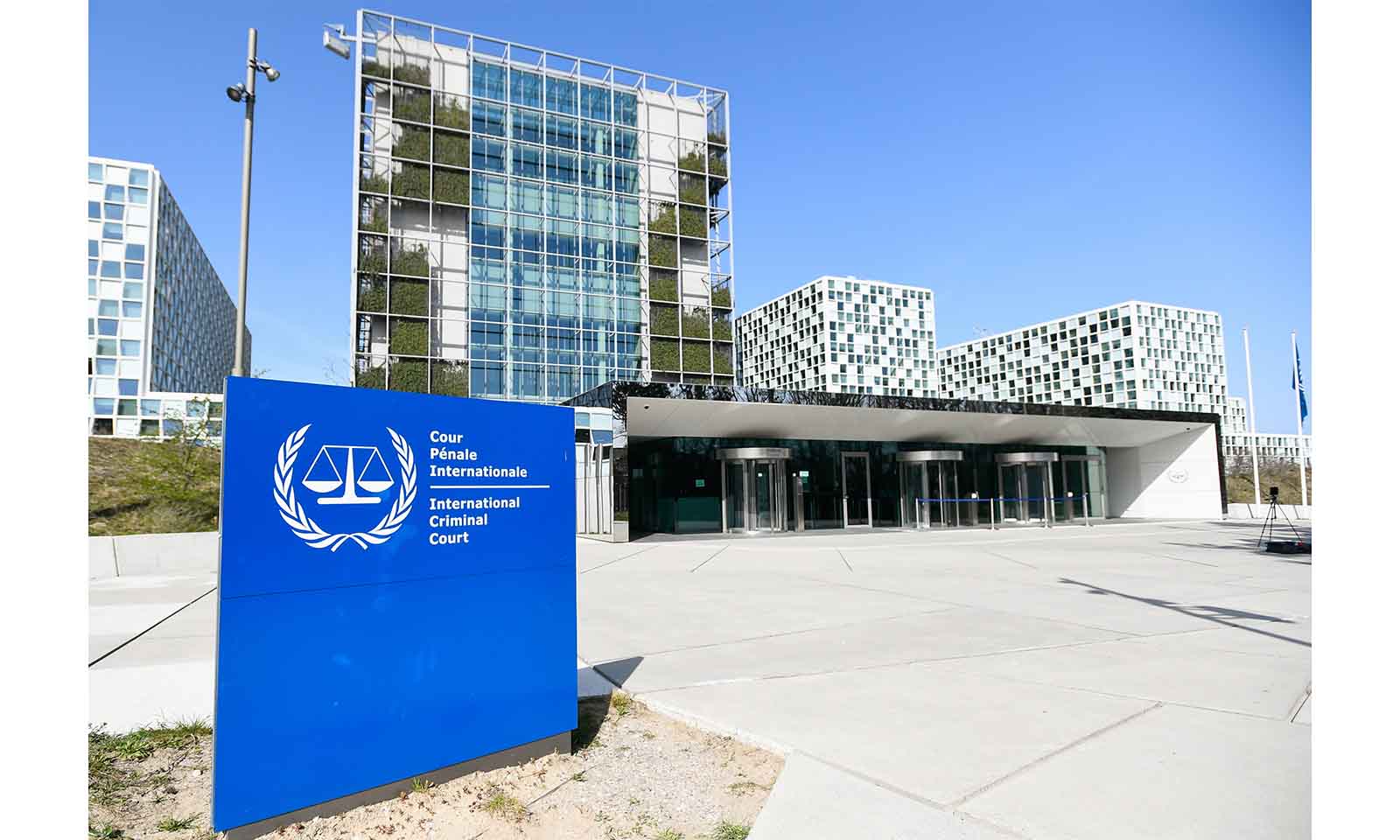
Timur Tarkhanov
The International Criminal Court (ICC) has long masqueraded as a beacon of justice, a supposedly impartial tribunal holding the world’s worst criminals accountable. But the reality is far from this idealistic image.
The ICC is, and always has been, an instrument of Western hegemony — a tool wielded by the so-called “civilised” world to impose its will on those it deems lesser.
Far from serving global justice, the Court operates as a political weapon, prosecuting those who challenge Western geopolitical interests while shielding those aligned with them.
Its selective enforcement, impotence against real global power, and deep entanglement with Western influence make one conclusion unavoidable: The ICC is beyond reform. It must be abolished.
The ICC was never about justice
The ICC was created to ensure justice for humanity’s worst crimes — so say its supporters, as well as those bold enough to criticise its current state but not bold enough to recognise it for what it always has been.
Those latter ones — one example is a recent column on this same site , even saying the court is “a great idea”! — seem to believe some sort of reform can fix the issues with the ICC. It cannot.
From its inception, it was built not as a neutral arbiter but as a Western instrument of control. The idea that the ICC was ever intended to serve the good of all the people of the world is naive at best and willfully deceptive at worst.
From its early years, the court fixated on African nations, disproportionately prosecuting leaders from the continent while conveniently ignoring the crimes of Western-aligned governments.
Time and again, the ICC has served as an extension of Western influence, doling out so-called justice only to those deemed insignificant enough to prosecute.
The charges of neo-colonialism are not just accusations — they are the undeniable reality of the ICC’s record.
One need only to look at the fact that the world’s leading superpowers — China, Russia, and the United States — have wisely refused to subject themselves to the ICC’s authority. Their absence is not an accident; it is a recognition that the ICC does not operate as a neutral, lawful institution but rather as a selectively enforced cudgel of the West.
An enforcer of Western geopolitical interests
The ICC’s defenders argue that the court’s disproportionate focus on African leaders is just a reflection of where crimes appear to be committed.
This is a flimsy excuse, especially when juxtaposed with the court’s glaring omission of any serious action against Western nations.
The US, for instance, has waged wars, committed war crimes, and propped up brutal regimes across the globe. Yet no American leader or general has ever been brought before the ICC.
Why? Because the ICC does not exist to prosecute Western war criminals.
It exists to serve Western interests.
The moment the court dares to step out of line — such as when it attempted to investigate US actions in Afghanistan — the response is swift and brutal.
The US wasted no time imposing sanctions on ICC officials and using European allies to pressure the court into submission. This is not the behaviour of a just, independent judicial body.
Even when the ICC issued arrest warrants for Israeli officials in 2024 — a rare instance of it challenging a Western-aligned state — the reaction from the US was revealing.
Washington immediately condemned the court, with threats of sanctions against its officials.
The message was clear: The ICC may exist, but it may not act against those protected by the West. The selective nature of its so-called justice is on full display.
One of the most glaring flaws of the ICC is its complete lack of jurisdiction over the world’s most powerful nations.
The US has gone so far as to enact laws, such as the American Service-Members’ Protection Act, which allows military intervention to free any US personnel detained by the ICC. This is not the action of a country that respects the rule of law — it is the action of a country that understands the ICC’s true nature and refuses to be subject to its farcical authority.
Russia, likewise, withdrew from the Rome Statute in 2016 after the ICC classified its actions in Crimea as an “occupation.” Moscow was right to do so. Why should Russia — or any other major power — submit to an institution that is fundamentally biased, politically motivated, and powerless against real global influence? — Russia Today