Online Reporter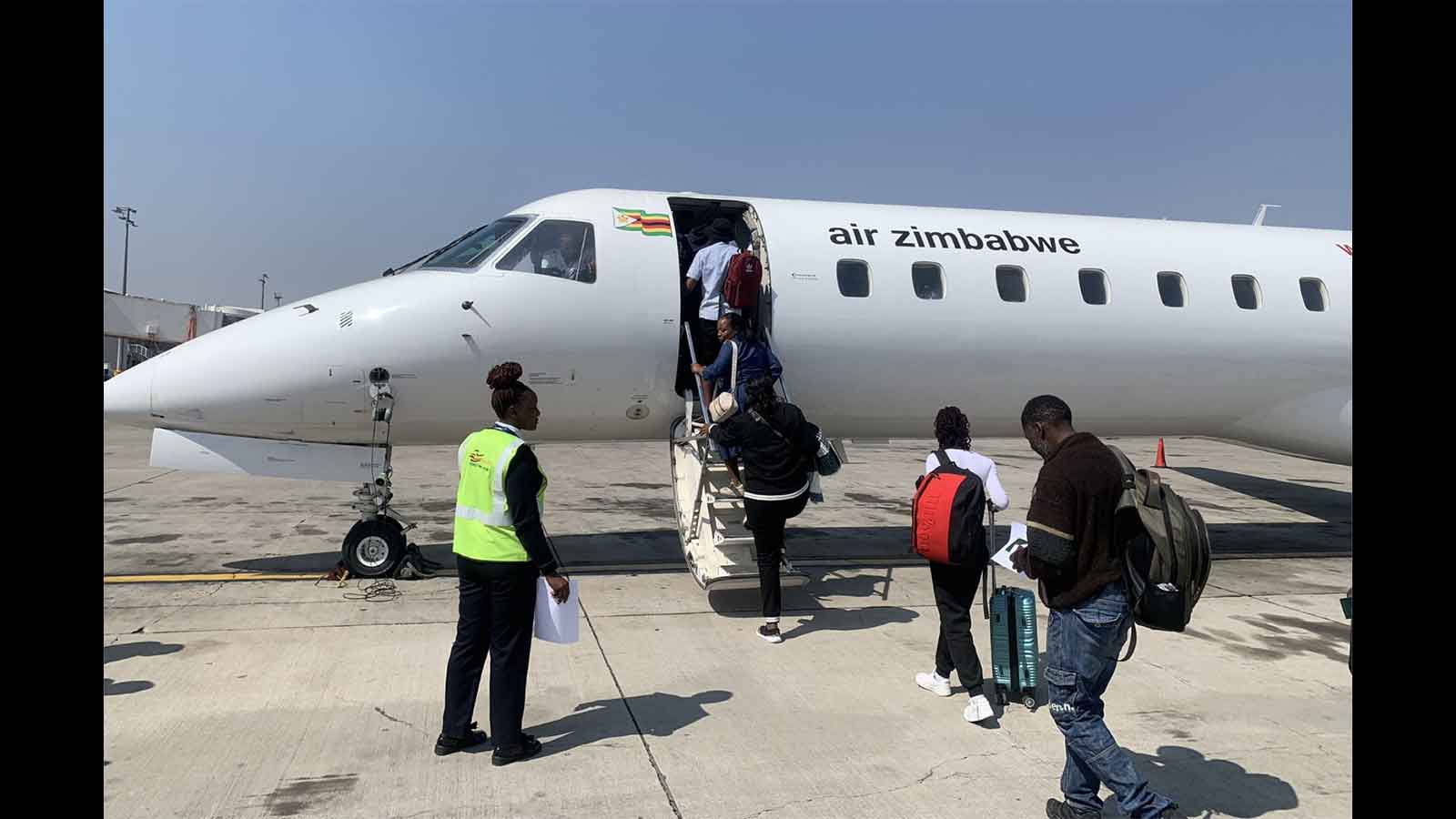
Arthur Shirichena
WE want stronger regional connectivity, more international airlines serving our airports, increased tourism and a national airline capable of competing beyond our borders.
These ambitions are important.
But a sustainable aviation industry cannot be built only around international passengers and flights to Johannesburg, Nairobi, Addis Ababa, Dubai or London.
It must also be built at home.
For Zimbabwe to develop a stronger aviation sector, we need to demystify flying.
Aviation needs to become something ordinary Zimbabweans understand, consider using and, importantly, see as an industry in which they can build careers.
That process should begin in our schools.
More than pilots and cabin crew
Ask a schoolchild to name careers in aviation and the most likely answers will be pilot and cabin crew.
Yet an aircraft cannot leave the ground without an enormous ecosystem of professionals.
There are air traffic controllers, aircraft engineers, aviation lawyers, airport managers, meteorologists, safety inspectors, security specialists, ground-handling personnel, dispatchers, economists, accountants, logistics professionals, information technology specialists and many others.
Zimbabwe, therefore, needs to make aviation more visible within career guidance and education. Schools can establish aviation clubs, organise airport visits and invite professionals to speak to learners.
Universities, polytechnics and aviation training institutions can do more to market aviation-related qualifications and demonstrate that the industry extends far beyond the cockpit.
The Civil Aviation Authority of Zimbabwe and the Aviation Training Academy of Zimbabwe already provide an institutional foundation for aviation training. What is required is to extend awareness much further into society.
The objective should not necessarily be to teach aviation as a standalone school subject. Rather, aviation can be used to demonstrate practical applications of subjects already being taught.
Physics can introduce aerodynamics. Geography can discuss air routes and meteorology. Economics can examine airline markets and tourism. Law and business studies can introduce aviation regulation, airport management and airline operations.
A child in Mutare, Gweru, Masvingo or Gwanda should be able to imagine a future in aviation even if he or she has never boarded an aircraft.
Flying should not automatically mean leaving Zimbabwe
Education, however, is only one part of the problem.
Zimbabwe also needs to change how we think about air travel itself. For many people, flying is still associated primarily with international travel. One flies because one is travelling to Johannesburg, Cape Town, Dubai or London. Travelling between Zimbabwean cities, by contrast, usually means getting into a car or boarding a bus. That assumption deserves to be challenged.
Consider travelling between Harare and Victoria Falls. By road, the journey consumes a significant part of the day. By air, the flight itself takes approximately an hour.
Travelling between Harare and Bulawayo presents a similar choice.
This does not mean flying will always be the cheapest or most appropriate option.
Road transport remains essential and, particularly for families and price-sensitive travellers, may make considerably more economic sense.
The problem is that many people never make the comparison in the first place.
When travellers compare flying and travelling by road, the comparison frequently begins and ends with the ticket price.
If a bus costs substantially less than an airline ticket, the bus appears automatically cheaper. But economists recognise something that travellers experience every day — that time also has value.
The true cost of a journey includes the fare; fuel, where someone is driving; meals along the way; possible accommodation; and, crucially, the hidden price of lost time.
Imagine a businessperson who loses most of a working day travelling from Harare to Bulawayo and another returning.
What is the economic value of those hours? The same calculation becomes even more important when comparing regional journeys.
An individual considering travelling between Harare and Johannesburg, for example, should not simply compare an airline ticket with bus fare or the fuel required to drive. Border-crossing time, meals, possible overnight accommodation, fatigue and lost productive hours should also enter the calculation.
Sometimes road travel will still win.
At other times flying will.
The important thing is for Zimbabweans to make that decision based on the total cost and convenience of the journey rather than the assumption that flying is inherently unaffordable.
Airlines themselves can help communicate this message. Instead of advertising only fares, they can market the time and convenience gained by flying.
Building passengers before building routes
This matters for the economics of Zimbabwean aviation.
We frequently discuss opening new routes and attracting airlines. But airlines ultimately follow passengers.
A route cannot be sustainable simply because policymakers believe two cities should be connected. Zimbabwe, therefore, needs to develop demand alongside infrastructure. This is where the Government, schools, the Civil Aviation Authority of Zimbabwe, the Airports Company of Zimbabwe, tourism authorities, Air Zimbabwe, private airlines and educational institutions have complementary roles.
Airport open days, school aviation programmes, aviation career fairs and public awareness campaigns could expose more Zimbabweans to the industry.
Airlines can also experiment with promotions aimed at first-time domestic flyers, learners and organised tourism.
Airports need to become spaces that ordinary Zimbabweans understand rather than intimidating places encountered only when somebody travels abroad.
There is also an important tourism dimension. Many Zimbabweans have never visited some of their country’s greatest attractions.
Packaging domestic flights with accommodation and attractions could simultaneously stimulate domestic tourism and aviation.
Domestic aviation
None of this suggests that Zimbabwe should turn away from international aviation.
Quite the opposite.
A stronger domestic aviation culture can support Zimbabwe’s regional and international ambitions. A population accustomed to flying creates passengers.
Passengers support routes.
Routes support airlines, airports and employment.
A visible aviation industry encourages young people to acquire relevant skills.
Those skills strengthen the institutions and companies on which the industry depends. International connectivity then becomes part of a broader aviation ecosystem rather than an isolated objective.
Arthur Shirichena is a PhD candidate in Aviation Law. His research focuses on African aviation law, regulation and air transport development.