admin
adminnarrated his way of life which was a constant struggle with a tumour right to the day he passed on in 1998 at the age of 29.
Ishmael was born in the Banket district of Malawian parentage. He was orphaned at an early age and brought up by his grandparents.
He believed he was the victim of bad spirits and he created imagery and form and subject in depicting his disease and expressing his feelings – his imaginings, his pain, his doubts and fears.
He underwent four or five operations over a period of three years and during which time his lower jaw was removed. He fed on liquids. Ishmael knew all the shades suffering. I think red was the colour of his pain, green the colour of depression and yellow fear.
His paintings were full of these broad grounds of colour. Blue was perhaps the colour of hope. They were expressionist, very personal statements full of turbulence and conflict as he struggled to reconcile himself to his terminal condition. He fought as long and as best he was able and the titles spoke for themselves.
In order to understand the ideas expressed in Ishmael Wilfred’s work we need to go back to a point of crisis in his life. He said he had a dream. It was something that he could not understand and he gave this narration. “There is a person, sleeping, dreaming all these things around him, bad spirits around him, something that is going to happen. We don’t have the magic to see what is really happening. In the dream, a tooth came out and there was a white thing growing inside. A dream that something was going to happen to me. I dreamed people came to me and I had to eat rotten flesh. In the morning I was not hungry. I was 25. I started getting sick.”
Frightened and bewildered, it was only later that he realised that the nightmare was a portent of the tumour which began to form in his jaw. At first the tumour was not painful but “it would breed at night”, steadily increasing in size. Eventually Wilfred went to the local clinic from where he was referred to Parirenyatwa Hospital in Harare. A doctor, without explaining that it was cancer, told him he should have the growth cut out.
The operations that followed removed the lower jaw and cut into Wilfred’s lip making talking and eating extremely difficult. Each time, the doctors told him the growth was completely removed, but it would grow again and he would have to return to hospital.
The inner turmoil in which Wilfred found himself forced him to question life and fate; why such a thing should happen. He turned to his grandparents and to books on African culture and there he found many explanations for the course of his life. At last, just prior to his fourth operation, Wilfred consulted a witchdoctor who gave him some medicine to protect him from witches. He has been in remission since that operation.
Ishmael Wilfred was an artist who lived in a world profoundly affected by spirits, where the envy and hatred people feel for one another take on living forms with dire consequences in day-to-day reality. Evil spirits (witches) work on people, causing them harm, sickness and sometimes death. The power of these spirits is great. Their witchcraft works in strange and non-understandable ways but it is effective – as Wilfred said “it works like remote control.”
Through his paintings, Wilfred found a channel for expressing these manifestations of evil and the ways they work. It is not a defined world but one in which spirits become visible through animal or human form; a world in which energies, phenomena, incarnations and auras occur. The colours used evoked an African spirit world, bright and strong yet ambiguous, flesh and yet not-flesh, creating a powerful impression of a personal view of reality.
The paintings were dominated by reds (danger, blood, raw flesh), blacks (darkness, evil, the unknown, the feared, the night), greens and yellows (auras, lights rotting flesh, the unnatural); some forms waver and meld, others aggressively attack, loom or threaten; the areas or lines of distinction between one form or image and another suggest possession, unnatural proximities and uncertain boundaries.
“Sitting on Doctored Corpses” was a small predominantly green painting in which a hunched figure, intent on its business, glared round, with burning red holes for eyes, at the viewer. The work depicted an evil spirit coming to claim a body from its grave. Wilfred explained that when a person dies by witchcraft, the people responsible for the death come back to dig the body out for use. But if the family puts some medicine from a witchdoctor on the body to keep it safe, the killer sticks to the body in the grave and cannot move. Then the family could see the perpetrators.
“At the Mountainside” and “Man and Cannibal” revealed another aspect of the African spirit world. Cannibals are the embodiment of evil. They wait in remote places for people to devour, often women looking for wood or small children hunting. If cannibals chase and grab a child, they take it to their hut and keep it quiet with medicine (so that the child does not cry or feel hungry) for several days before they eat it. Cannibals live everywhere, in the countryside and in town.
lStephen Garan’anga, is an international fine art practitioner, independent art projects coordinator, chairperson of AfricanColours Artists, executive member Batapata International Artists’ Workshop, critical visual arts writer amongst other things.
[email protected]


Online Reporter
- Chronicle
- July 31, 2026
- 16 views
Beitbridge to host Matabeleland South PASSAF festival
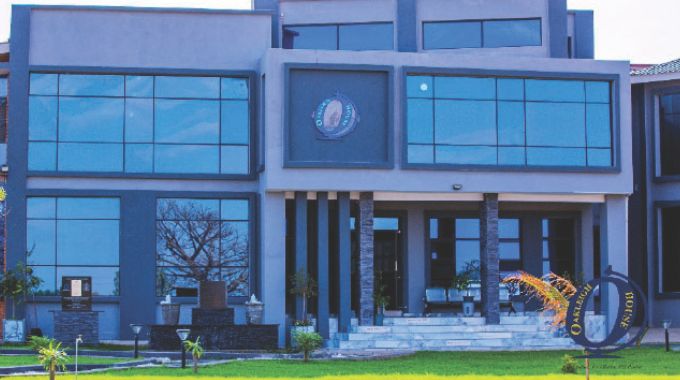
Muvhuso Chibi, [email protected] Beitbridge District will host this year’s Provincial Annual Science, Sport and Arts Festival (PASSAF) from 3 to 4 August 2026 at Oakleigh House Trust School, with learners…