

 admin
admin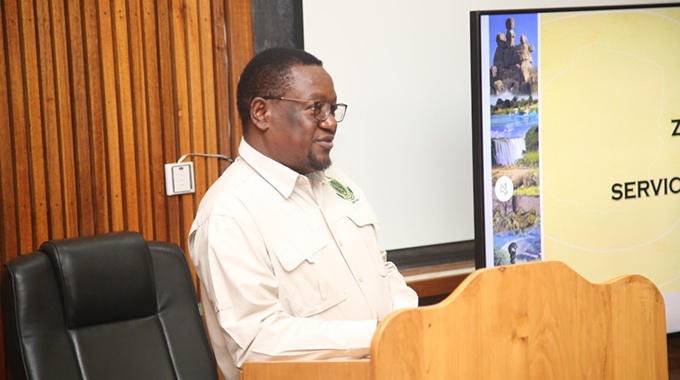
Ivan Zhakata Herald Correspondent
THE wildlife industry contributes significantly towards economic development and maximum efforts towards wildlife conservation will go a long way in contributing to socio-economic development in Zimbabwe.
This was said by Zimbabwe Parks and Wildlife Management Authority (ZimParks) director-general Dr Fulton Mangwanya in an interview recently.
Dr Mangwanya said the economic development yielded benefits to various communities and the nation at large.
He said ZimParks’ unity and collaborations with different partners, among them the International Fund for Animal Welfare (IFAW), have been key in the conservation of wildlife in the country ensuring its contribution to economic growth.
“Our partners have also rendered support to improve the welfare of our prominent assets which are the front-liners in conservation, our rangers, who continue to tirelessly safeguard these precious resources,” Dr Mangwanya said.
“Ultimately, adequate protection of major ecosystems, key species and their habitats will yield an accrual of benefits to the people co-existing with wildlife and to the nation at large.
“We are also thrilled to announce the successful completion of the construction project at Makona field station which has been under continual development for the past five years.
“Currently, the junior staff houses accommodating 16 families, entertainment centre and operational water system have been completed.
“Although the construction project was characterised by several whoops and hardships, the noticeable dedication, commitment and collaborative spirit of the personnel at different development levels which were supplemented by continuous financial support rendered by our highly-esteemed Wildlife partners in conservation, IFAW has enabled us to collectively achieve this milestone.”
Dr Mangwanya said they were grateful to IFAW and their various partners for the invaluable support rendered at Makona field station.
“I would like to appreciate the pivotal role played by various conservation stakeholders and the community in combating the illegal harvesting of wildlife resources,” he said.
“The efforts of communities have also helped in the conservation of wildlife in the country by reducing poaching.”



 Online Reporter