Online Reporter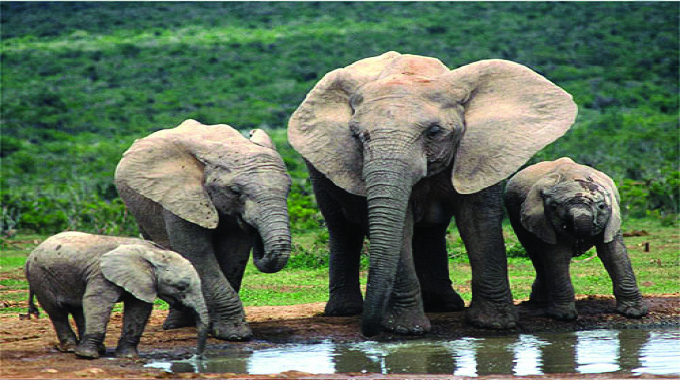
Emmanuel Koro, [email protected]
AS delegates and observers prepare for CITES CoP20 in Uzbekistan this November, the Ivory Education Institute has issued a bold challenge: “It’s time CITES, the UN’s international wildlife trade regulating agency, stopped ignoring the plight of endangered creatures that inhabit the unseen world beneath its surface.”
The Los Angeles-based organisation, which is dedicated to understanding the historical, practical, and cultural significance of ivory, argues that CITES has lost much of its relevance by focusing predominantly on charismatic megafauna — elephants, lions, whales — while largely neglecting less glamorous but ecologically vital species such as dung beetles, earthworms, maggots, and other invertebrates.
These so-called “creepy crawlies” are the unsung agronomists of our ecosystems — pollinators, decomposers, pest controllers, and foundational links in the food chain.
The Institute’s Managing Director, Mr Godfrey Harris, posed a provocative question: “Which of CITES’ 185 member countries will step forward to demand that these creatures be treated with the same reverence as the more iconic species?”
In a series of observations this month, Mr Harris warned that “while the world rallies to save the ‘big guys’ from extinction, insects are being harvested, trafficked, and traded with virtually no oversight from the world’s animal watchdog agency.”
Just this month, four individuals — two Belgians, a Vietnamese, and a Kenyan — were tried in Kenya for attempting to smuggle 5 000 queen ants to Europe for use in glass-sided ant farms. Each was fined US$7 700 or sentenced to a year in prison for violating Kenya’s wildlife conservation laws.
Given that each queen ant is reportedly worth US$1 000, Mr Harris described this as a criminal enterprise that CITES must understand and address through its member states.
He questioned CITES’ absence during such developments, especially as Kenyan experts have been warning of a growing trend in trafficking lesser-known wildlife species.
“Most likely,” Mr Harris remarked, “they were hiding in their Geneva offices, flying business class to meetings in exotic locations, and drafting carefully worded memos in three languages that offend no one — yet leave surface wildlife no better off.”
“CITES bureaucrats seem to be part of a global effort to ignore the unseen, unpretty, and unknown ‘other’ endangered species — the creatures that evoke an ‘ugh’ from most people.”
Mr Harris continued: “Dung beetles disperse seeds and recycle nutrients. Bees pollinate plants that feed both wildlife and humans. Earthworms aerate the soil, promoting root growth and water absorption. Yet their populations are changing dramatically due to habitat loss, climate change, and an often completely unregulated international trade driven by hobbyists, collectors, and traditional medicine.
“The challenge for CITES is to begin the tough task of identifying which of these species are endangered, understanding the implications for humanity, and devising effective strategies to confront the organised crime groups likely behind their smuggling.”
Animal rights groups, he said, face a different challenge: making these creatures as appealing as a baby elephant splashing in a river or a penguin chick nestled between its parents’ feet.
“If the world and CITES continue to ignore the unseen pillars of global ecosystems, trees will stop growing, soil will lose fertility, and grasslands will wither. In short, the very animals CITES adores for their fundraising appeal will begin the awful journey of starving to death. Why? Primarily because of systemic bias within animal rights groups. They are driven more by the need to maintain funding levels than by the science or ecological urgency we all face.”
Mr Harris argued that CITES has strayed from its original mandate — to regulate international wildlife trade of species endangered by extinction — and has become overly influenced by animal rights NGOs that favour blanket bans over nuanced, science-based regulation.
“Would you rather donate to save a baby rhino or a swarm of wriggling mosquito larvae from extinction? Simply put, animal rights NGOs need to make creepy crawlies as appealing as Jiminy Cricket from Pinocchio or Charlotte the spider from Charlotte’s Web.”
Mr Harris hopes that CITES will revisit its core mandate at CoP20 and prioritise species based on ecological function, not just popularity or fundraising potential.
He proposed a rallying cry for the upcoming conference: “Make the Organisation Relevant Again” — MORA.
As CITES marks its 50th anniversary this year, Mr Harris called for a “relevance renaissance.”
“CITES must embrace a holistic and sustainable conservation approach that includes underground, underwater, and treetop species,” he said.
He also did not shy away from the political undertones of his critique, questioning whether CITES’ inaction on bee deaths in the United States — compared to its heavy involvement in African elephant conservation — reflects a lingering colonialist mindset.
“There’s an unspoken assumption that wealthy Western countries can manage their own ecological problems, while poorer African and Asian nations require international intervention. This, as we’ve all seen, often results in Western control through seemingly generous gifts. That’s not conservation — it’s racial bias,” he said.
Reflecting on the four men caught smuggling queen ants, Mr Harris concluded: “If we were to lose all the elephants in Africa, it would be devastating — but the grasslands would continue to thrive. If we were to lose all the ants, worms, and termites in the soil, the grasslands, elephants, and all the smaller mammals and birds would collapse.”
He left readers with one final thought: “If any individual or organisation reading this has ideas on how we can make CITES CoP20 more relevant to the world we face, I would be delighted to hear from you at [email protected].”
Emmanuel Koro is a Johannesburg-based international award-winning environmental journalist who writes independently on environmental and developmental issues.