admin
admin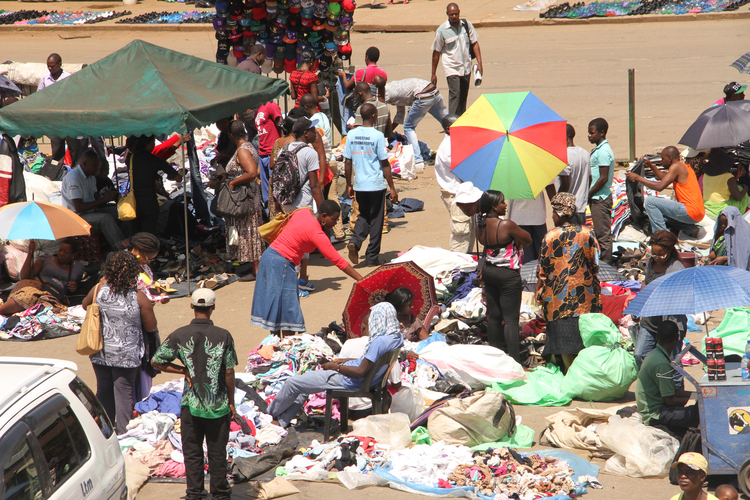
Upon assuming his new portfolio as Minister of Local Government, Public Works and National Housing a couple of weeks ago, Cde Saviour Kasukuwere indicated his intention to restore order in the city of Harare and his few days in office have been promising.
The energetic minister kicked off his tenure by descending on illegal vendors who have been resisting a Government directive to move out of undesignated vending sites in the Central Business District (CBD).
Although the efforts were met with stiff resistance, Minister Kasukuwere has on several occasions given assurance that Government will not back down on its bid to clean up the chaos created by illegal vendors in the city.
“They will go, we will not allow petty political statements and emotions to override reason,” he was quoted as saying last week.
“What kind of a city are we building when we don’t deal with such issues as vendors.
“We have to clear it and the mayor agreed that we do so.”
Cde Kasukuwere reaffirmed his resolve by posting on his Twitter account a picture of himself and Harare Mayor, Councilor Bernard Manyenyeni in a meeting, with a caption: “with Mayor Manyenyeni finding common ground rebuilding the Sunshine City”.
He went further to give a stern warning to corrupt officials in council saying he wants to see proper administration of Harare and other cities.
Barely a month in office, the minister has given hope that sanity can prevail in Harare again but experts say there may be need for a revolution in Harare as the city has become a huge mess.
They say the ugly scenes that unfolded in the CBD last week when vendors engaged in running battles with municipal police are only a metaphor of how bad the situation in Harare has gotten.
Critical accommodation shortages, illegal land allocations, inadequate water supply, poor roads, traffic congestion and poor service delivery are some of adversities that have ravaged the capital.
Residents say Harare has now been reduced to a remnant of the glowing city it once was.
It is in the wake of such developments that Harare has pinned its hopes on Minister Kasukuwere to bring back sanity to the city.
Housing
The issue of accommodation shortages in Harare has been dragging on for years and experts feel addressing the matter will be key in rebuilding the city as well as ensuring that order is restored.
The country’s housing deficit has been reported to be above 1,5 million units with the capital city being the most affected.
As a result, informal settlements have sprouted and illegal allocation of stands in Harare has become a dilemma for the city council.
Land barons have been swindling desperate home-seekers by selling them land outside the law.
Experts say that the local government’s failure to make stands available as well as corruption by council officials could be the causes of the disaster.
“It has become difficult for one to own a stand in Harare because authorities have not been making them available,” president of Zimbabwe Institute of Regional and Urban Planners, Mr Percy Toriro said.
“That is why we are having land barons taking advantage of desperate home-seekers. And that is also why we are seeing people building decent houses in informal settlements because they have the will and the resources to build houses but are not getting stands.”
Rural and Urban development expert, Mr Nyasha Mutsindikwa, echoed the sentiments saying corruption, more than anything else, has created the housing chaos.
“The biggest challenge that we have is corruption and unrealistic demand for urban land,” he said.
With council now resorting to demolish houses built on undesignated sites, just how these problems can be solved has become another nightmare.
Mayor Manyenyeni, however, reckons that for people to avoid being duped they should follow right channels when acquiring stands.
“There is a shortage of land for housing stands in Harare and there is need for new strategies such as vertical development. There may also be need for us to cut on the size of our stands because they are too big,” he said.
“To avoid being swindled people should use the formal and recommended channels when trying to acquire stands.”
Mr Mutsindikwa said Government in partnership with local authorities must create a database of genuine land developers and housing co-operatives and make the public aware of these so that they can approach them when they need stands.
While Minister Kasukuwere has already sounded the need to allocate housing land properly, the mess could take years to clean up as it had become deep-rooted.
Water
After years of investing billions of dollars in water infrastructure, the city’s water supplies is expected to get better.
Nonetheless, Harare is still being faced with a myriad of problems such as old infrastructure, increased pollution of water sources, a growing population as well as lack of adequate treating chemicals.
Reports emerged recently that the city council has for three months failed to test the levels of effluent discharged into the city’s water sources thereby relying on estimates to determine the amount of chemicals needed to treat the water.
Harare Residents Trust director, Mr Precious Shumba, said the funds to turn around the situation have repeatedly been made available but to no avail as they were abused.
“Corruption, dishonest leadership at Town House, dilapidated infrastructure, and increased pollution of water bodies and an increasing population have combined to negatively impact on the provision of water in Harare,” he said.
“The thrust should be to tighten the monitoring and regulatory system of water pollution and discharge of effluent into the water streams feeding Harare’s main water bodies.
“In our view as the HRT, the solution lies in accountable and transparent management systems being put in place at Town House
to protect public resources from greedy officials and corrupt technocrats at Harare Water.”
However, City of Harare director of water, Engineer Christopher Zvobgo, last week said a total amount of $173,5 million by Zimfund Grant and the Chinese Exim Bank Loan injected into Harare water will improve supplies. “Work is in progress at various water plants in Harare and this is due to funds received by the council to change old equipment and acquire chemicals through the Zimfund Grant and the Chinese Exim Bank Loan,” he said during a tour of Harare water plants.
Engineer Zvobgo said the development will enable Morton Jaffray Water Plant to pump about 550 mega litres of water to Harare each day.
However, there will still be a huge deficit as Harare needs at least 1 200 mega-litres of water per day.
Some of the projects which could increase water output in the future are Kunzvi project expected to consume $550m to generate 250 mega-litres per day and Musami water project which would cost around $850m generating 450 mega-litres per day.
The Musami and Kunzvi projects can generate a revenue income of a combined $156 million when functional.
Observers say while the current water situation is dire, the future looks good if all these projects are to be implemented.
Transport
The Harare transport system also needs attention and close co-operation between the Ministries of Transport and that of Local Government as experts say commuter omnibuses and pirate taxes have failed as public transport of choice.
The small sizes of the vehicles meant that they would be needed in huge quantities to service Harare’s commuters, this has created unprecedented traffic congestion.
Add the rising ex-Japanese car imports to that and you have a traffic jungle.
The city’s poor road network has only worsened the situation.
Authorities have mulled banning commuter omnibuses in favour of big buses but experts say the move should not be haste. “There is need to re-plan and invest heavily in urban public transportation infrastructure before banning the kombis,” Mr Mutsindikwa said.
He went on to say there is need to involve urban planning experts in solving the traffic problems.
“In Zimbabwe, my own experience is that the urban planning profession is not being given the position that it deserves in solving some of these transportation problems.
“Universities or other research institutions have a lot of research findings on these issues which can be used to inform policy but this is not happening. There is need to utilise research institutions so that they offer solutions to some of the problems facing societies.”
The above are only some of the major problems that are confronting the city and it remains to be seen if sanity will ever prevail in Harare again.


 Online Reporter