Online Reporter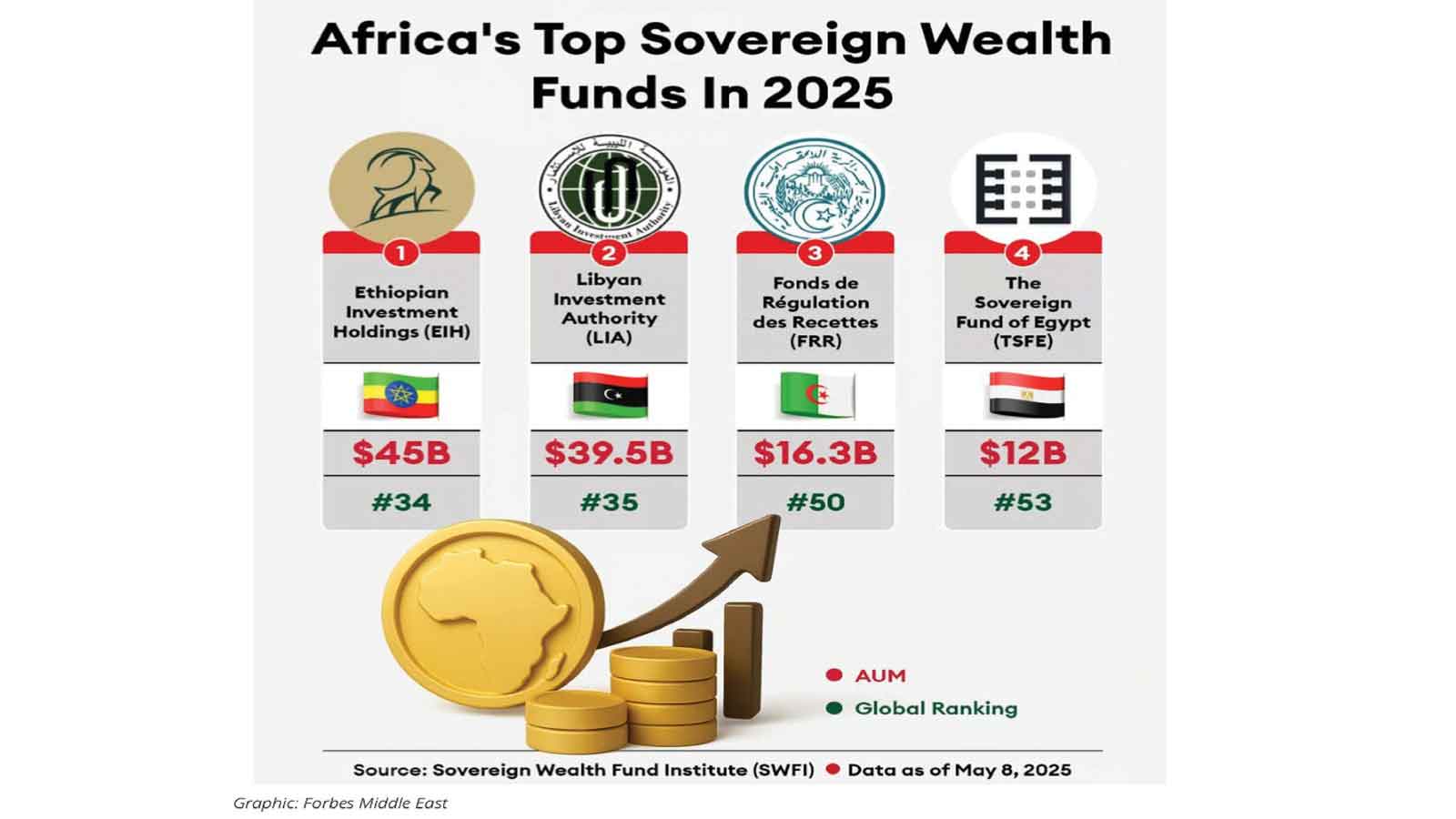
Nixon Chekenya, James Dambaza
and Fungai Mukundiwa
A few years ago, Botswana quietly did something remarkable.
It took the wealth from its diamonds and set some of it aside, not for today, but for tomorrow.
That decision gave rise to the Pula Fund, a national savings pot that has helped the country weather storms and plan for the future.
Now, across Africa, more countries are asking the same question: What should we do with national wealth? Spend it now or invest it for generations?
That is where sovereign wealth funds come in.
From Accra to Abuja, and now in Zimbabwe, through the Mutapa Investment Fund (MIF), governments are building these funds with a bold promise: to turn national assets into long-term prosperity.
But here is the truth: Some of these funds succeed, while others struggle.
And the difference is not luck.
It comes down to a few hard lessons.
Lesson One: Discipline beats size
Nigeria has one of Africa’s most ambitious funds, the Nigeria Sovereign Investment Authority. It has invested in roads, agriculture and power projects.
These are visible, real investments.
But even in Nigeria, progress has not always been smooth.
Why? Because big money alone is not enough.
Botswana’s experience shows something different. Its fund is smaller, quieter, less flashy, but more disciplined.
Rules are followed. Decisions are steady. Over time, that discipline builds strength.
The lesson is simple: A fund does not need to be big to work; it needs to be well-run.
Beyond governance and clarity of mandate, the investment strategy of a sovereign wealth fund must also be grounded in rigorous financial discipline and portfolio construction principles.
Successful funds typically diversify across asset classes, geographies and time horizons to balance risk and return, rather than concentrating exposure in domestic political priorities.
This reduces vulnerability to commodity cycles and domestic economic shocks, which are particularly pronounced in resource-dependent economies.
In addition, clearly defined benchmarks, performance metrics and independent oversight mechanisms are essential to ensure that investment decisions are evaluated objectively rather than politically. Without these safeguards, even well-capitalised funds risk underperformance and erosion of public trust over time.
Lesson Two: Know exactly what the fund is for
In Ghana, the Ghana Petroleum Funds were created with a clear idea: save some oil revenue, use some to stabilise the economy and plan for the future.
That clarity matters.
When a fund tries to do everything — fund infrastructure, stabilise the budget, create jobs and respond to crises — it risks doing nothing well.
Successful funds are focused. They know their job and stick to it.
Lesson Three: Trust is built in the open
One thing Ghana has done right is openness. Reports are published. Numbers are shared. Parliament is involved. This matters more than it may seem.
When people understand how a fund works, they trust it. When investors trust a system, they invest. When trust is missing, even good ideas struggle. Transparency is not just about accountability; it is about confidence.
Lesson Four: Think beyond today’s pressures
The world’s most successful sovereign wealth fund belongs to Norway, the Government Pension Fund Global. It is massive, but its real strength lies elsewhere.
It is protected from short-term pressures.
Decisions are made with the future in mind; not the next election or next crisis. That is why it continues to grow. This is perhaps the hardest lesson of all. Long-term thinking is easy to talk about, but difficult to practise.
And what about Zimbabwe?
Zimbabwe now stands at an important moment.
The creation of MIF signals a clear intention: to manage national assets more strategically and to think about the future.
The opportunity is real.
Zimbabwe’s asset base is not trivial.
The country sits atop one of the world’s richest concentrations of mineral wealth: lithium, platinum, gold, chrome and diamonds.
These resources, if properly harnessed and strategically managed, could underwrite a genuine transformation of the national economy.
MIF, which absorbed the former Zimbabwe Sovereign Wealth Fund and consolidated State-owned enterprise assets under a single management structure, represents the most serious attempt yet to bring coherence and strategic purpose to this wealth.
It has been charged with a mandate that is both ambitious and necessary: to invest in productive sectors, attract co-investors and generate returns that serve the long-term national interest rather than the short-term pressures of the annual budget cycle.
Whether it succeeds will depend not on the richness of Zimbabwe’s ground, but on the quality of the institutions that stand above it.
For Zimbabwe, this implies that MIF must go beyond institutional creation and focus on execution credibility.
This includes establishing transparent reporting standards, enforcing strict withdrawal and reinvestment rules and attracting professional fund management expertise with a proven track record in global capital markets.
Equally important is the separation of commercial decision-making from political influence, particularly in the allocation of capital to State-owned enterprises or strategic sectors.
If the fund can anchor itself in these principles, it has the potential to crowd in foreign investment, lower perceived country risk and serve as a stabilising force in the broader economy.
If not, it risks reinforcing inefficiencies and becoming another vehicle for short-term fiscal relief rather than long-term wealth creation.
But the lessons from across Africa are just as real.
If the fund is governed with discipline, guided by a clear purpose, run transparently and protected from short-term pressures, it can become a powerful engine for national development.
If not, it risks becoming just another institution that promises much but delivers little.
The bottom line
Sovereign wealth funds are not magic. They do not automatically create prosperity.
They are tools, and like any tool, their impact depends on how they are used.
Africa’s experience tells a clear story.
Where rules are respected, funds grow. Where clarity exists, investments succeed.
Where trust is built, economies benefit.
Zimbabwe has the chance to get this right.
The question is not whether sovereign wealth funds can work. The real question is whether we will make them work.
Generations of Zimbabweans have watched their country’s mineral wealth extracted, traded and dispersed with little lasting benefit to the majority.
MIF is, in principle, a break from that history, a declaration that Zimbabwe’s natural inheritance should compound for its people rather than pass through their hands untouched. That declaration must now be followed by action, structure and the kind of patient institutional rigour that turns good intentions into generational wealth.
The tools are on the table. The lessons from Africa and beyond are available to anyone willing to study them. What remains is the will to apply them honestly, consistently and without exception.
That is the work that no fund manager, no board and no government can avoid.
It is also the work that, if done well, Zimbabwe’s grandchildren will one day look back on with gratitude.
Nixon Chekenya is a PhD student at Texas Tech University (USA). James Dambaza is a PhD candidate at the University of the Free State (SA), while Fungai Mukundiwa is an MBA candidate at Georgetown University’s McDonough School of Business (United States). The three wrote this article for The Sunday Mail in their own capacity. Their views do not reflect those of their institutions.