


 Online Reporter
Sukulwenkosi Dube-Matutu, Mat South Bureau Chief
LAND preparation for winter wheat production is underway in Matabeleland South, with the province aiming to cultivate 2 300 hectares, a slight increase from last year’s 2 000 hectares.
The primary sites for winter wheat in the province are the Arda Antelope Estate in Matobo and the Arda Ingwizi Estate in Mangwe.
Recent rehabilitation of several irrigation schemes, including the Midlo and Masholomoshe schemes under the Green Climate Fund programme, is expected to support this year’s target.
So far, Arda Antelope Estate has planted 350 hectares of winter wheat out of a planned 550 hectares and is expecting an impressive yield of 6.5 tonnes per hectare.
In an interview, Matabeleland South Department of Agricultural, Technical and Extension Services (Agritex) Deputy Director, Mr Bhekilizwe Ncube, said several individual farmers were participating in wheat production this year.
“Land preparation is in progress for most farmers, with around 70 percent of the work completed. A total of 467 hectares has been planted at Ngwizi, Antelope and Valley schemes, which are among the major contributors to wheat production in the province. The crop is at the germination stage.
“We expect farmers to complete planting before the winter wheat planting window closes.
“This year, irrigation schemes such as Midlo and Masholomoshe will contribute to wheat production following their rehabilitation. We also have individual farmers producing wheat this year,” he said.
Mr Ncube noted that the harvesting of the summer crop is also underway. He said the province had a good crop across all districts this year, and farmers are expected to make deliveries to the Grain Marketing Board.
He said Insiza and Umzingwane districts performed well in maize production, while other districts such as Gwanda and Matobo excelled in small grains.
“In comparison to the past two seasons, this season’s provincial production is very good. Even the livestock grazing areas are in good condition and should last until the next season. The best-performing and contributing schemes are Ingwizi, Antelope, Valley and Silalatshani. We also have eight individual farmers who did well,” he said.
Mr Ncube said as the province shifts focus towards wheat production, his department continues to conduct farmer training programmes. He added that close supervision is in place to ensure that farmers carry out planting within the stipulated timeframe.
“I would like to urge farmers to work night and day so that we can meet our wheat target. More individual farmers are encouraged to join in. It’s my appeal to those with access, to water to participate. Inputs are being delivered, and farmers are encouraged to liaise with their nearest GMB depots.
“The uptake of wheat production by farmers over the past three years has been impressive. The rehabilitation of more schemes will also help to boost our production,” he said.
Arda Antelope Estate Manager, Mr Aleck Chinyai, said they were targeting to plant 550 hectares of wheat. He confirmed that 350 hectares have been planted and the crop is now at the tillering stage.
Mr Chinyai said they expect a yield of 6.5 tonnes per hectare, which may increase.
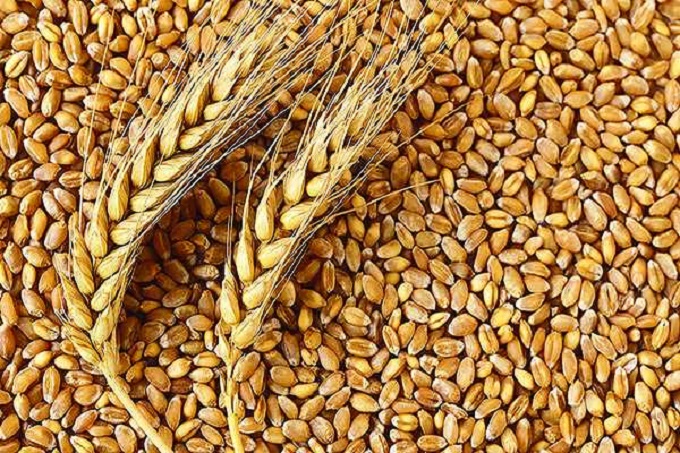
He said top-dressing of the wheat is currently underway.
“We have planted 350 hectares of wheat at the estate, and the process is ongoing with a target of 550 hectares. The area under wheat will increase as we harvest potatoes, commercial maize and sugar beans. We also have 22 hectares under sugar beans, which are now at maturity stage.
“We also have a commercial maize crop on 120 hectares of land, which is at the soft dough to drying-off stage. In addition to the commercial maize, we have 132 hectares of hybrid maize and 45 hectares of potatoes ready for lifting,” he said.
Masholomoshe Irrigation Scheme Chairperson, Mr Polite Moyo, said they are delighted to be participating in wheat production, following the rehabilitation of their scheme. He added that receiving inputs and tillage assistance would further enhance their output.
The Government has mobilised 15 381 tractors to support farmers during this year’s winter wheat season, a significant improvement from the 1 800 tractors made available last season.
The necessary chemicals for the wheat season are readily available from various suppliers.
This year’s wheat production is being bolstered by the involvement of private contractors, the National Enhanced Agricultural Productivity Scheme (Neaps) and the Presidential Wheat Support Scheme.
In a recent weekly report, Agricultural Advisory and Rural Development Services Chief Director, Mr Leonard Munamati, stated that the country has mobilised sufficient resources for the winter cropping season.
This co-ordinated effort underscores the Government’s commitment to enhancing winter wheat production in Zimbabwe, with a strong emphasis on resource availability and timely preparation by farmers.
The Government has set a preliminary target of planting 120 000 hectares of wheat for the 2025 winter season, the same as last year, as it aims for another bumper harvest of the cereal this year. — @DubeMatutu



 Bongani Ndlovu